
Potosí
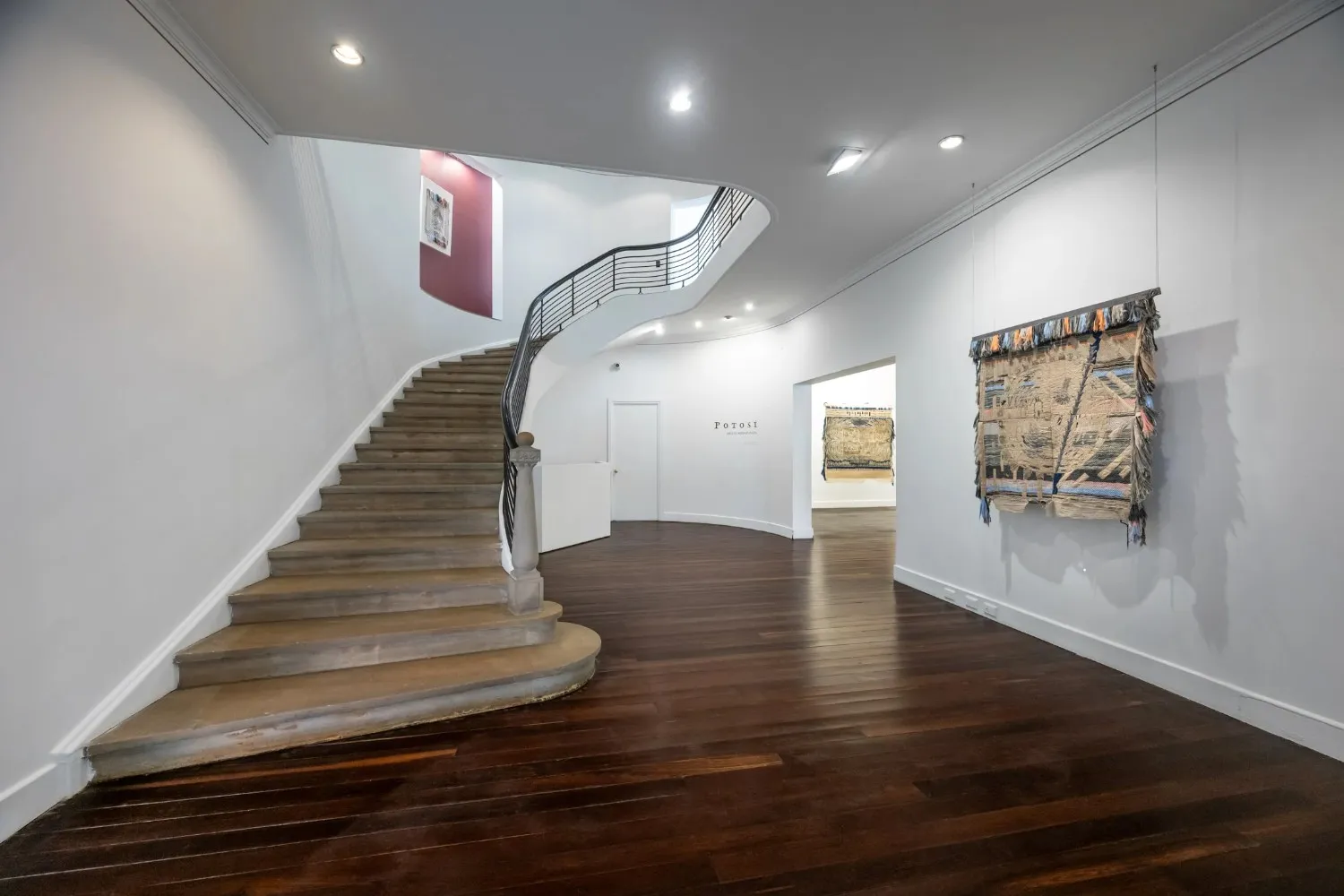
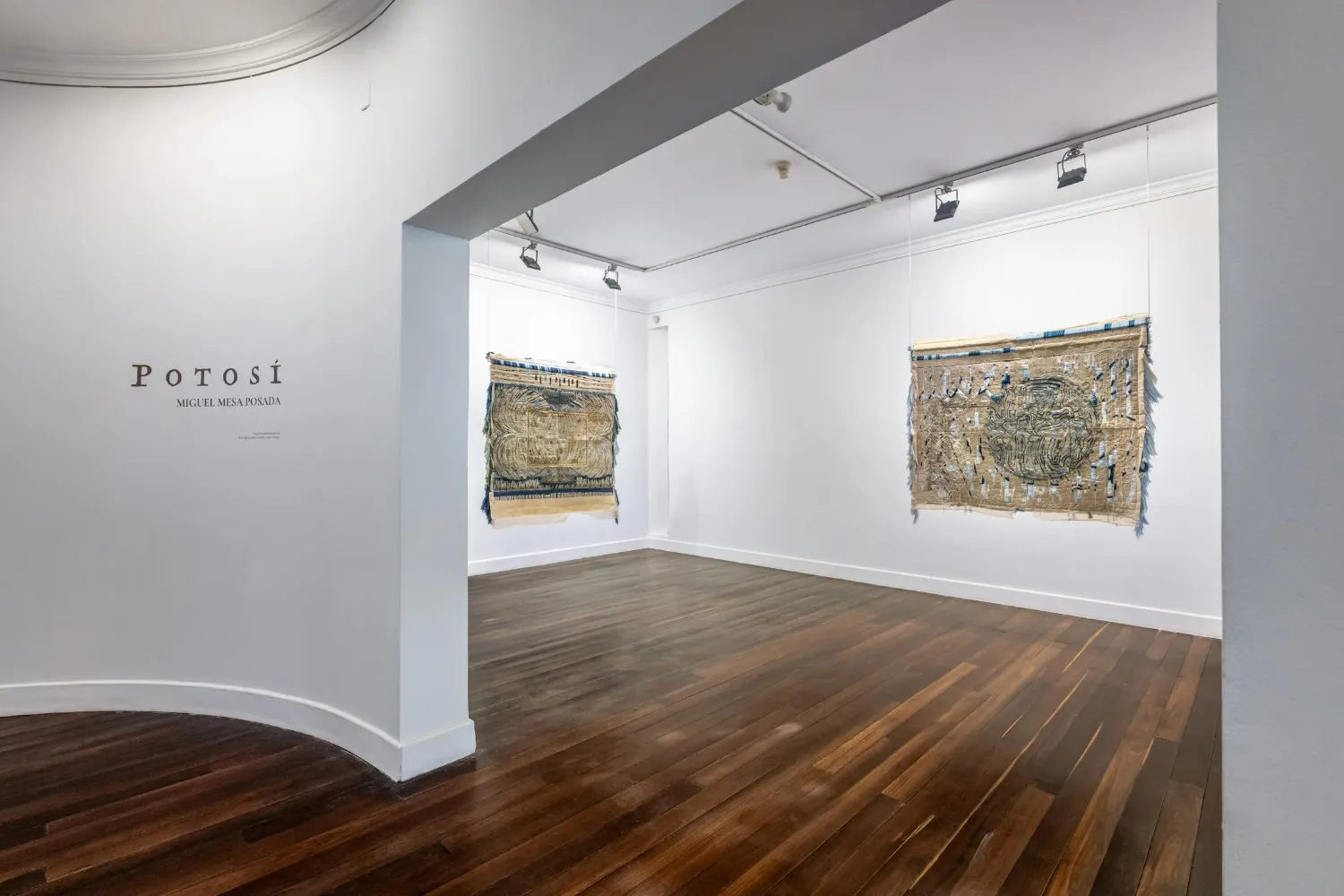
Miguel Mesa Posada's exhibition "Potosí" takes its name from one of the symbolic epicenters of colonial modernity: the Cerro Rico of Potosí (Bolivia), whose mining operations established global circuits of wealth, violence, and extraction from the 16th century onward. However, instead of taking a historicist approach, the show proposes a material and conceptual shift. Mesa Posada's Potosí considers other ideas of value and wealth present in textiles: a territory of temporal crossings and reflective stitches, where Latin America's cultural inheritances are woven, covered, and blurred.
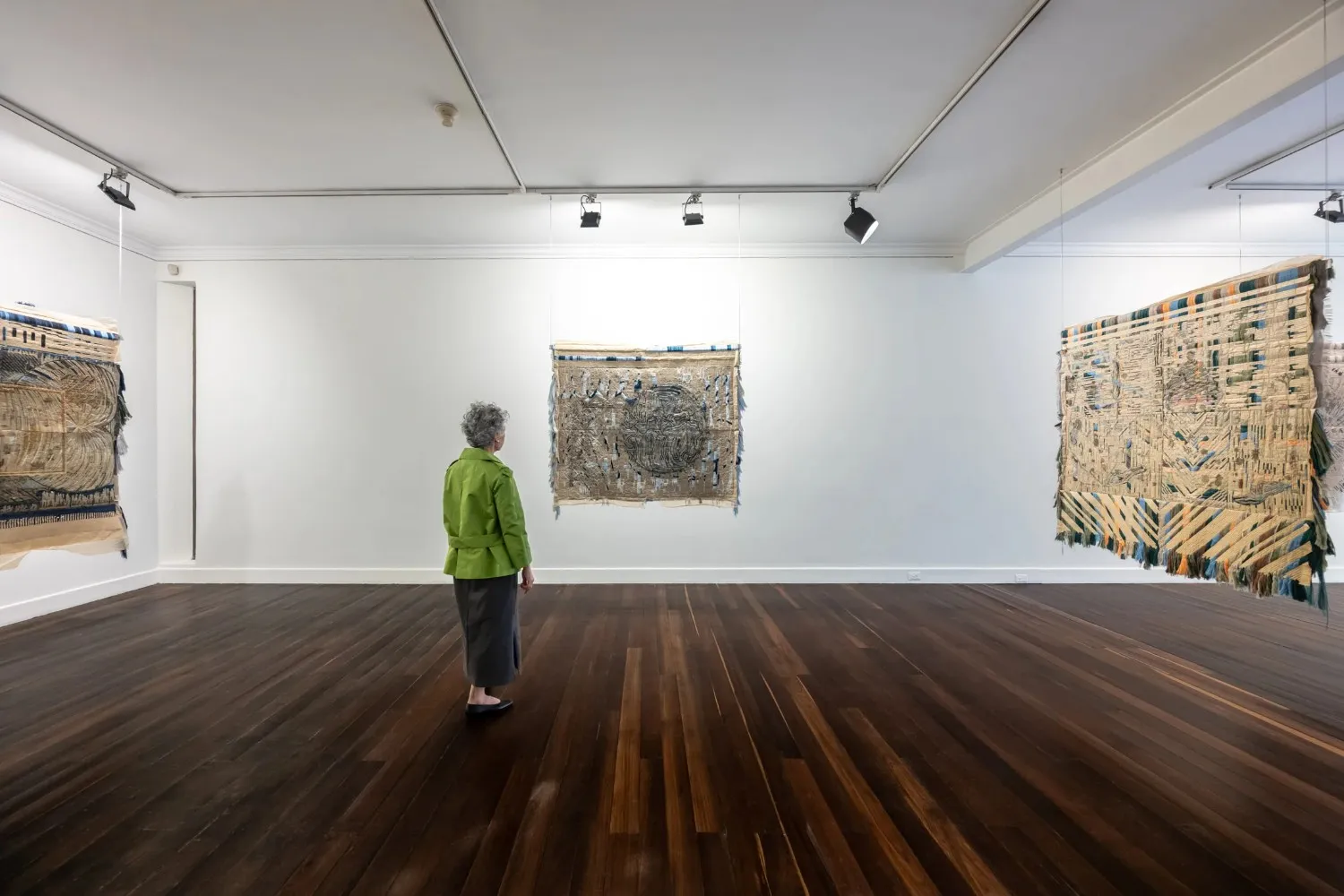
In Mesa Posada's work, weaving operates as a palimpsest of beliefs. Forms of colonial violence coexist with exercises in translation, survival, and hybridization capable of producing new epistemologies, which can be read as ways of inventing new pasts to sustain a future open to historical mixture.
Historian Serge Gruzinski, in his book "The Mestizo Mind," proposes that the encounter between Europe and America enabled hybrid forms of thought which, despite the dispossession and abuse of local populations, generated key intellectual and artistic inputs for cultural mestizaje (understood beyond race). The mixtures implied by colonization in all its material and symbolic forms can be read as creative inheritance from the chaos of the "conquest," highlighting in that encounter a force that transformed the Old World—and it's in the encounter with indigenous thought that the dynamics of globalization begin. Today, that globalization continues amid multiple tensions, allowing imaginaries and knowledge to connect across rigid borders. In "Potosí," Mesa Posada engages with this perspective by insisting that memory, material culture, and contested pasts can still build something new.
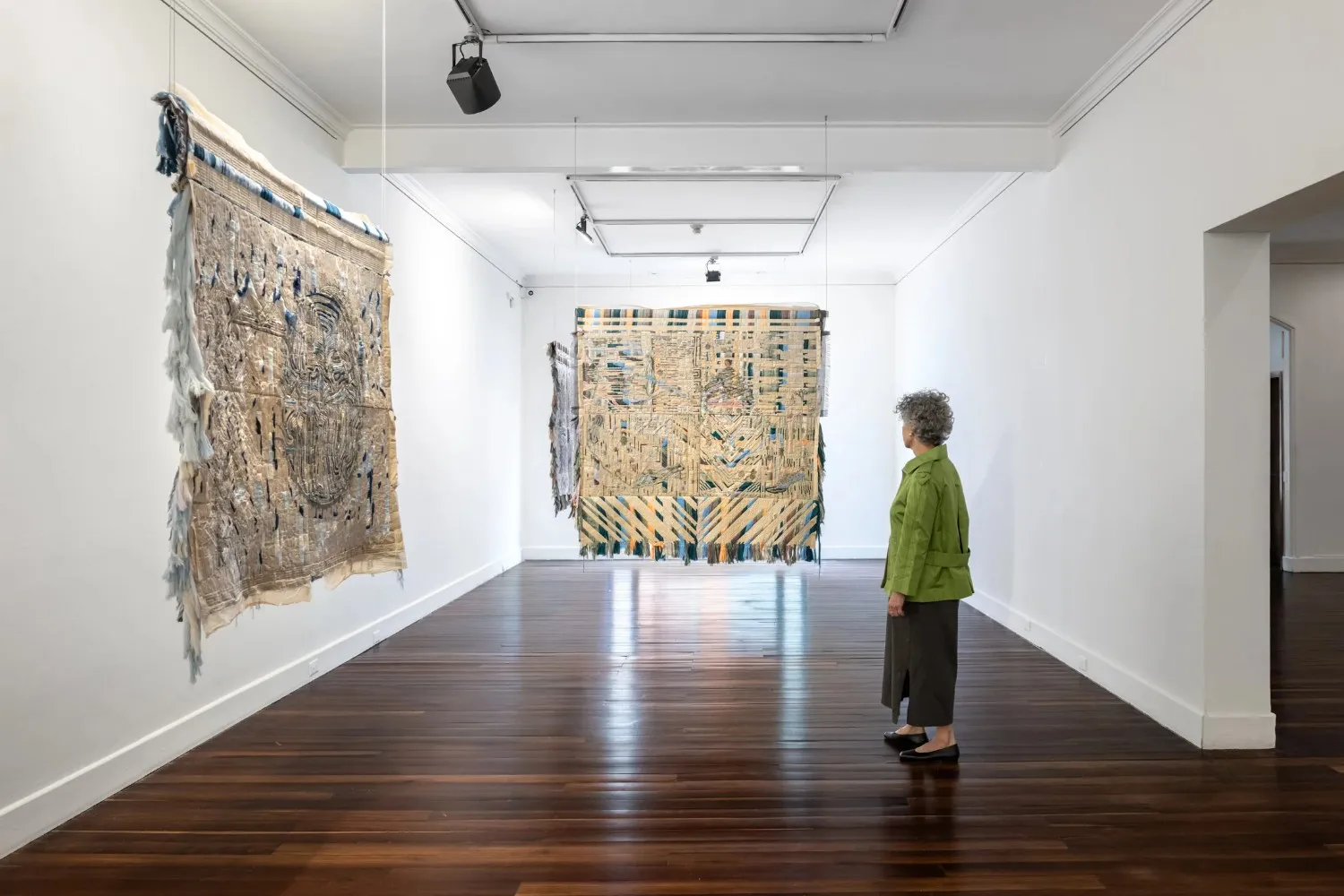
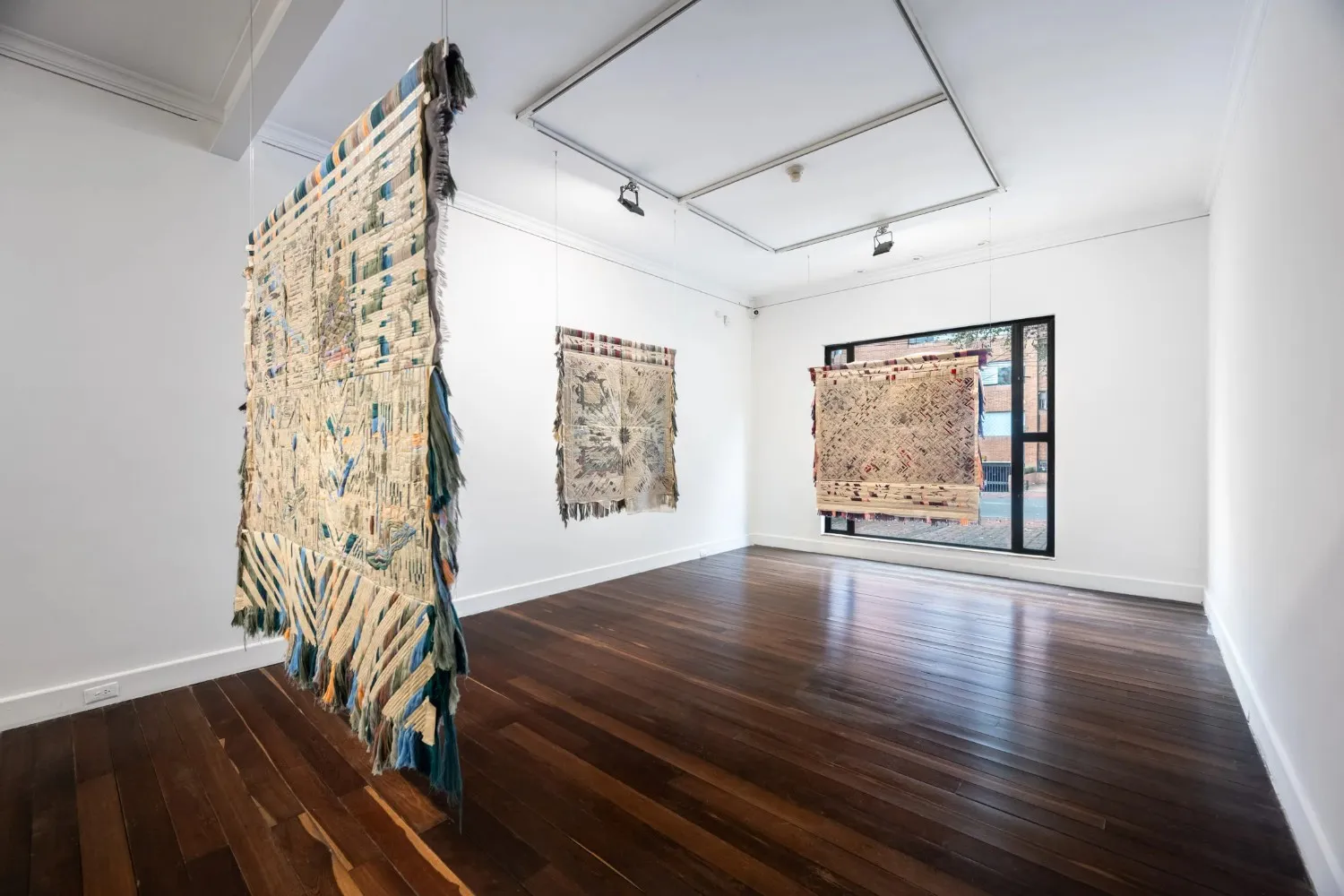
In this exhibition, the boundaries between art and history, between the popular and the industrial, between utilitarian object and aesthetic work dissolve. Materials are reconfigured here as fields for sensory experimentation, and Mesa Posada's gesture resembles that of an explorer seeking to find something new.
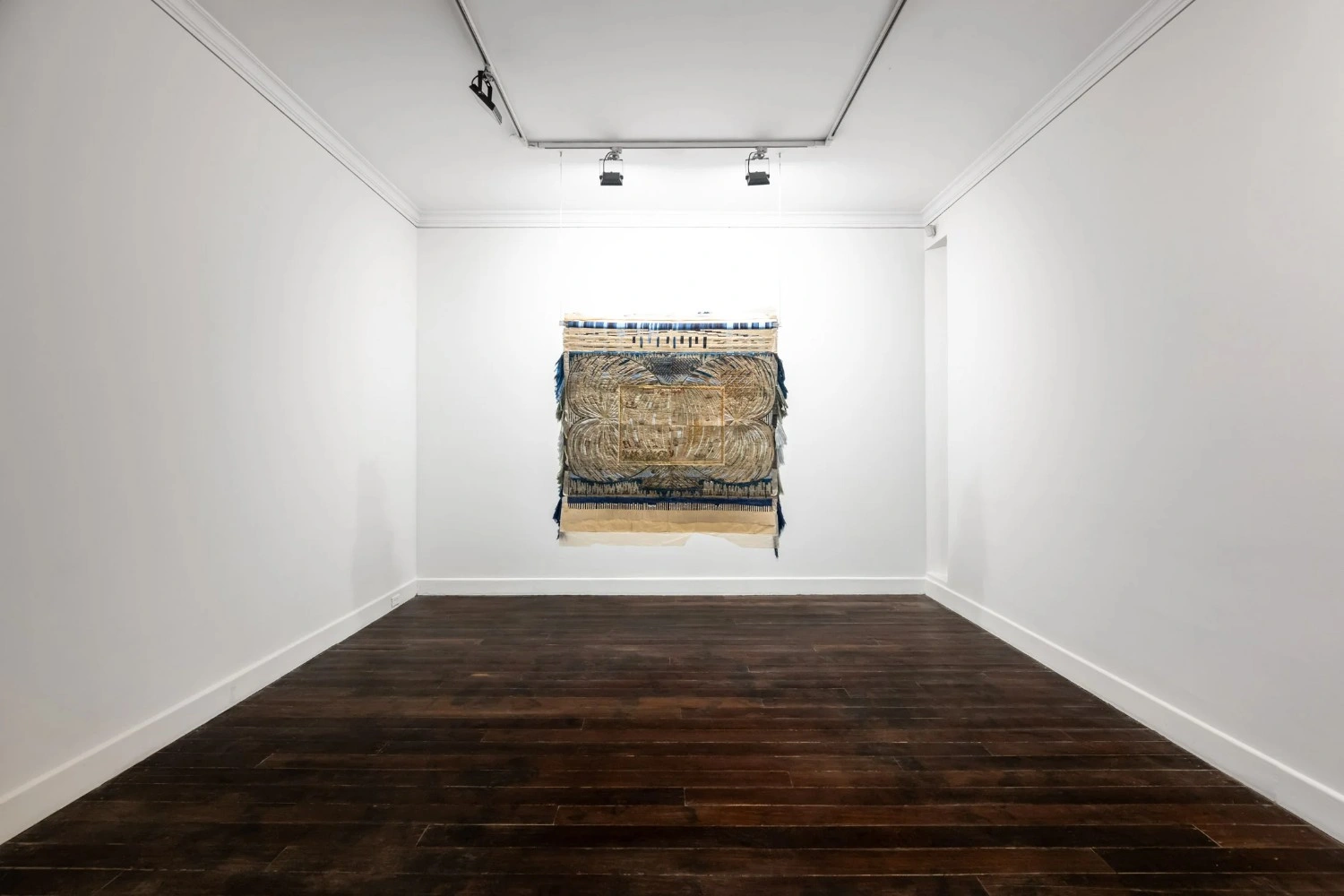
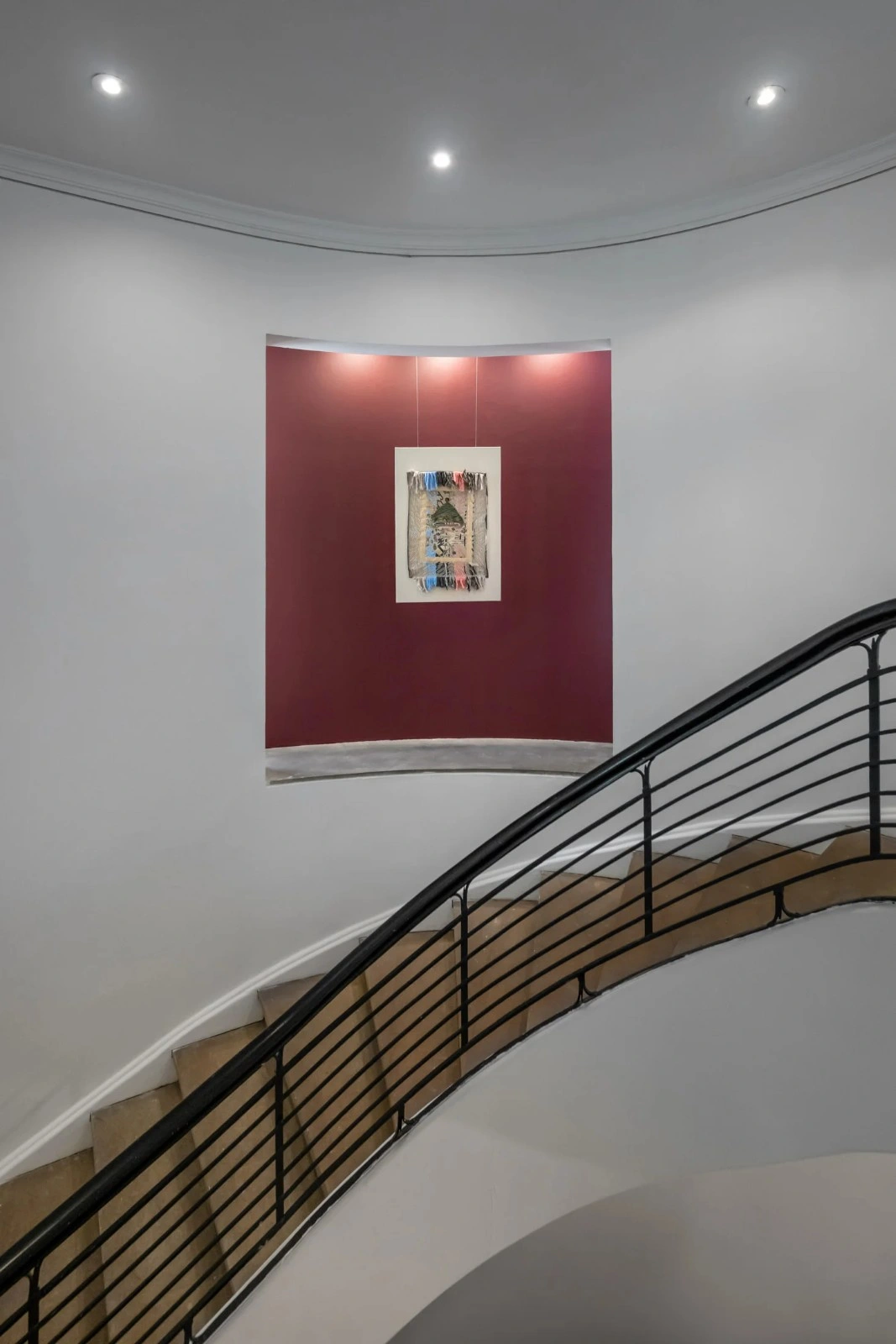
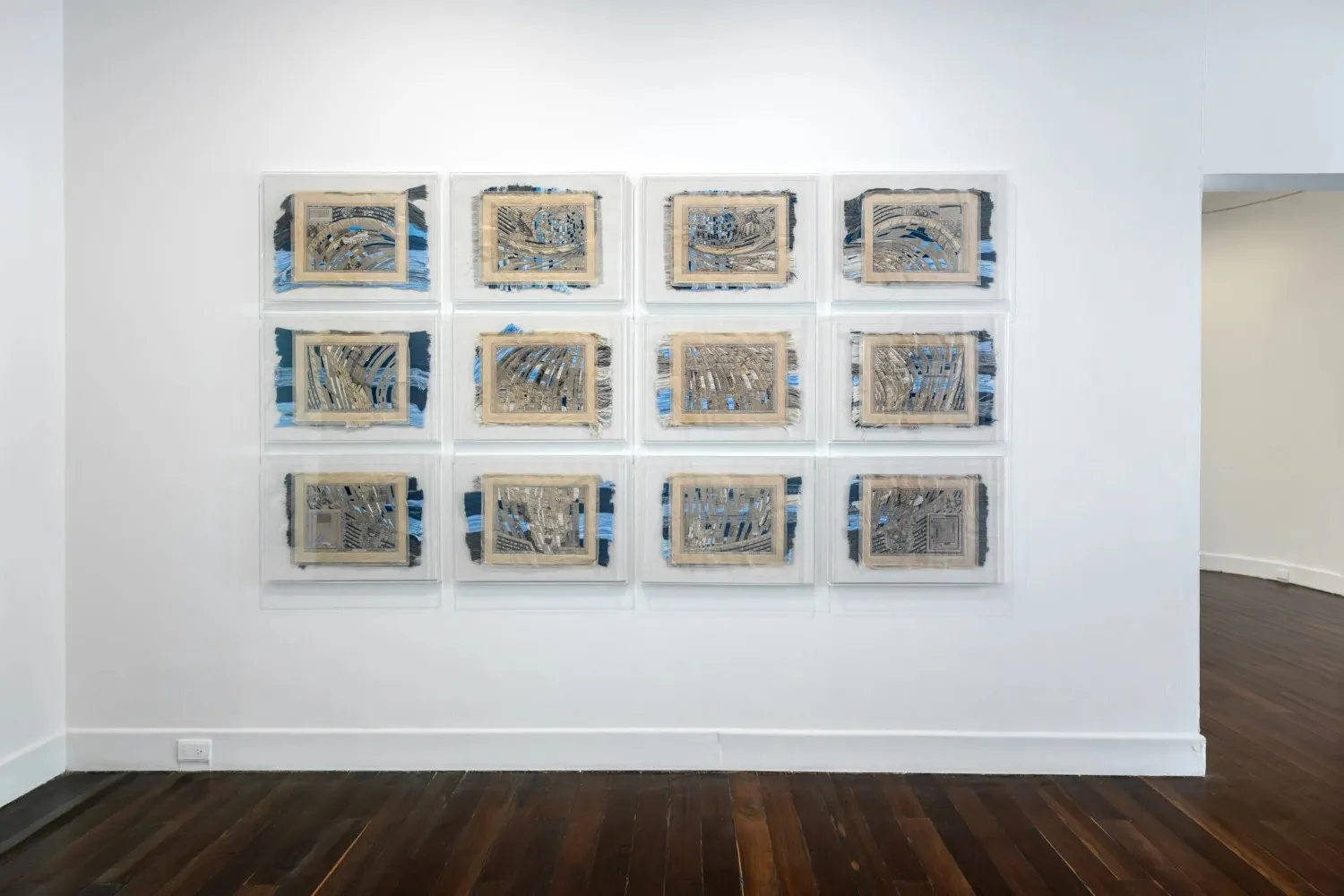
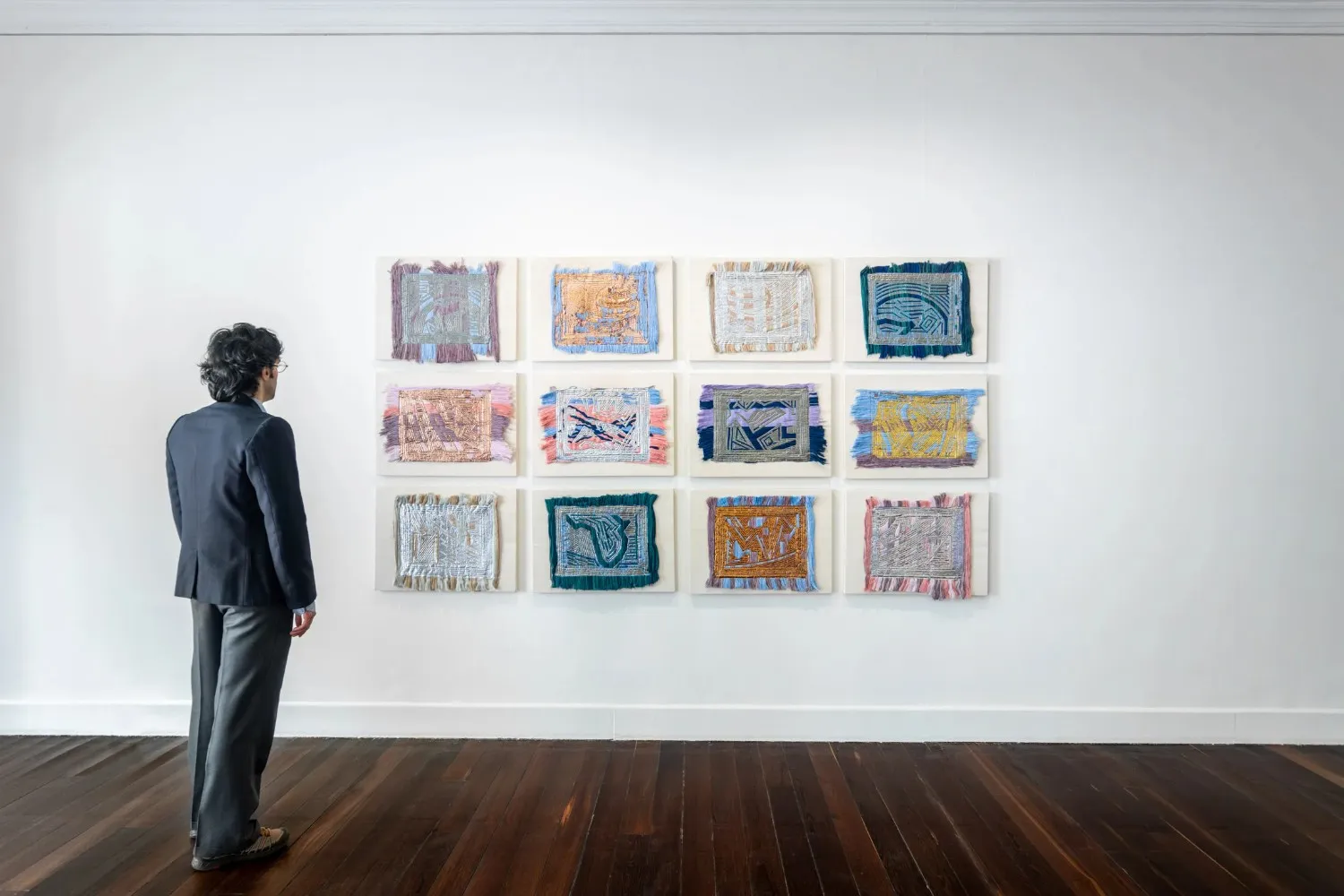
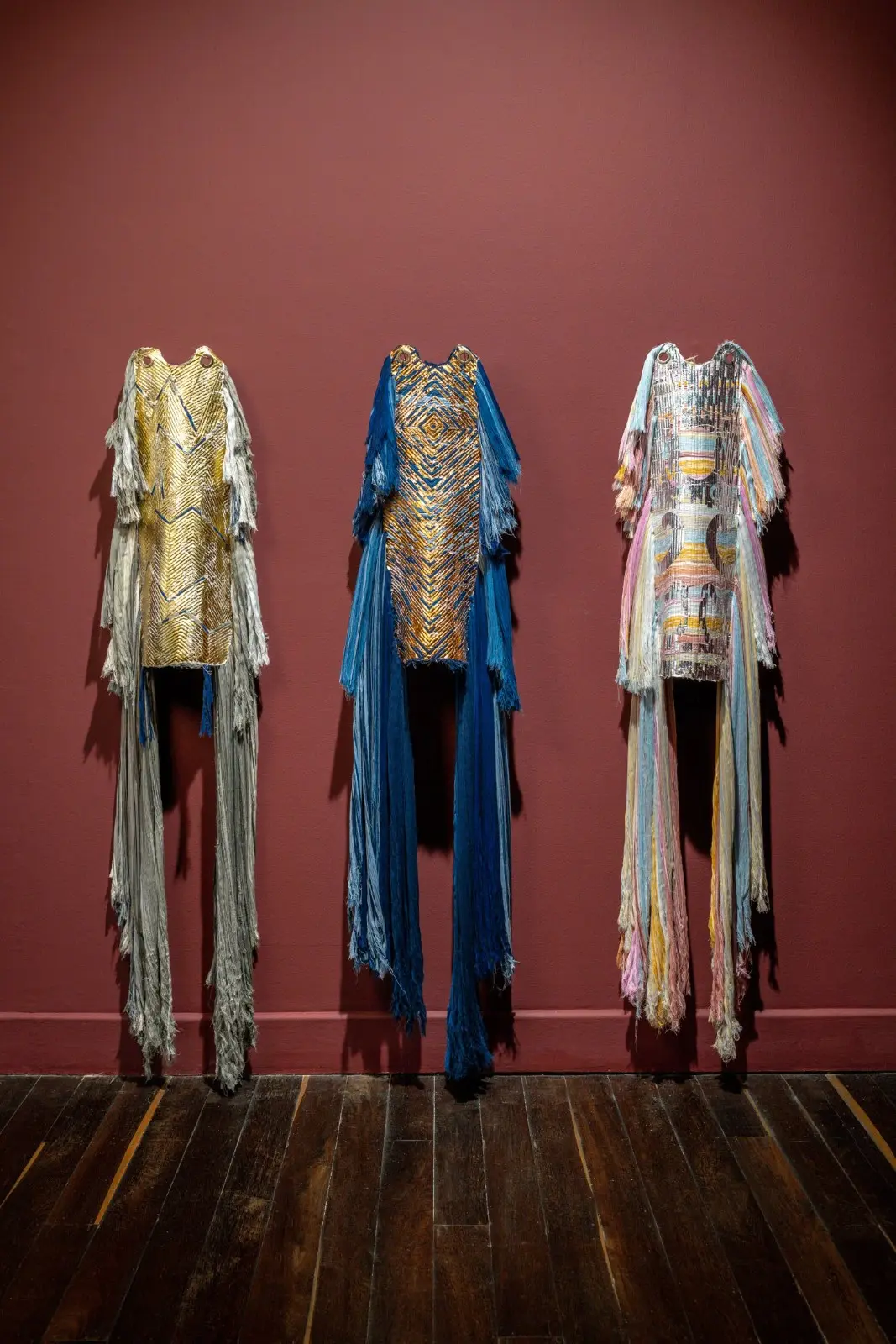
From this position, the map ceases to be merely a geographic document and becomes, in dialogue with textiles, a narrative rich in layers. The lines stitched onto cartography resemble veins through which material and symbolic capital is permanently extracted. The shine of metal, present throughout the exhibition, articulates the tension that emerges between the sacredness of the earth for some and the historical anxiety associated with gold and silver extraction for others. Equivalent to the use of metal as transit and offering for the former, and as a source of accumulation tied to extractivist logic for the latter.
The confrontation between European and pre-Columbian representations is key. While modern cartography consolidated territory as a surface for control, delimitation, and sovereignty, many indigenous cultures configured the map as an inhabited place, a weaving of relationships and tutelary presence—the mountain, the altépetl, is a living entity and symbolic axis of community. In this sense, Brian Harley's reflection in his book "Maps, Knowledge and Power" is illuminating: maps are not neutral instruments but inherently political documents. Projections, symbols, and cartographic silences are selected to reinforce authority structures and legitimize specific sovereignties. The map, therefore, doesn't just represent the world—it orders it according to a regime of writing, reading, and domination.
In "Potosí," the gesture of sewing and unveiling maps is not merely formal—it's a critical operation. The needle and the hand that tear the paper interrupt the presumed Cartesian objectivity and rewrite it, converting these documents into mestizo collisions. Textiles introduce interstices, layers, and plots yet to be un-covered. America reappears thus as terra incognita, not in the colonial sense of the unknown to be conquered, but as territory that rewrites itself. Permeable and critical toward the narratives that have fixed it in the universal imaginary of abundance.
The exhibition ultimately proposes thinking about wealth beyond metal and shine. If Potosí's imaginary condensed the promise of infinite opulence, Mesa Posada's works suggest another form of wealth: one that emerges from multiplicity, from memory that doesn't close itself off, and from the capacity to hybridize traditions to invent possible futures based on new pasts.
Each stitch is, then, a minimal but insistent gesture, a way of rewriting the ending of history from the weft.
María Wills Londoño
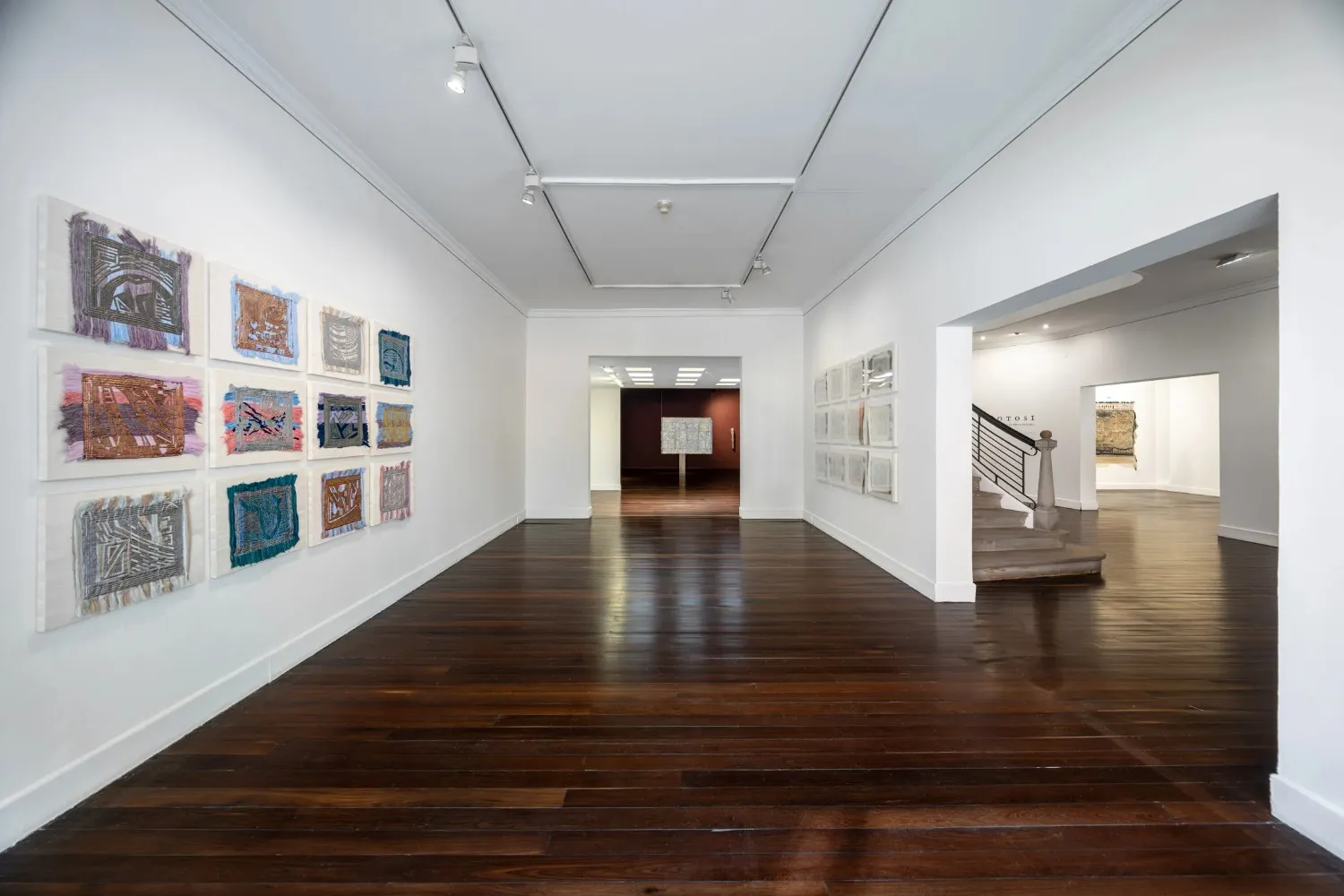
Miguel Mesa Posada's practice sits at the intersection of historical research, material speculation, and visual memory. This exhibition, his first solo show at Casas Riegner gallery, begins with a fundamental idea: in the Americas, weaving has not simply been ornament or utilitarian support, but also a system for inscribing, transmitting, and preserving knowledge. Against a history written from the centrality of paper, archives, and Western cartography, the artist proposes a shift that involves tearing away, unveiling, layering, and making textile what was fixed as document.
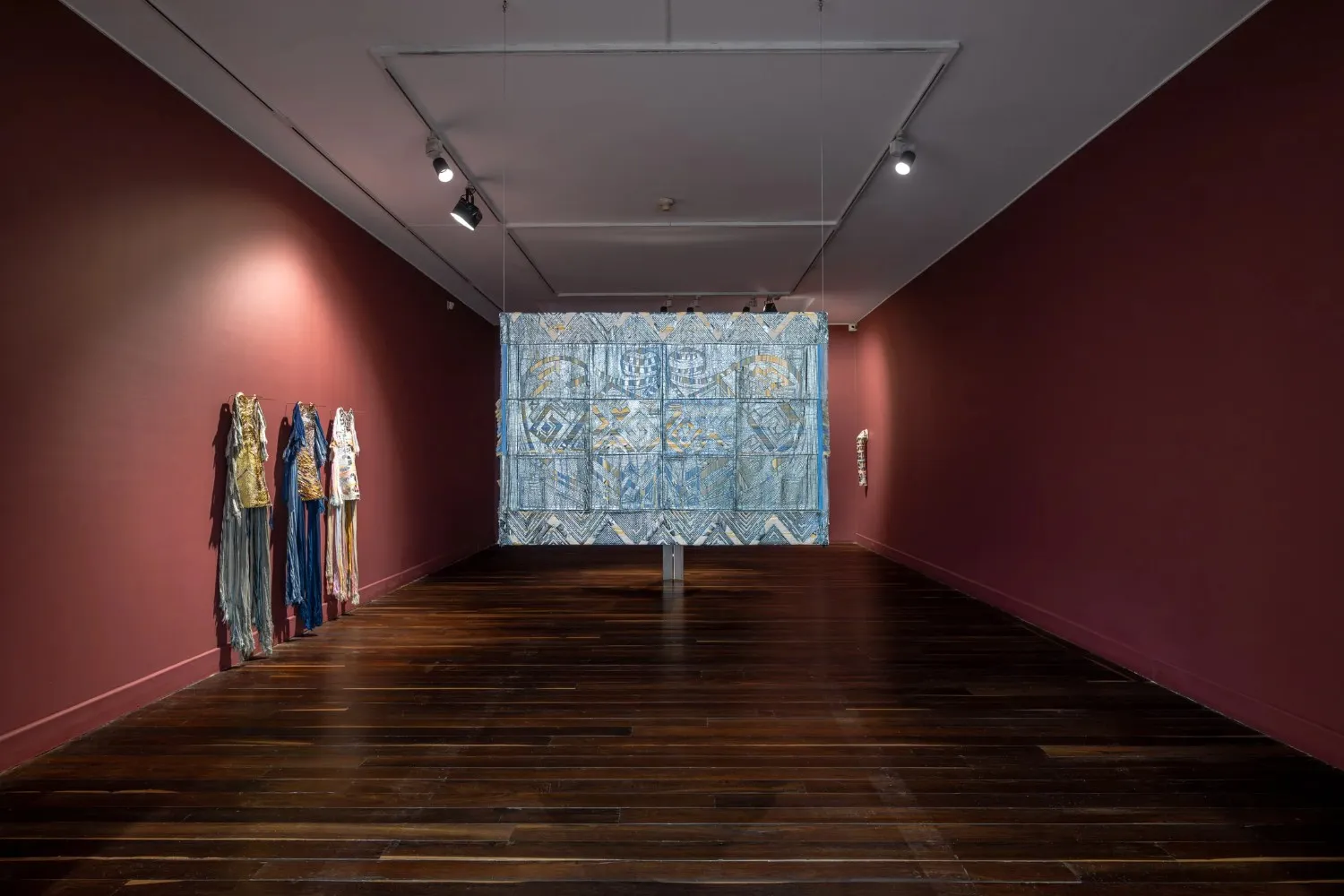
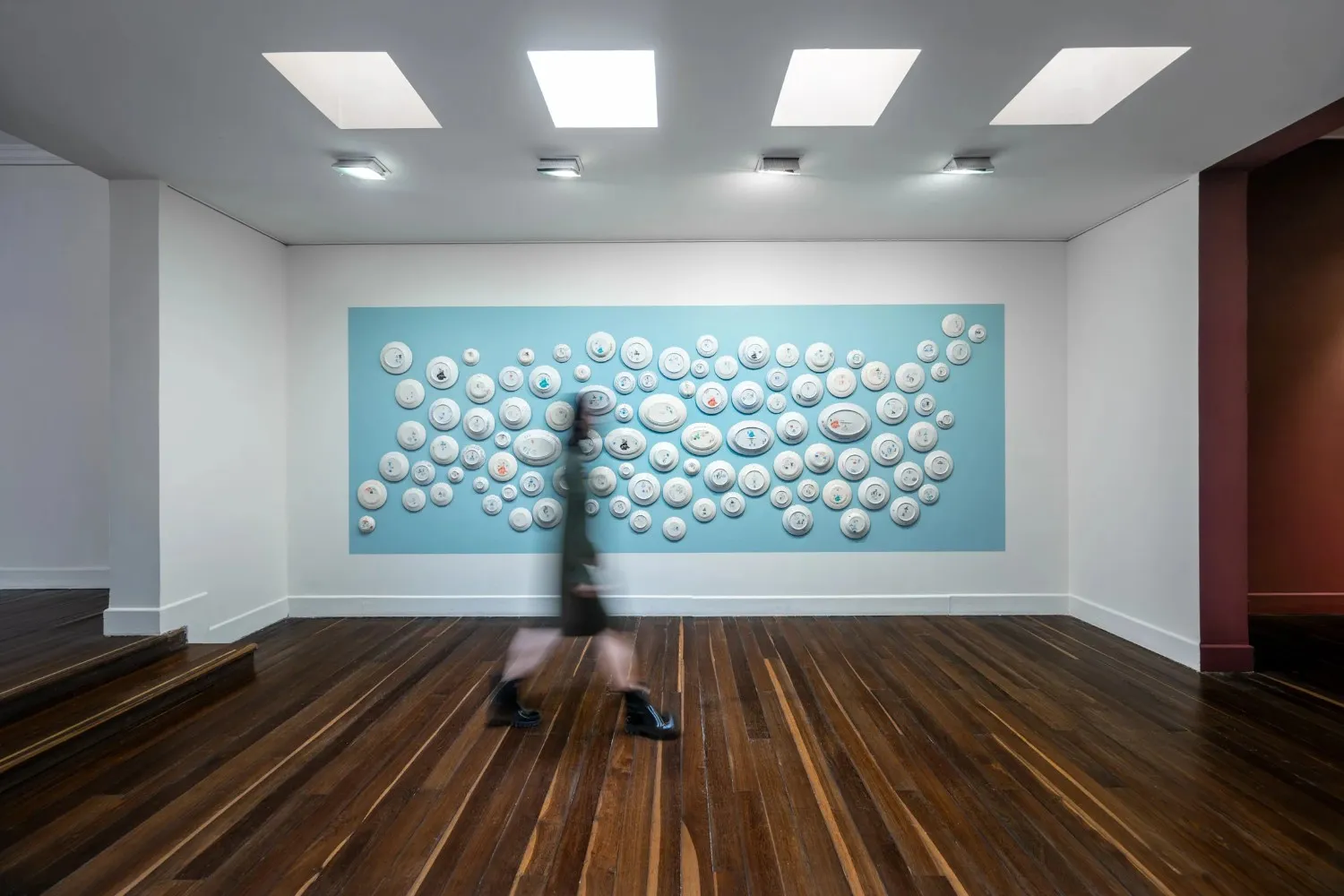
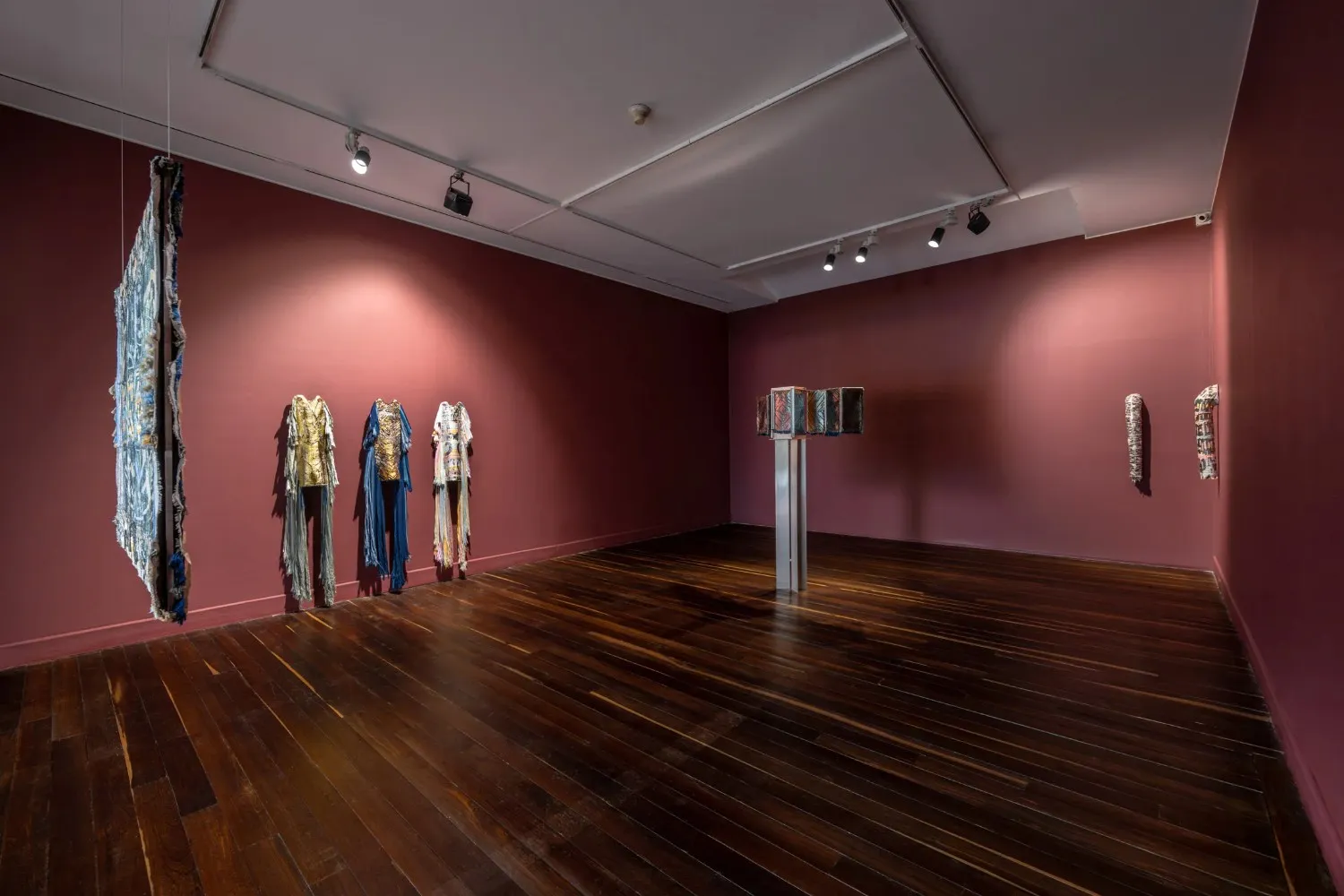
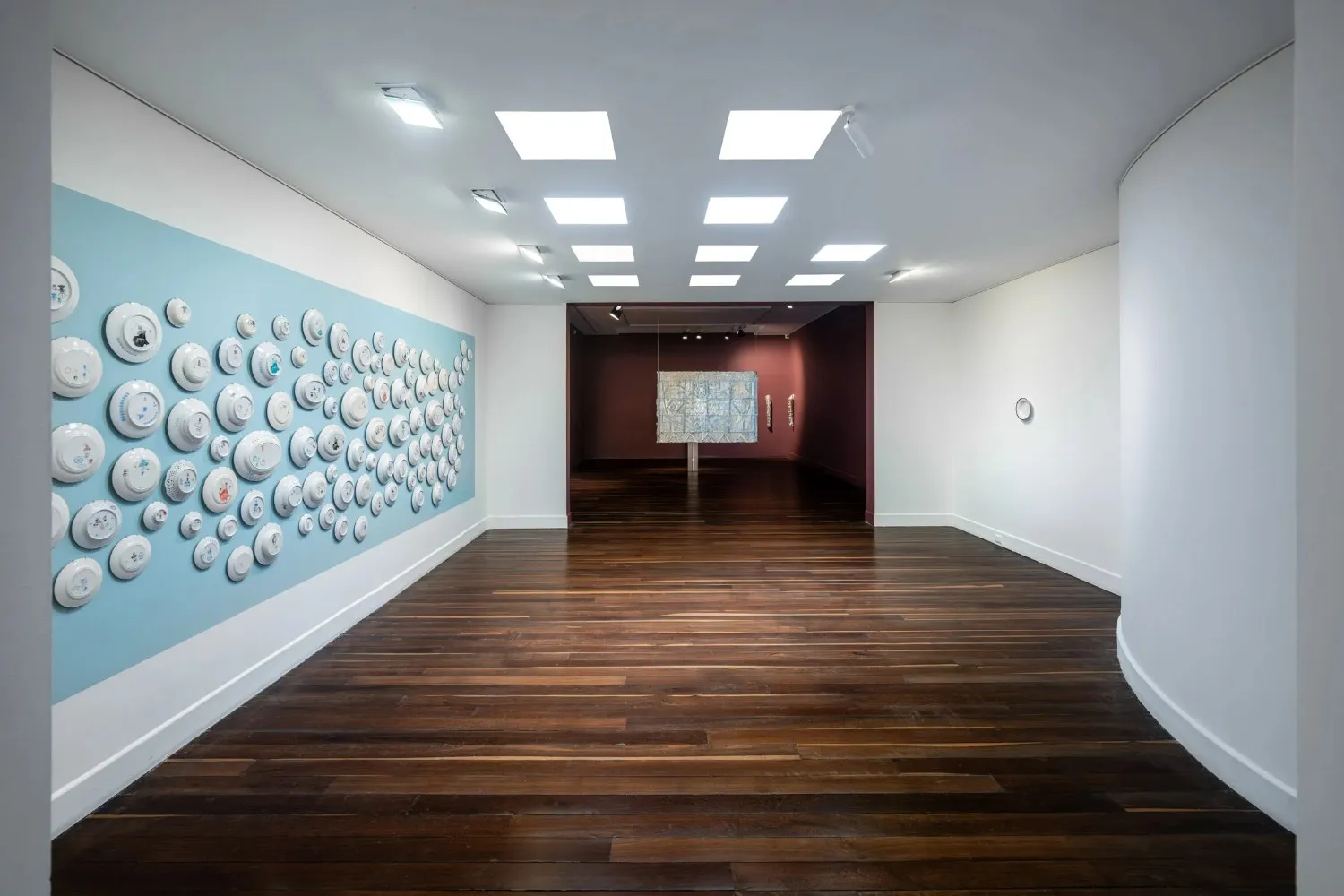
In this exhibition, maps, tableware, and votive forms are intervened through a technique the artist has developed over the years. It's a way of thinking through matter: removing one surface to allow another to appear, sacrificing the metallic to reveal the textile, eroding the promise of wealth to uncover a subterranean memory. In this gesture, also named by the artist as "Potosí," both the extractive history of the continent and a persistent question about what remains beneath the visible layers of power resonate.
The title and imagery of Potosí condense one of the exhibition's central tensions. Potosí names both a concrete place and an idea of incalculable wealth—a splendor built on the violence of extraction. Miguel takes this ambivalence as a starting point to question the ways America has been imagined as a reserve of value, as territory to be known, as inexhaustible promise. However, his response is neither illustrative nor strictly documentary. His works don't seek to explain history, but to activate its unresolved zones by making visible the voids, the detours, the possibilities that never materialized.
The intervened maps occupy a central place in this operation. Coming from Mesoamerican and European traditions, they undergo a process of "textilification" that doesn't cancel their documentary condition, but destabilizes it. In them, the map stops being a transparent surface of representation and becomes a field of friction between two regimes of knowledge: one tied to paper, classification, and cartographic vision; another linked to weaving, diagrams, knots, and the embodied transmission of memory. What emerges is not a reconciled synthesis, but a hybrid and unresolved form—the material simulacrum of a past that could have existed but never consolidated. In this sense, these pieces operate as visual hypotheses, as impossible documents of an alternative history.
The same logic runs through the series of tableware, where the back of the plate (that space historically reserved for the seal, the manufacturer's mark, the object's lineage) becomes a space for symbolic invention. Miguel combines crowns, inscriptions, emblems, signatures, and references from different archives and traditions to construct an improbable heraldry, a false genealogy of objects that never existed. As with the maps, it's not about falsifying the past, but imagining what forms would have emerged if other sensibilities, other repertoires, and other systems of legitimacy had structured American material culture. The plate, an everyday domestic object, thus appears as another possible document—a surface where history is imprinted in intimate, political, and affective terms.
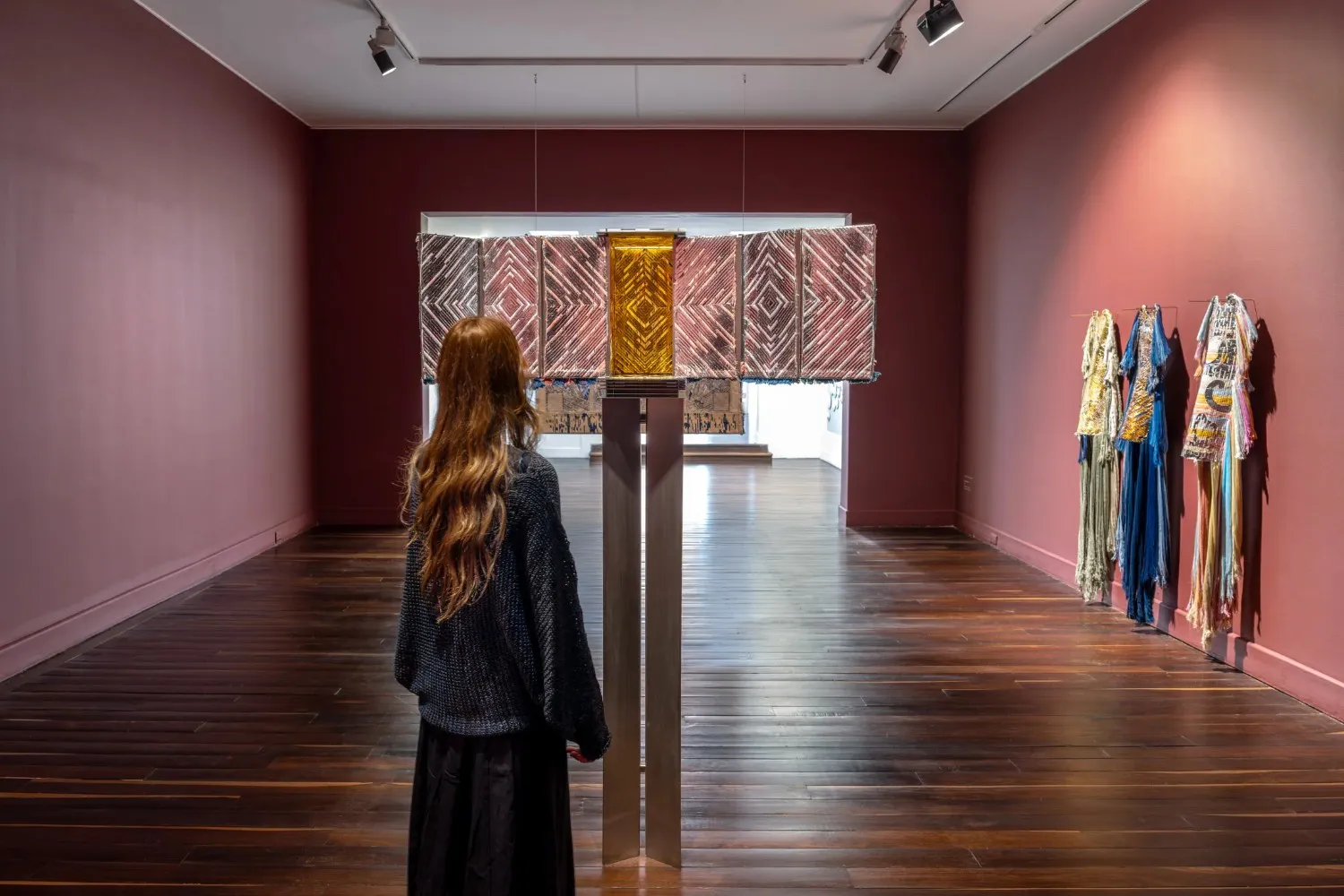
The spiritual dimension of the exhibition deepens this reflection further. A mobile altar, metallized surfaces, and ex-votos point to a long-shared fascination with shine, reflection, and the symbolic power of metal. But here, again, the shine is not presented as culmination, but as a layer to be crossed. Metal seduces, but also conceals; it dazzles, but also delays access to another denser and more persistent matter. In this tension between luster and depth, between surface and revelation, the work returns to a question about what bodies, what narratives, and what forms of life have remained beneath the dominant narratives of wealth.
Far from an essentialist affirmation of identity, Miguel's work sits in an unresolved mestizaje, made of layers, residues, appropriations, and survivals. His pieces don't propose a pure return to an origin or a naive celebration of mixture. Rather, they make visible the complexity of an American history constituted by tensions, impositions, creative detours, and forms of material persistence. In this sense, the exhibition doesn't reconstruct an identity but suspends it, turns it into a question, converts it into a surface for reading.
What these works ultimately offer is a way to re-enchant our relationship with history without denying its violence. Against the image of America as perpetually extractable territory, Miguel imagines another kind of wealth: not that of metal torn from the earth, but of the patterns, signs, and memories that resist beneath the layers of time. His objects produce estrangement because they seem to come from a parallel archive, from a possible but uninstitutionalized tradition. And it's precisely there where their conceptual power lies: in making us think that history can also be read from what never quite became fixed, from what remained woven but never fully written.
Pavel Andrés Vernaza Ortiz
Closing date: May 21, 2026
