Plots
In Praise of the Fragment (and of the Rebusque)
On Luis Roldán
He doesn’t change. Smiling, once again, Luis Roldán has managed to trick us. And though now he presents new and ever more sophisticated tricks —he’s seventy, and he knows too much—, for far less, more than two thousand years ago, Plato banished poets and artists from the polis and never let them return.
Because what truly irked Plato to the core was that artists always got away with it: appealing to our basest instincts, they seduced us inexorably, only to leave us more lost than before, further from the truth rather than closer. And whether by virtue of being an artist or of being caleño, Roldán is a born seducer, able to conjure —like the palabreros of Plaza Caicedo, who with a couple of turns of phrase can captivate anyone and raise a spectacle in thin air— a phantasmagoria out of nothing
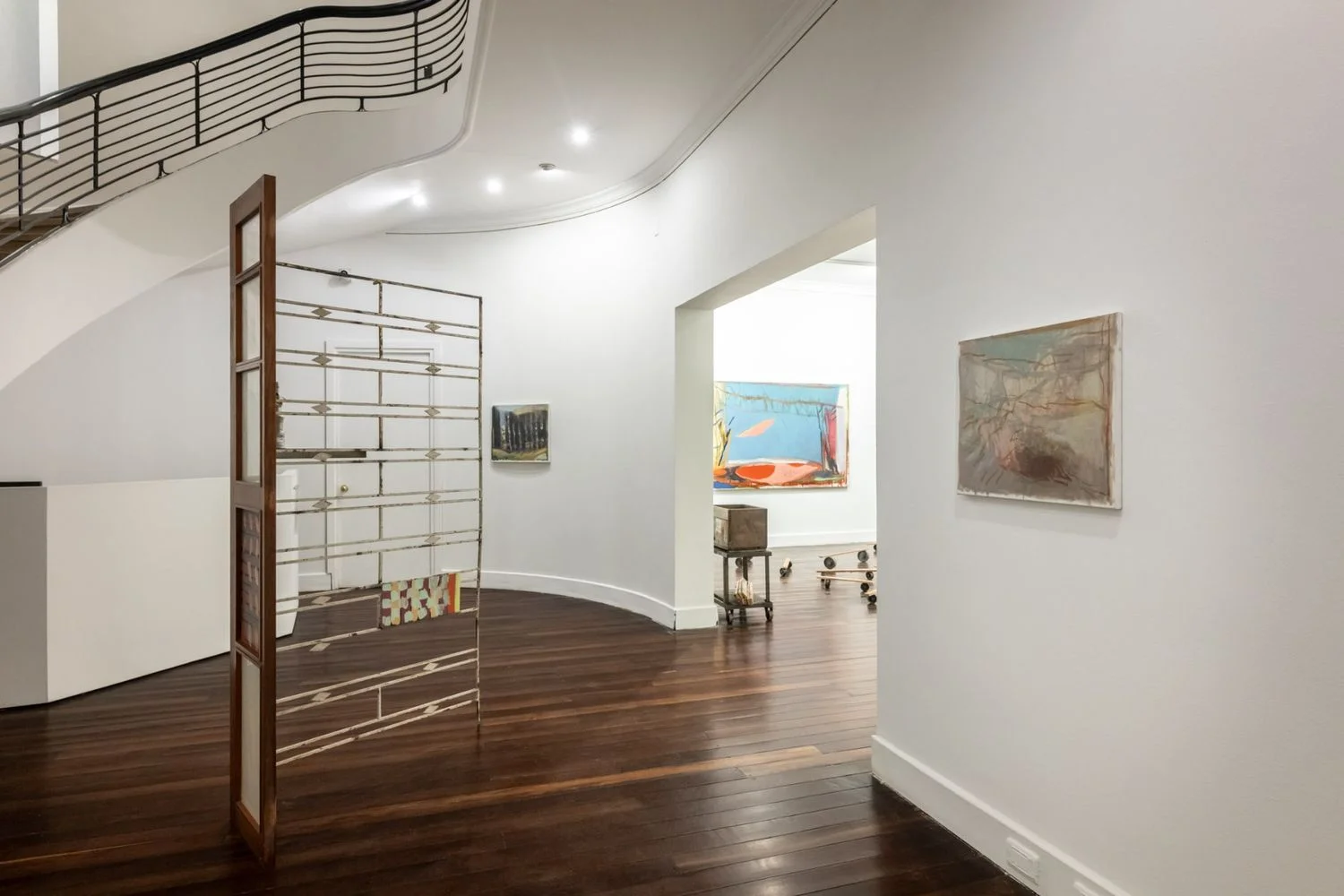
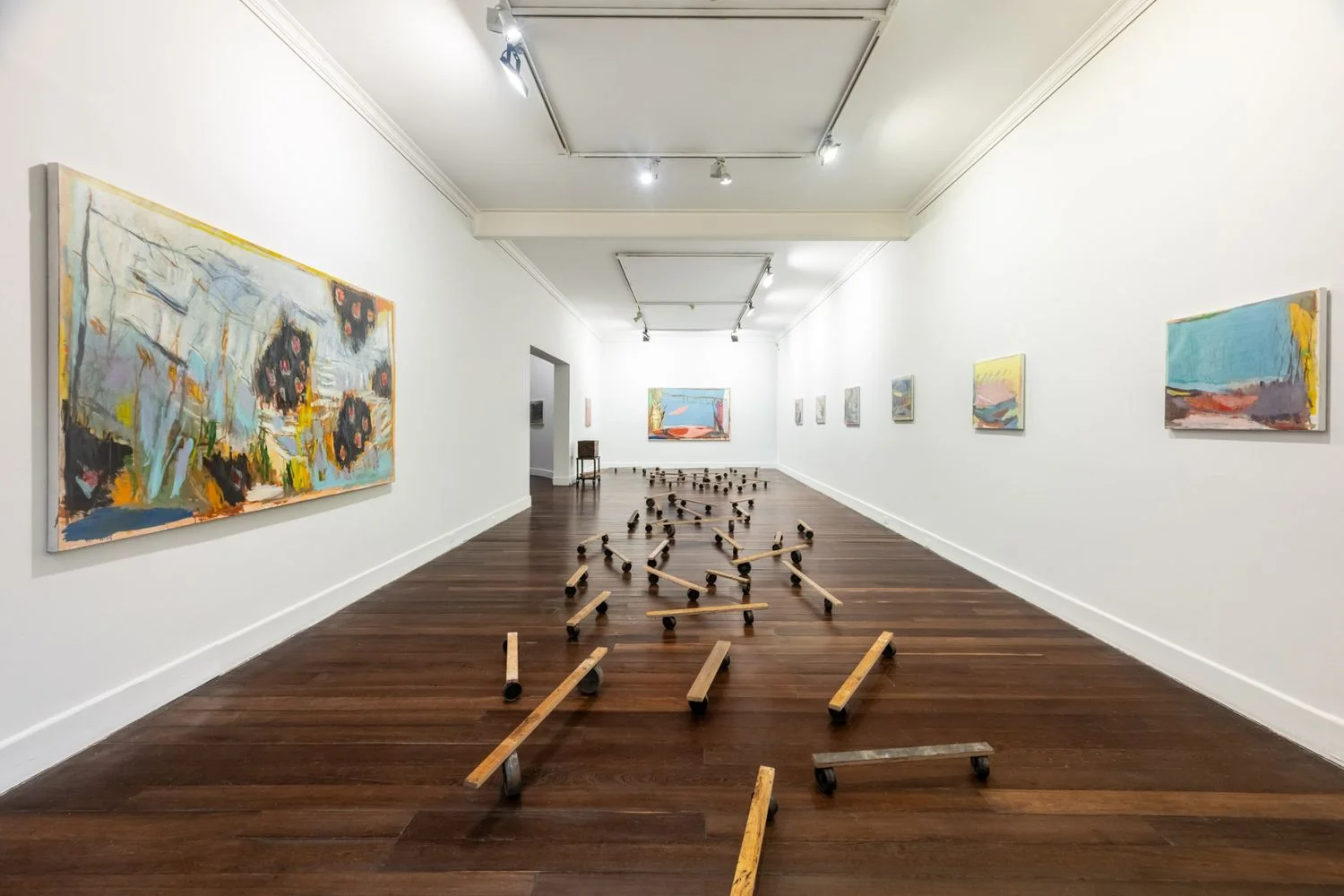
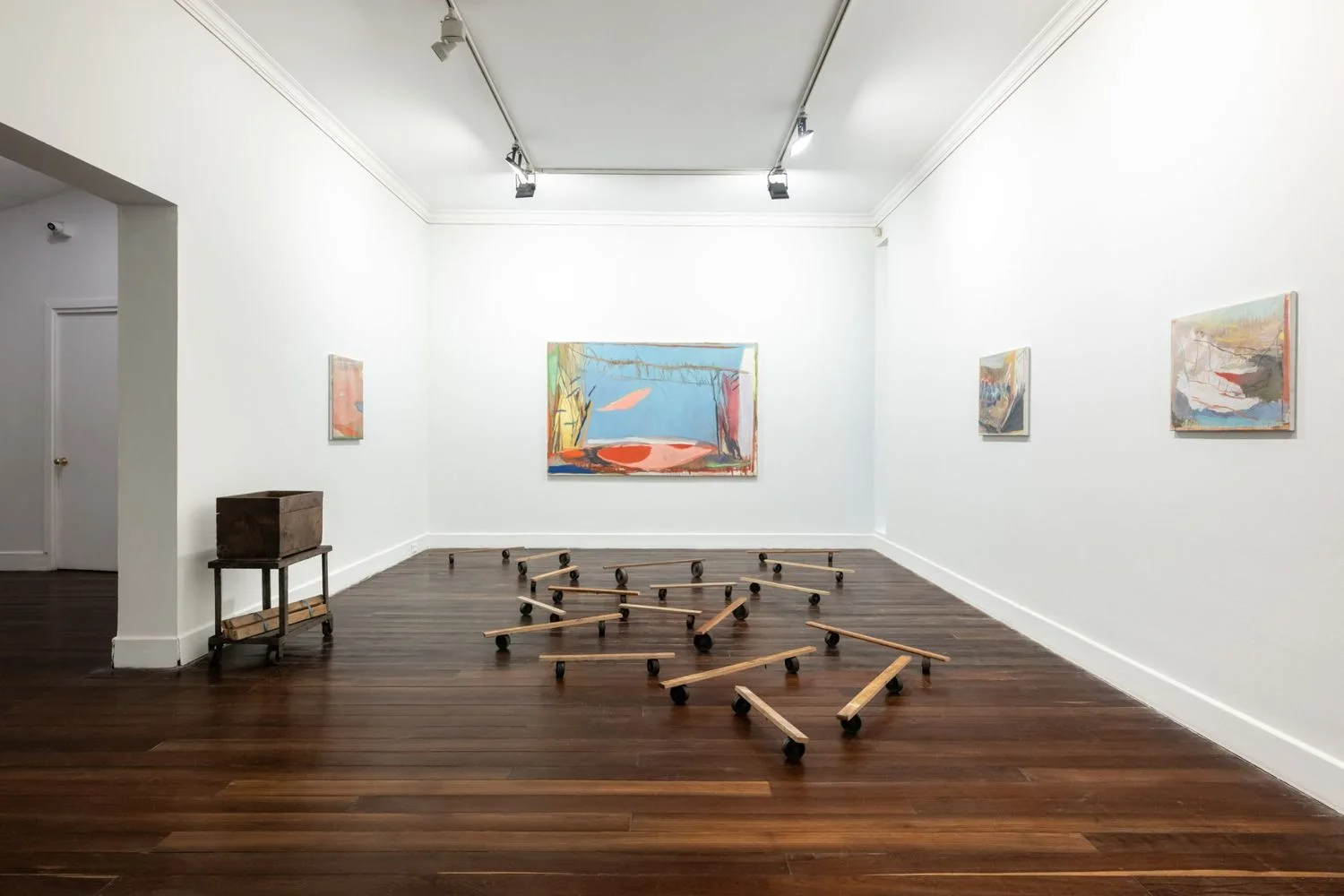
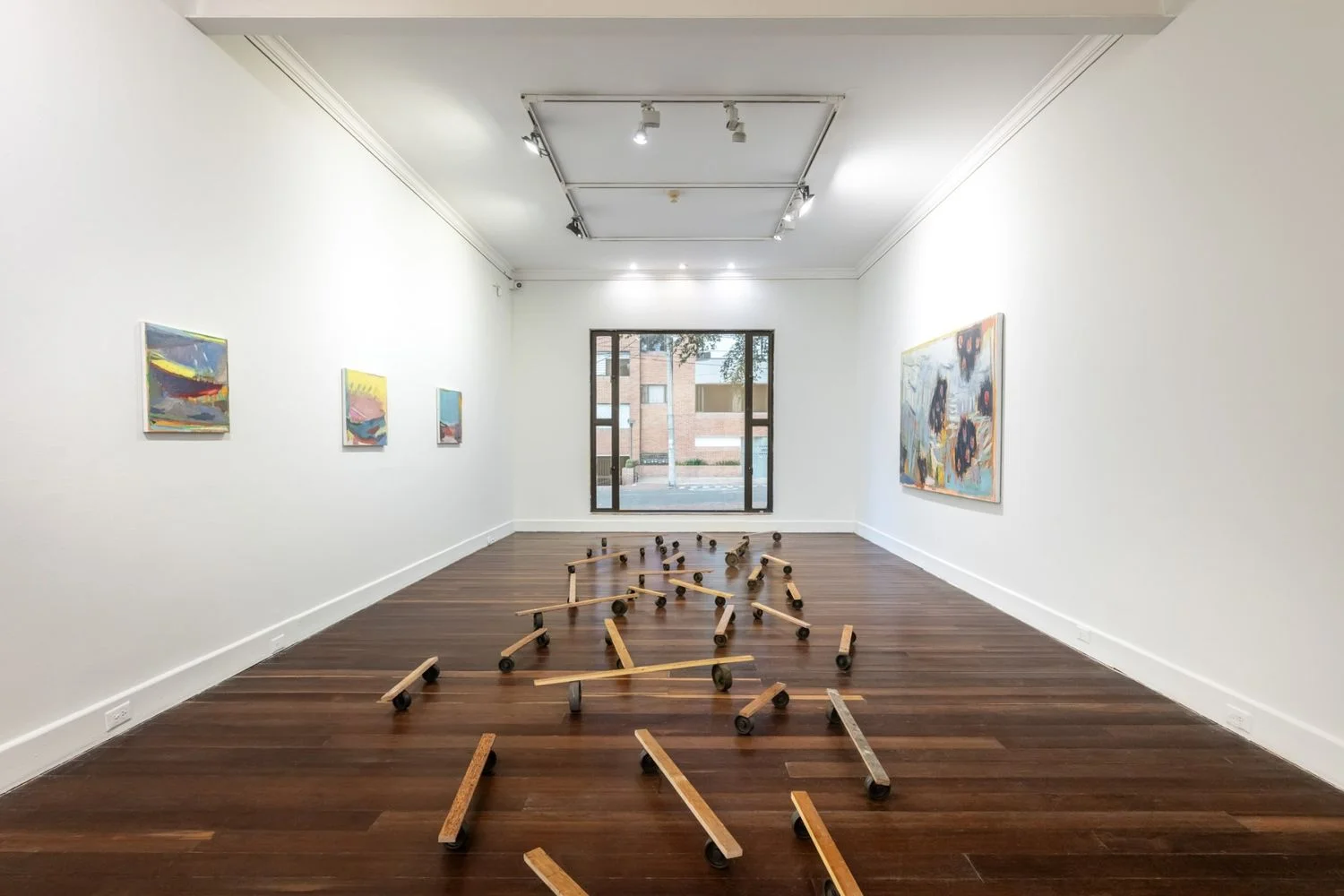
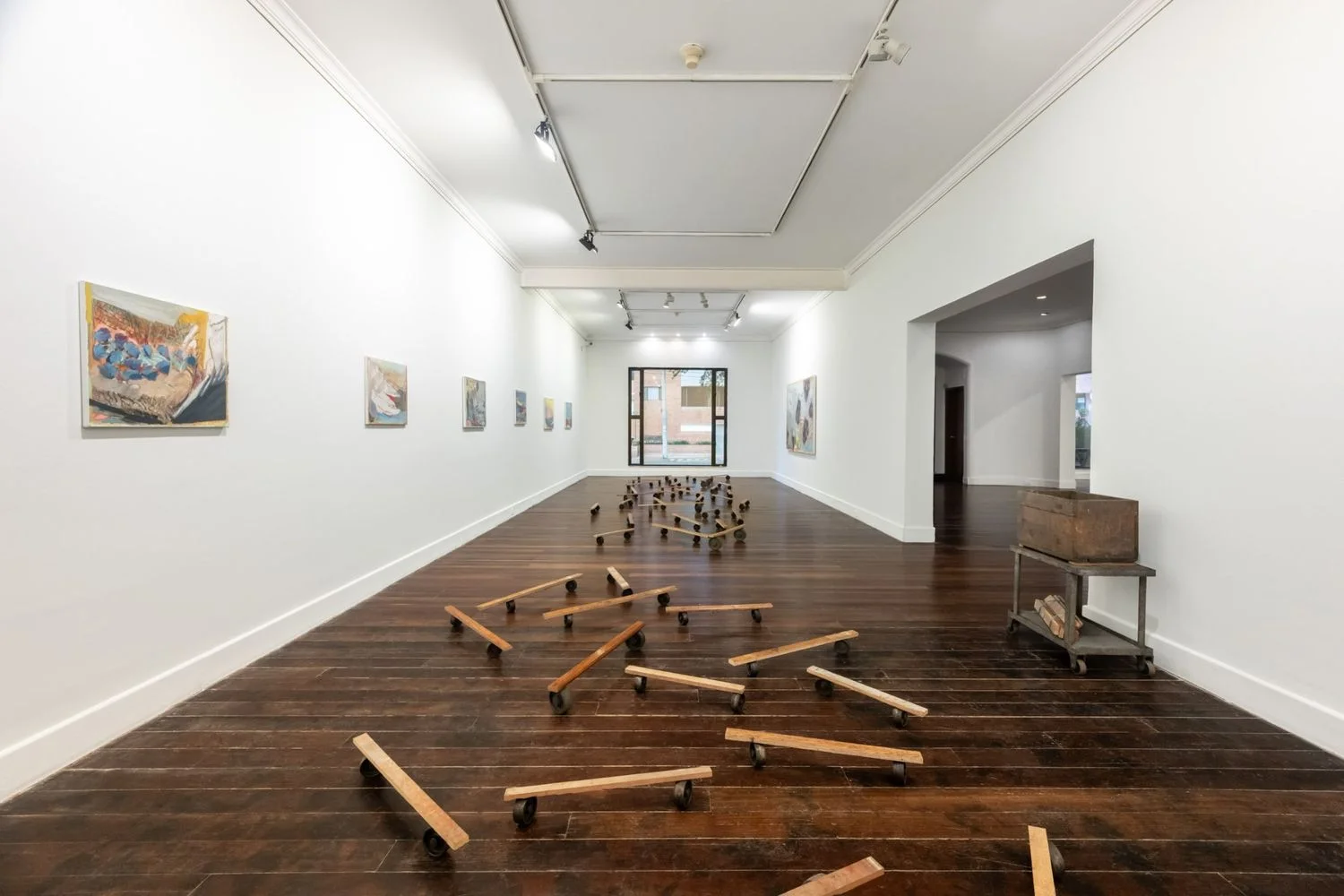
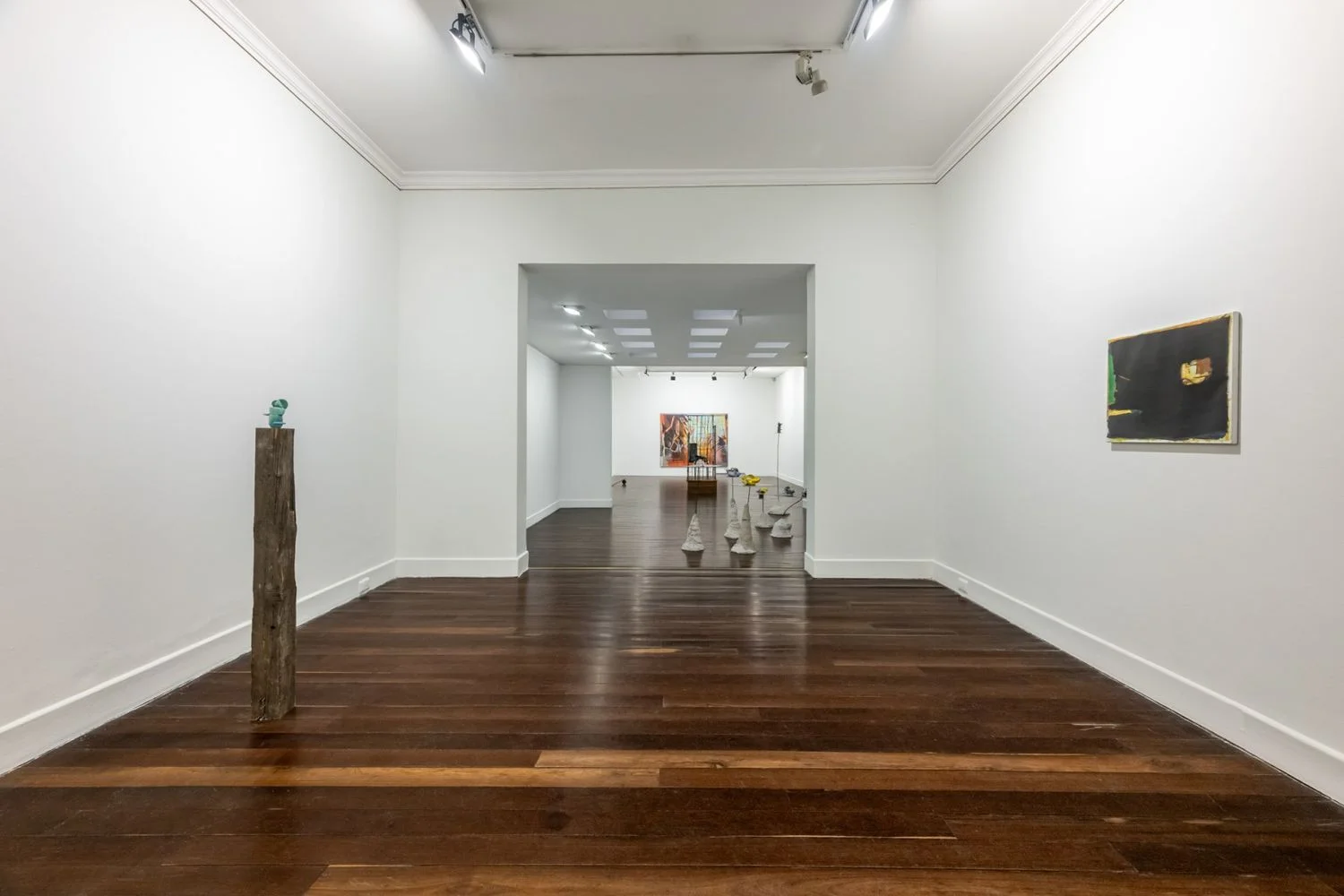
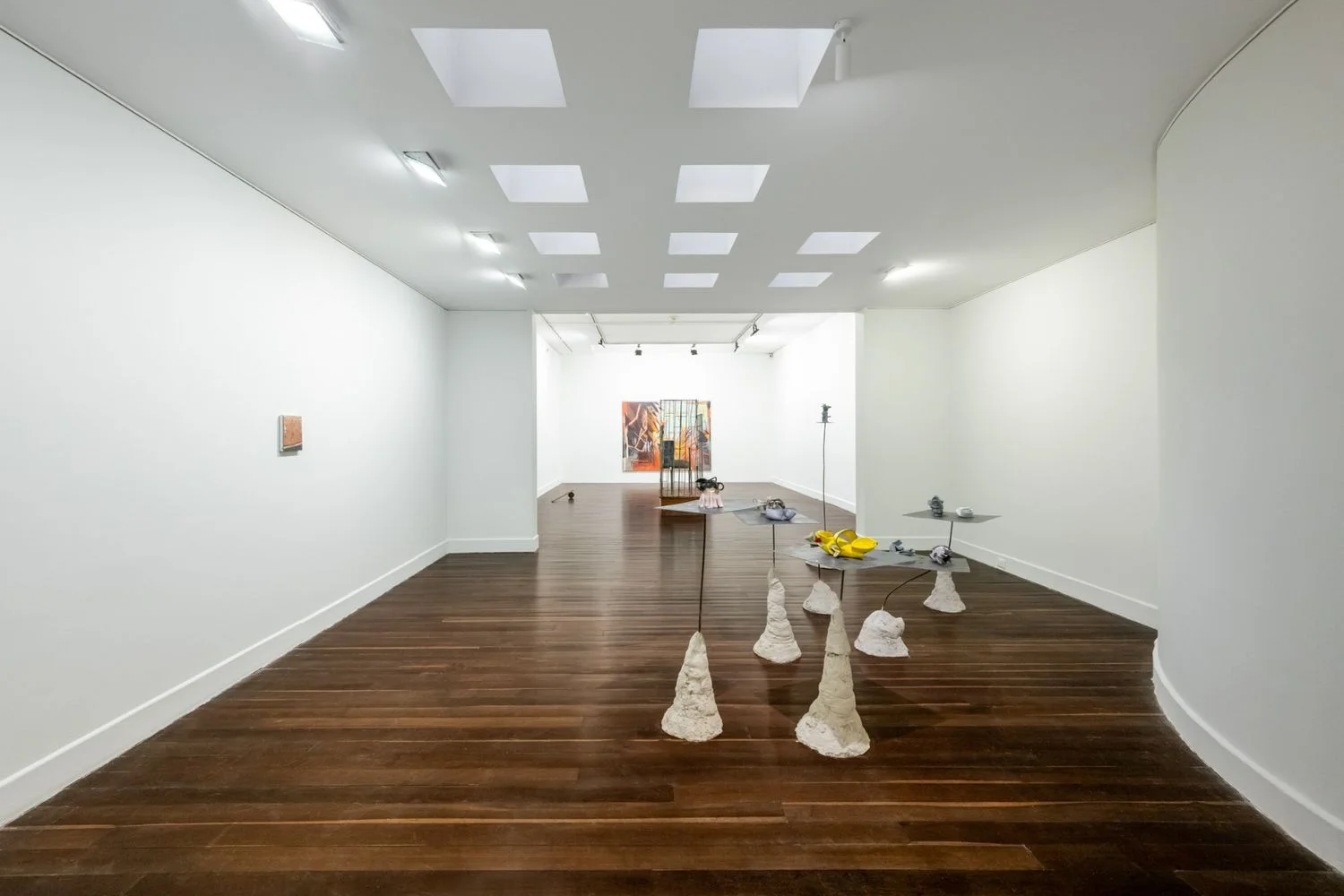
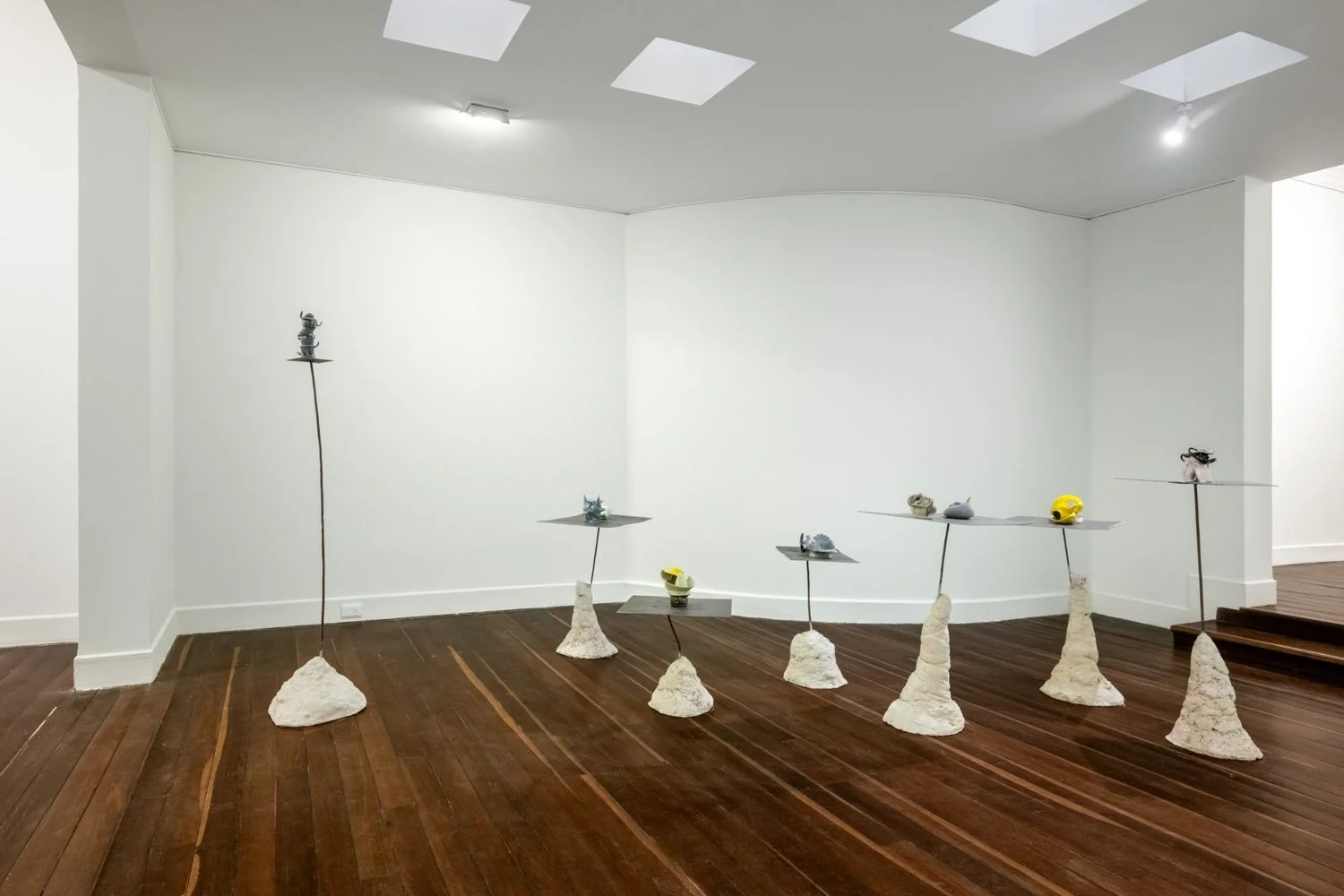
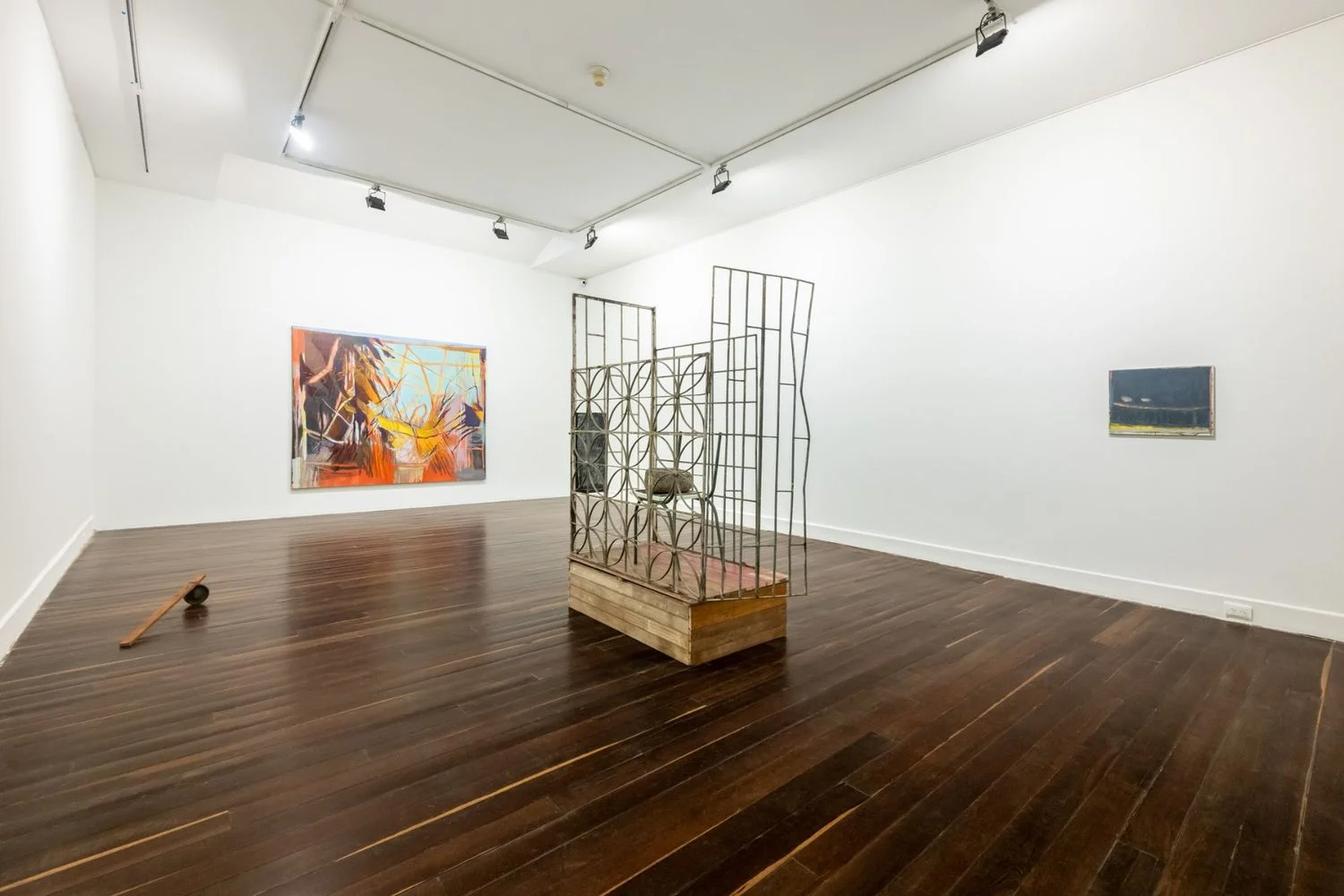
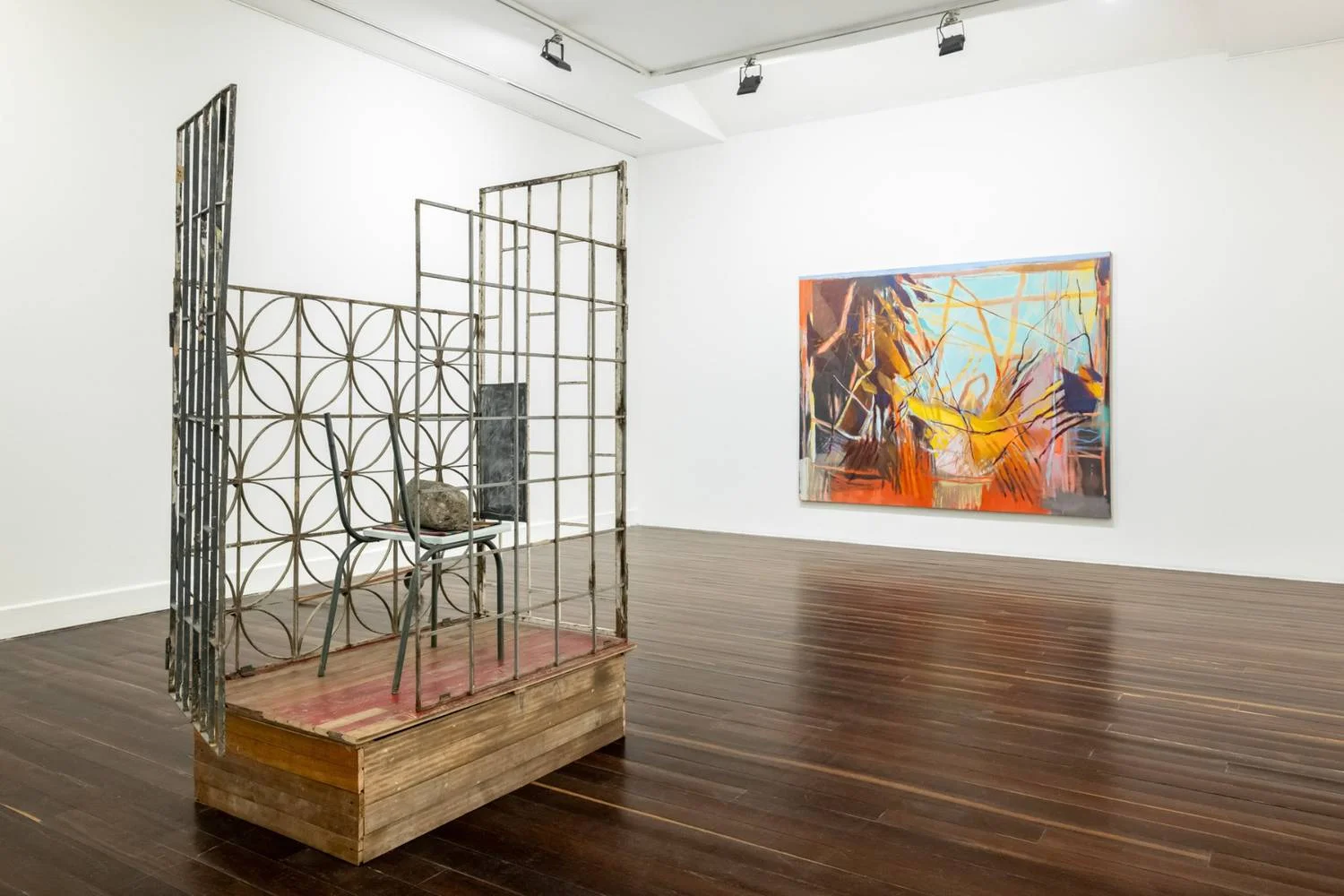
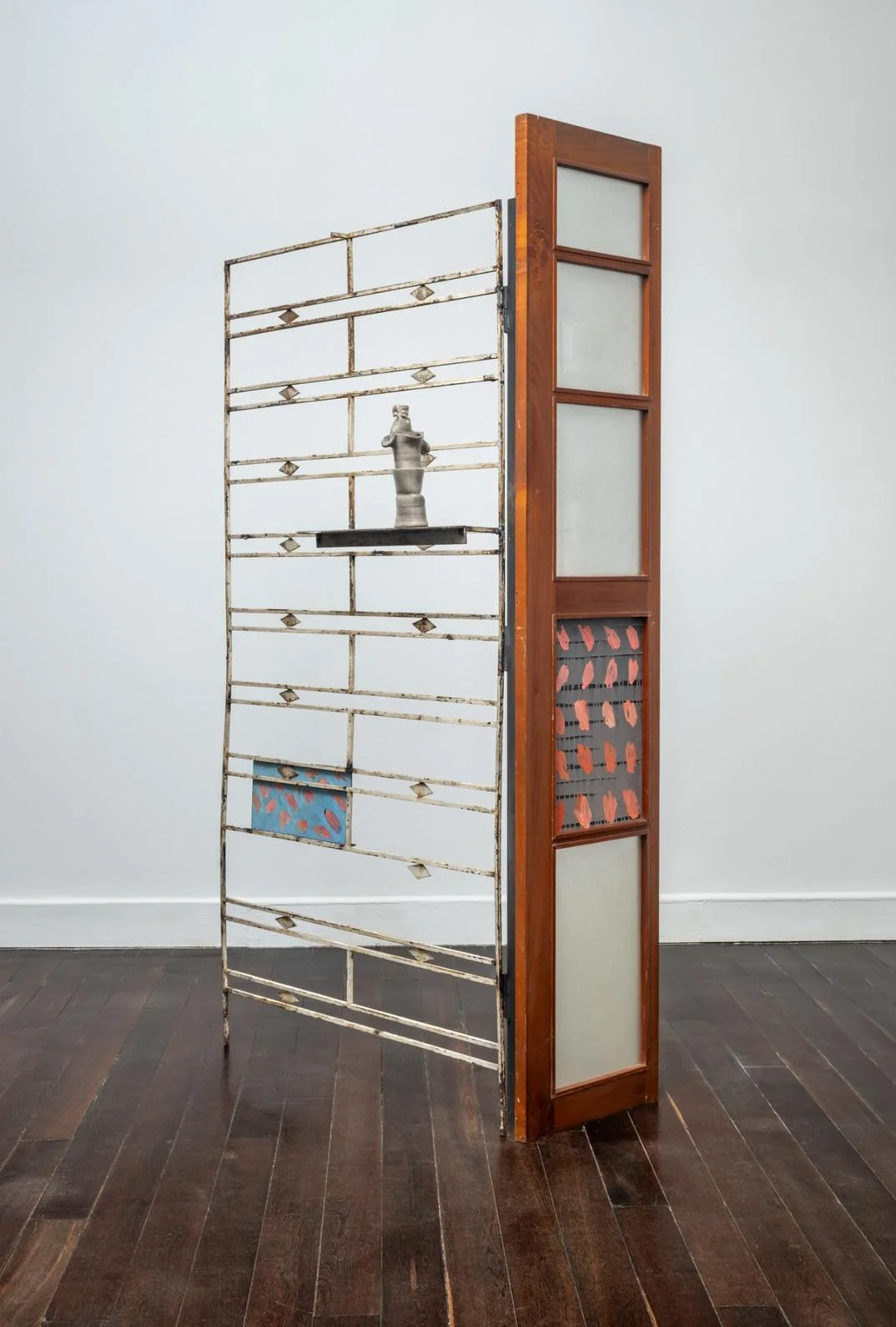
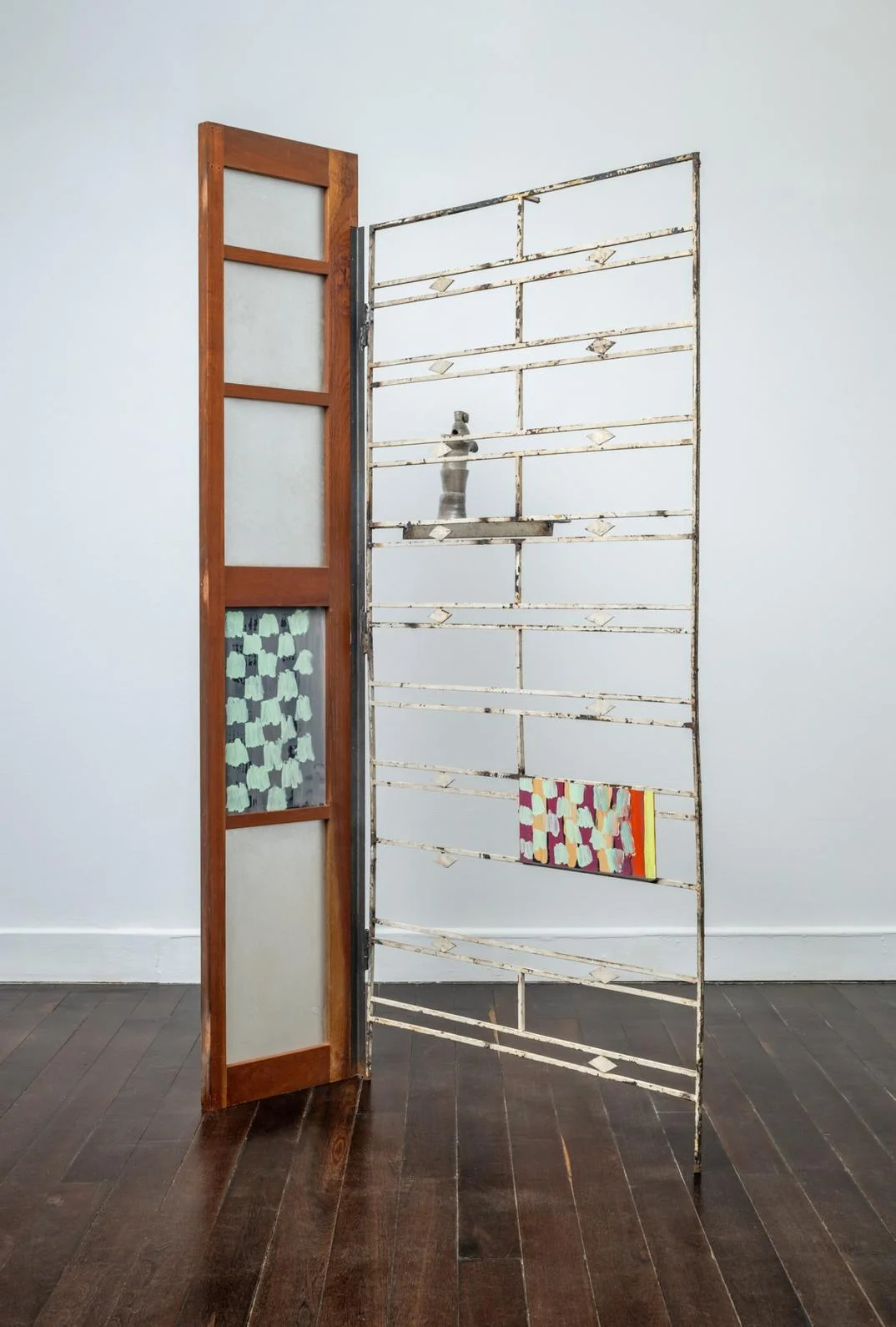
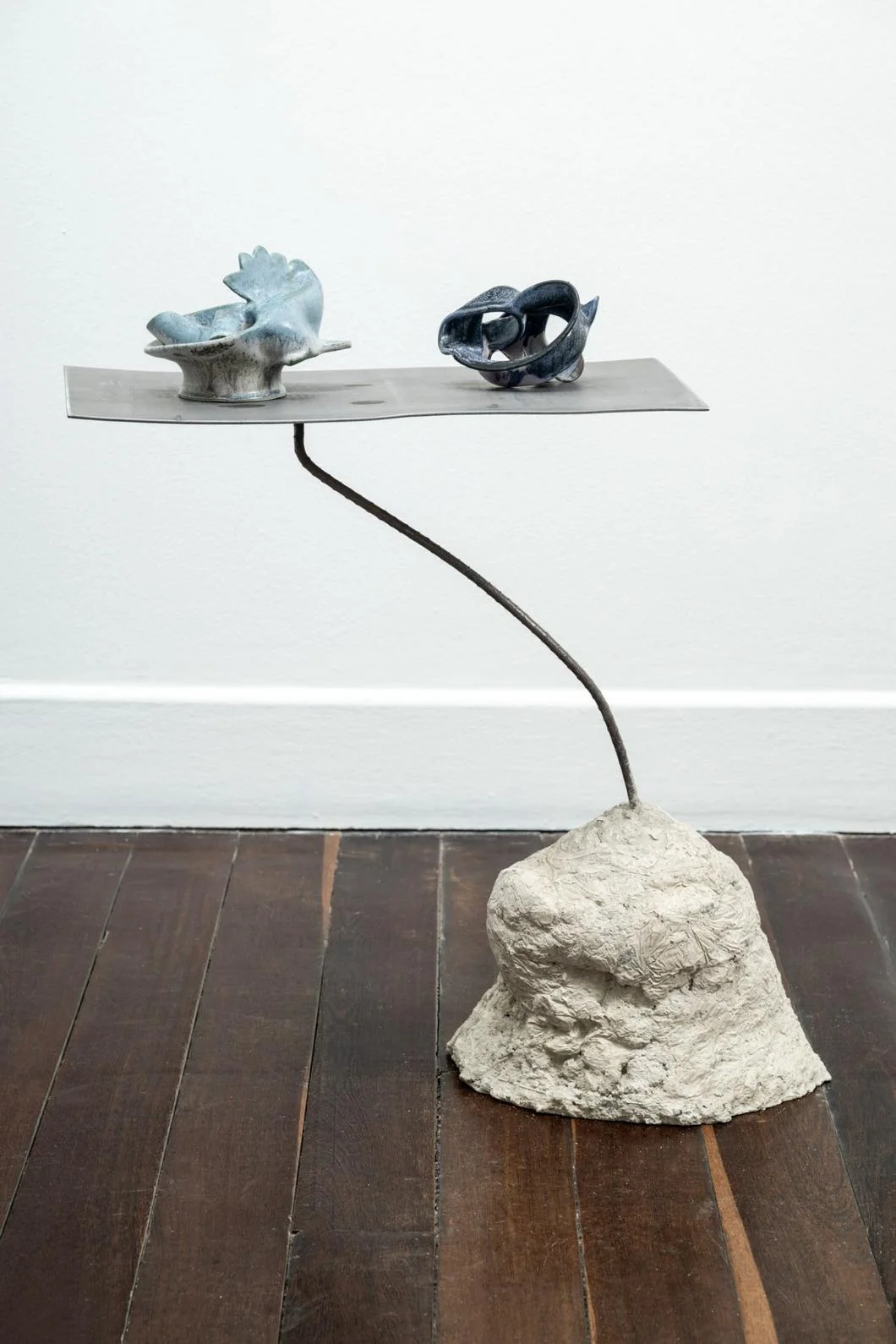
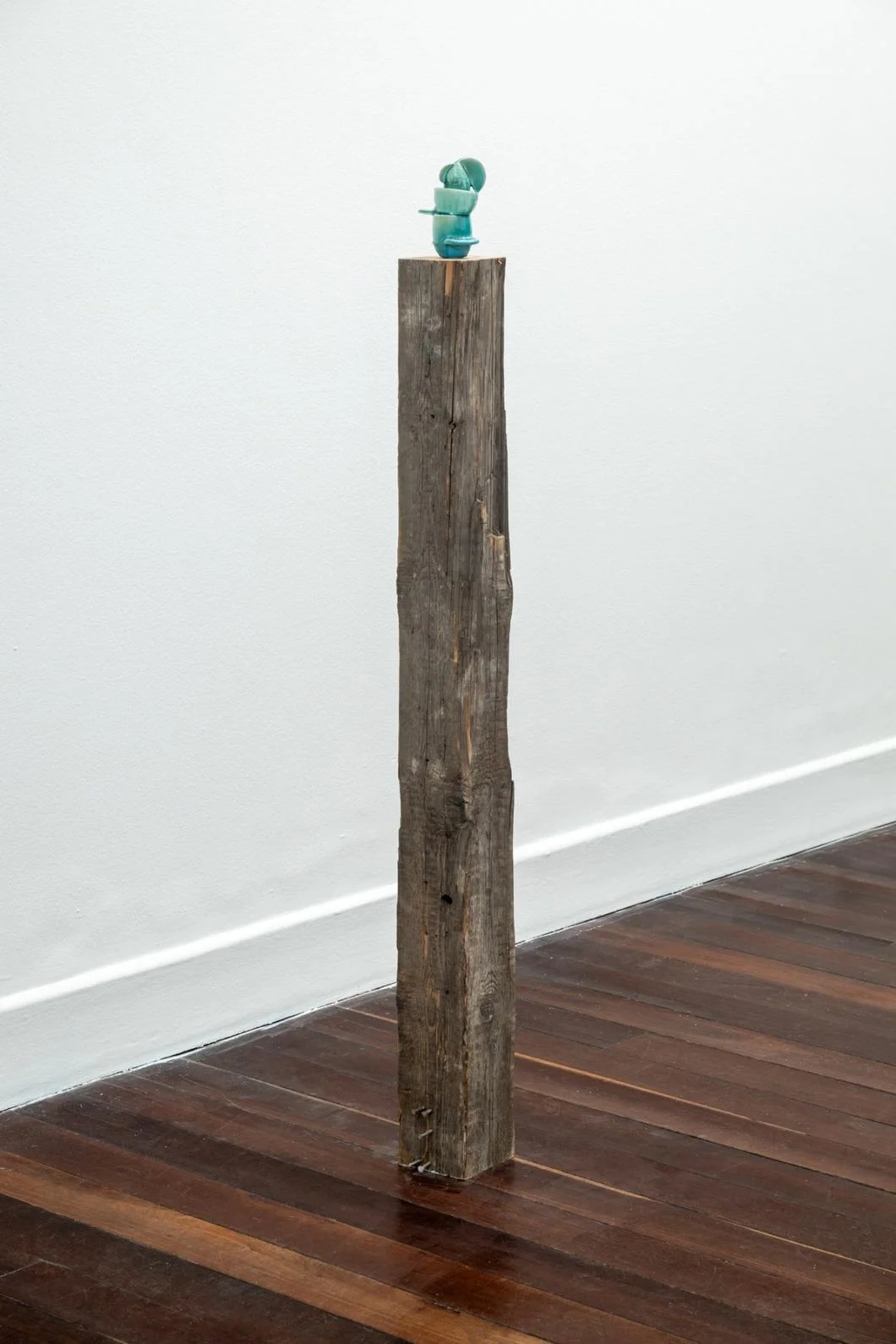
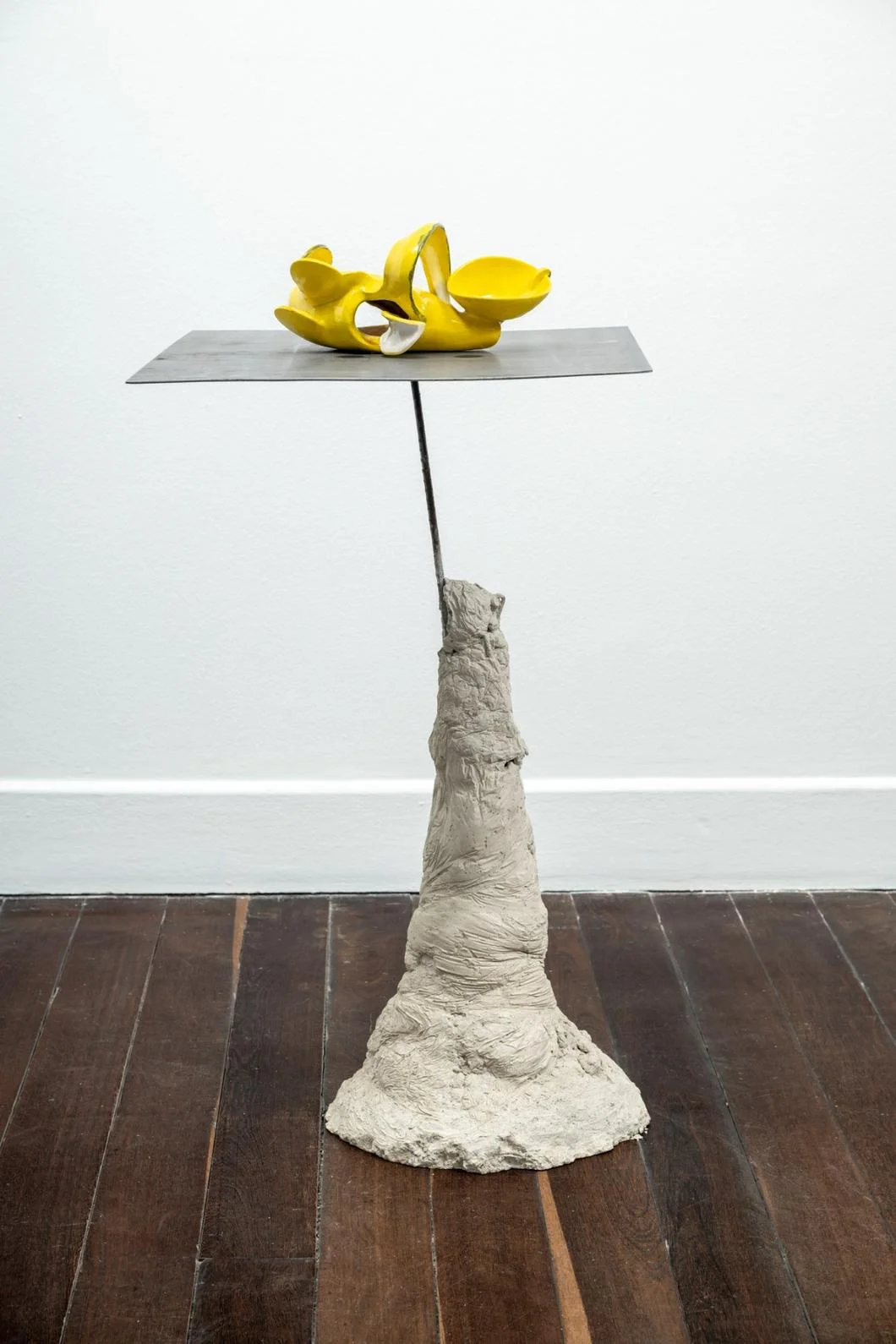
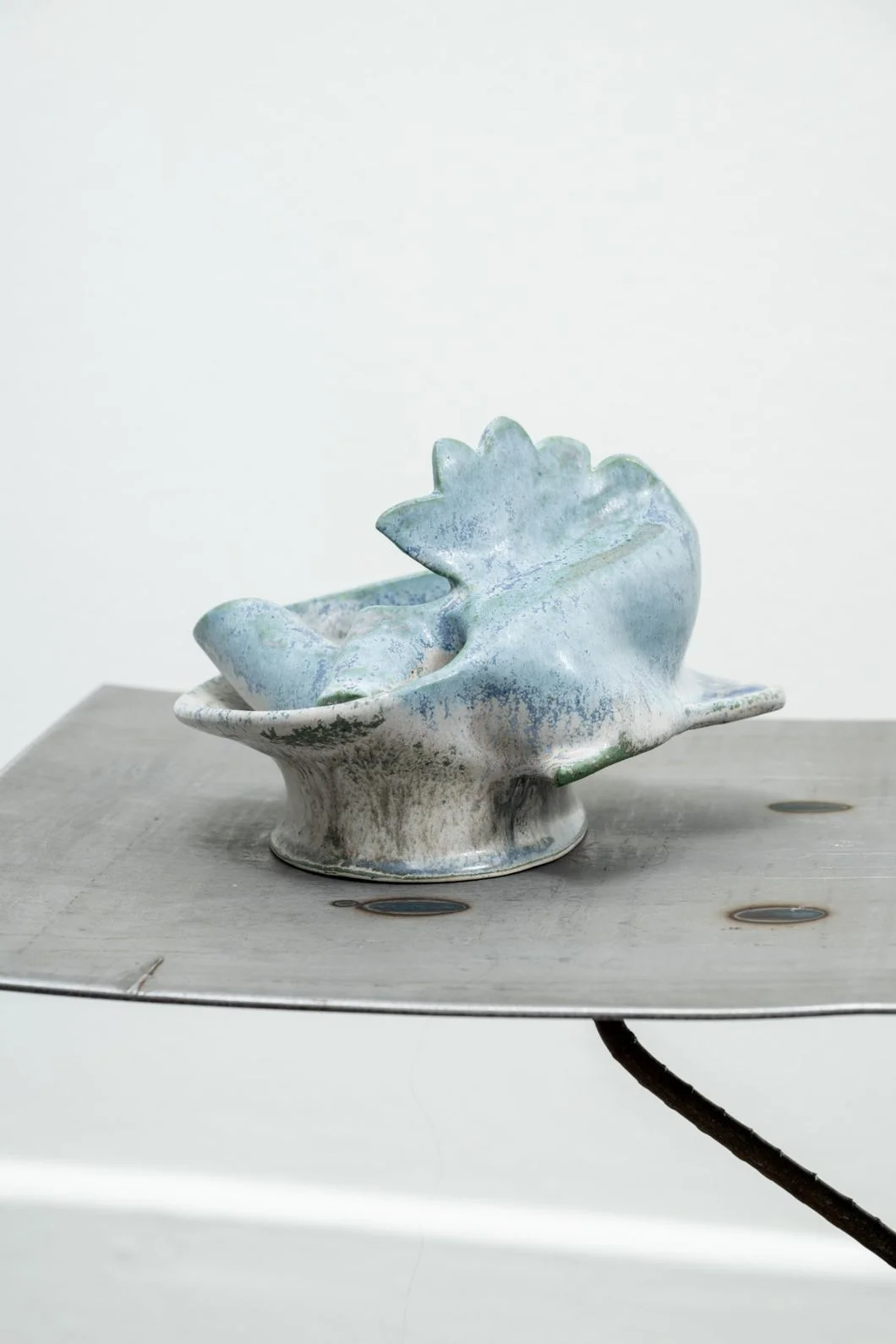
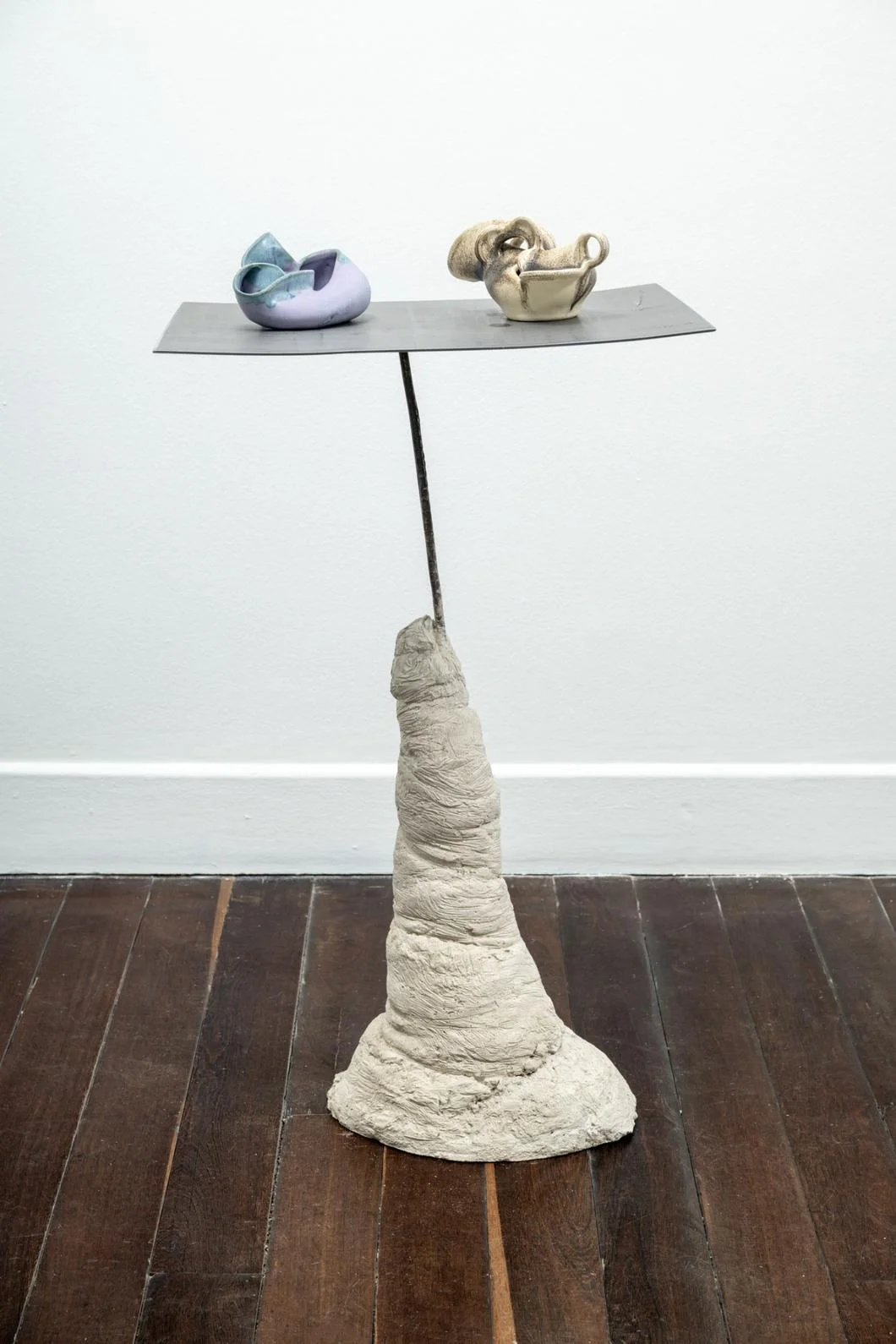
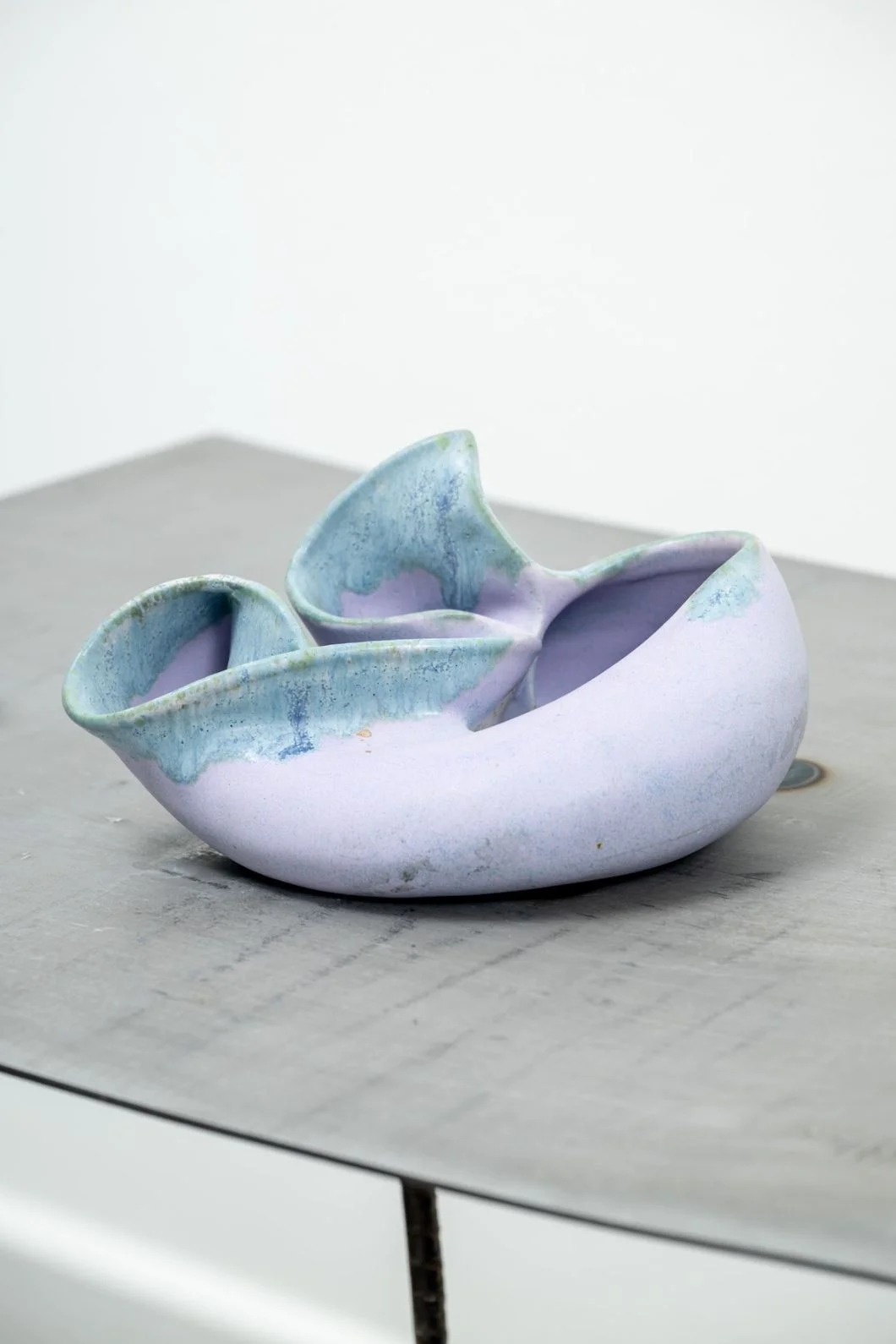
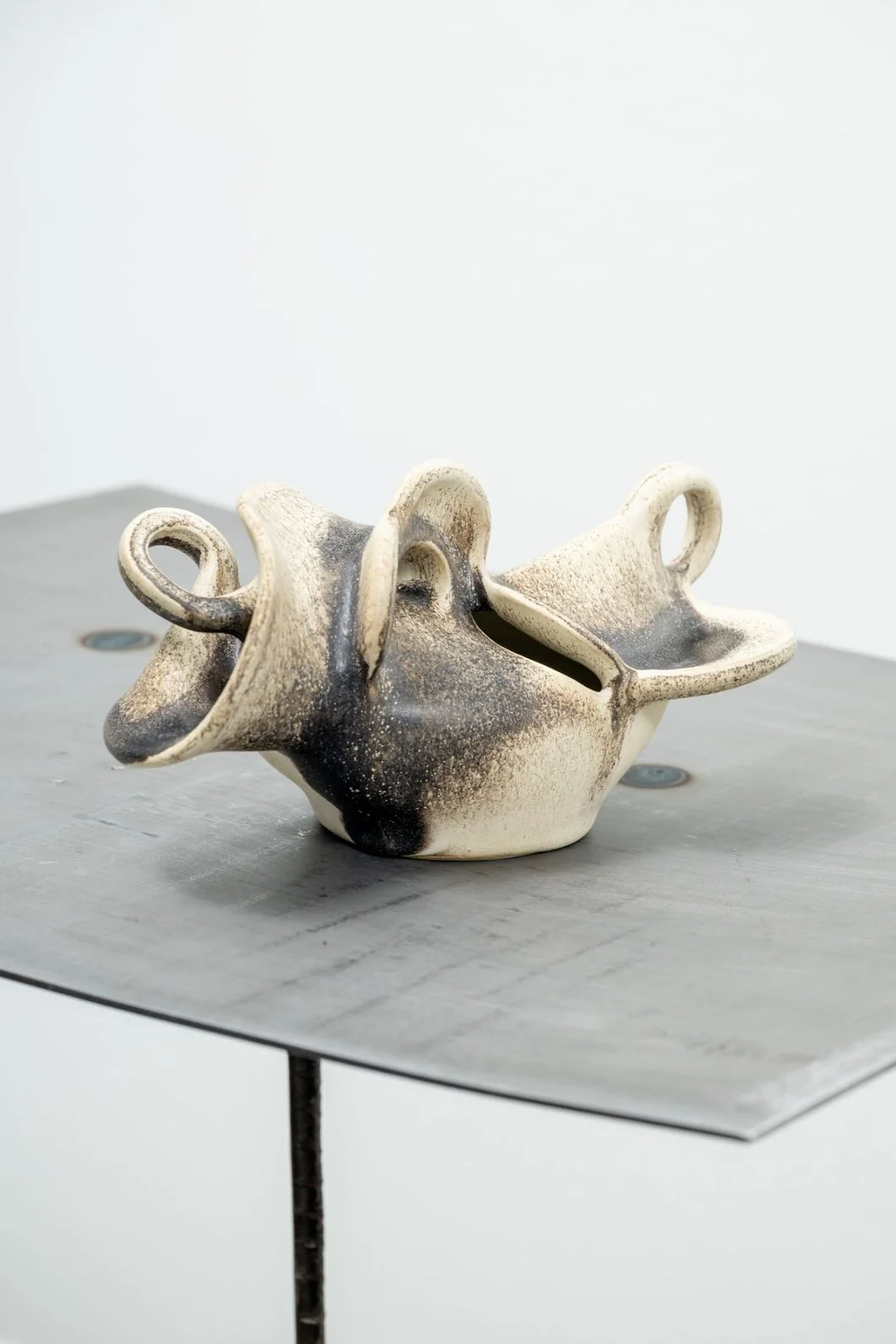
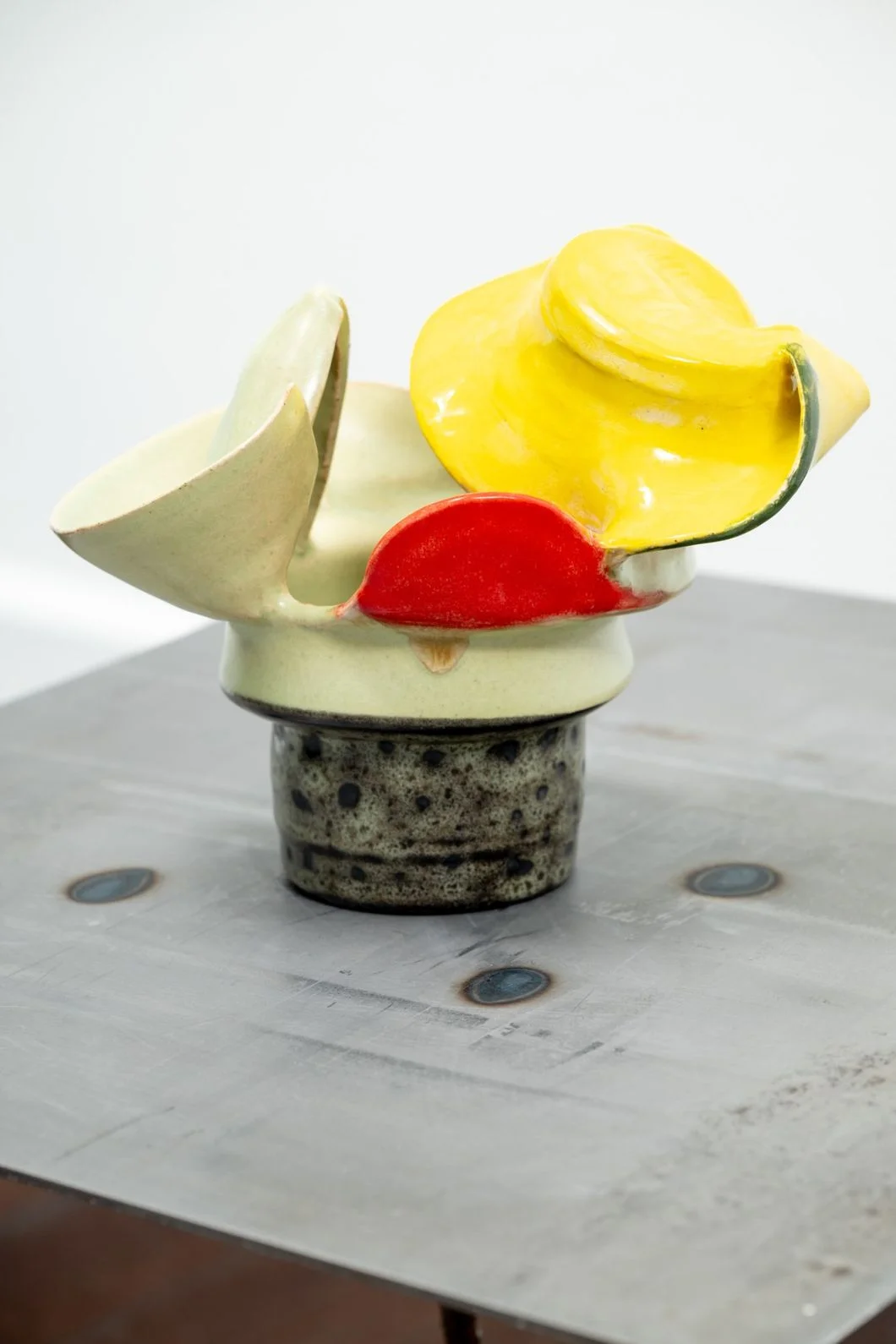
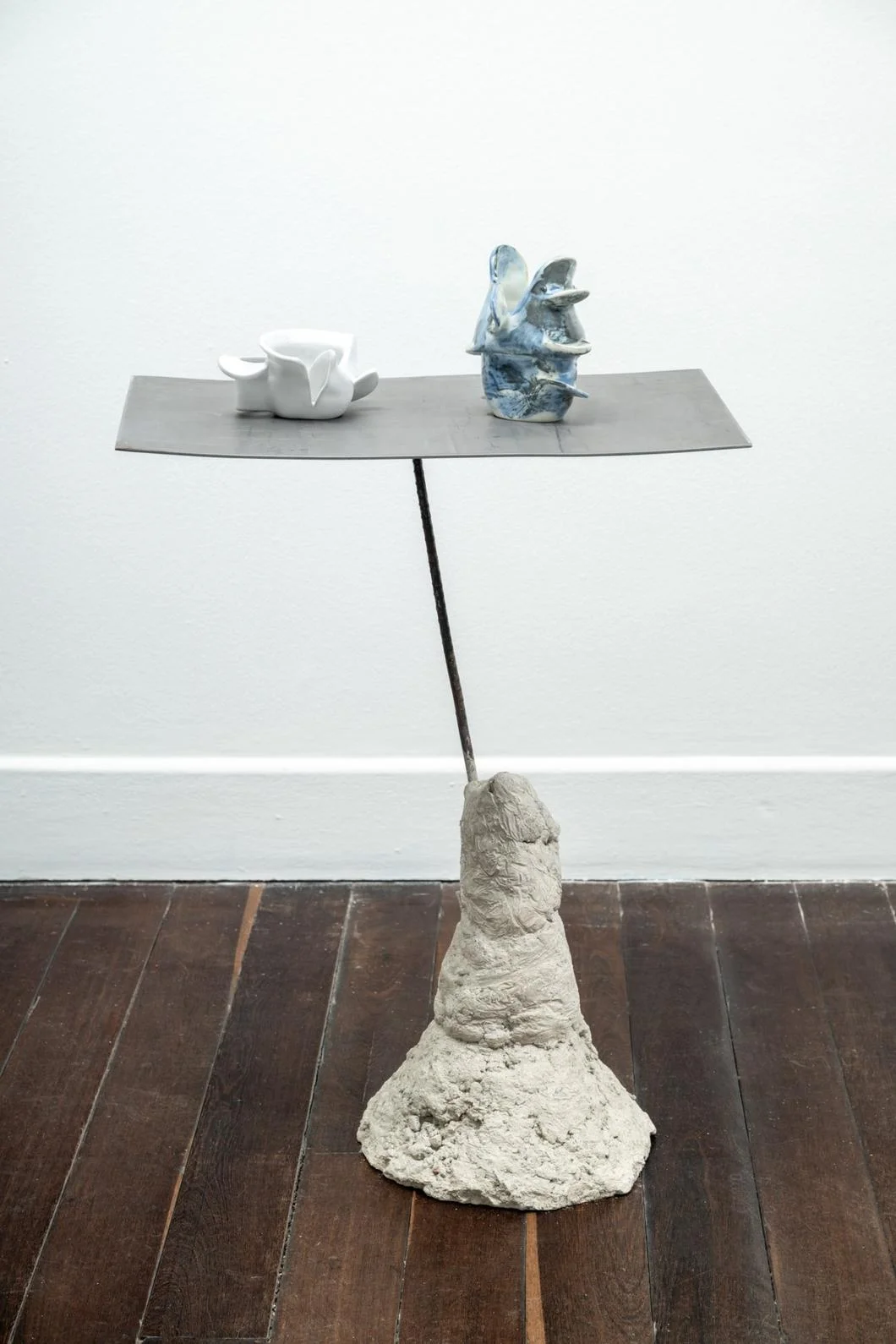
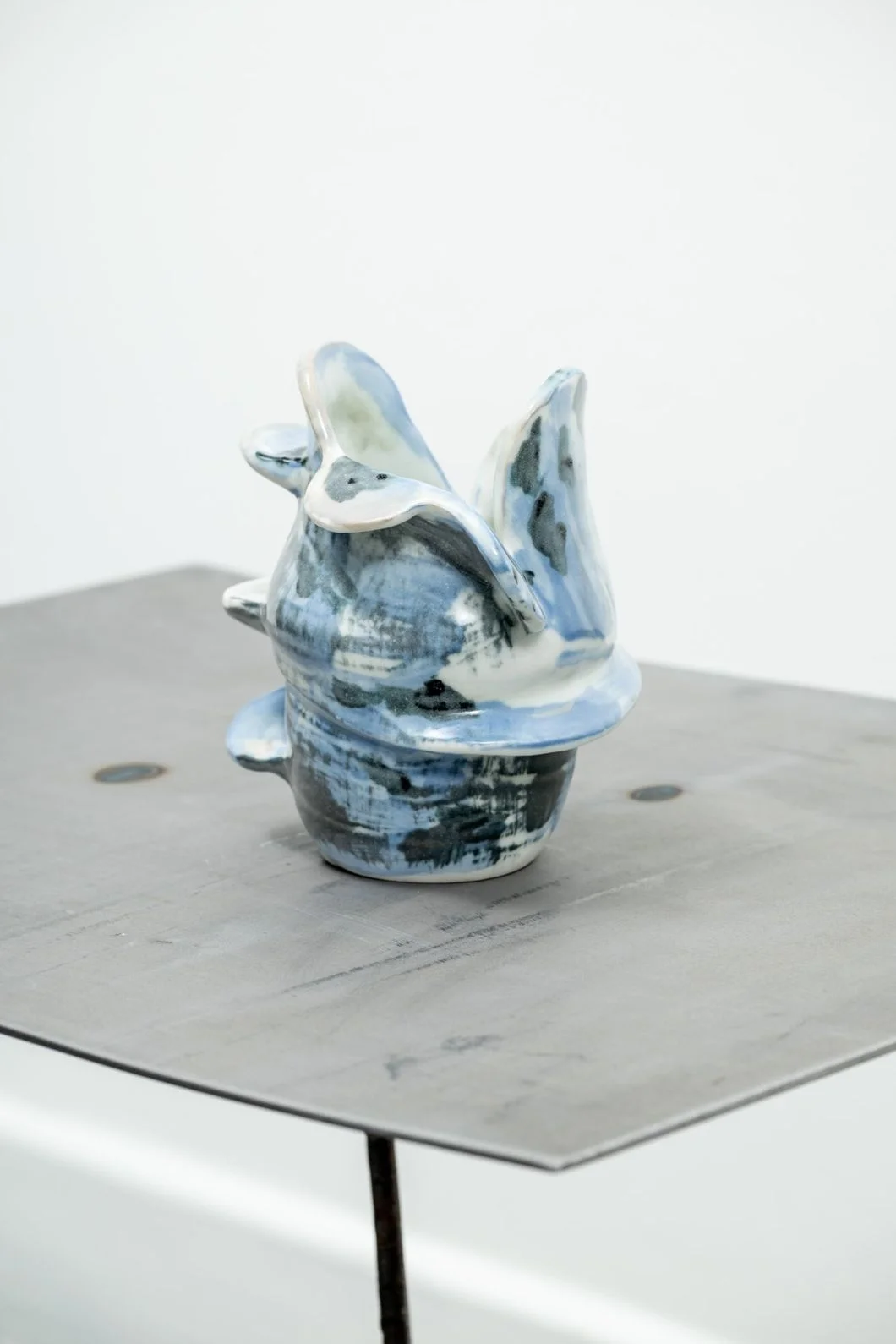
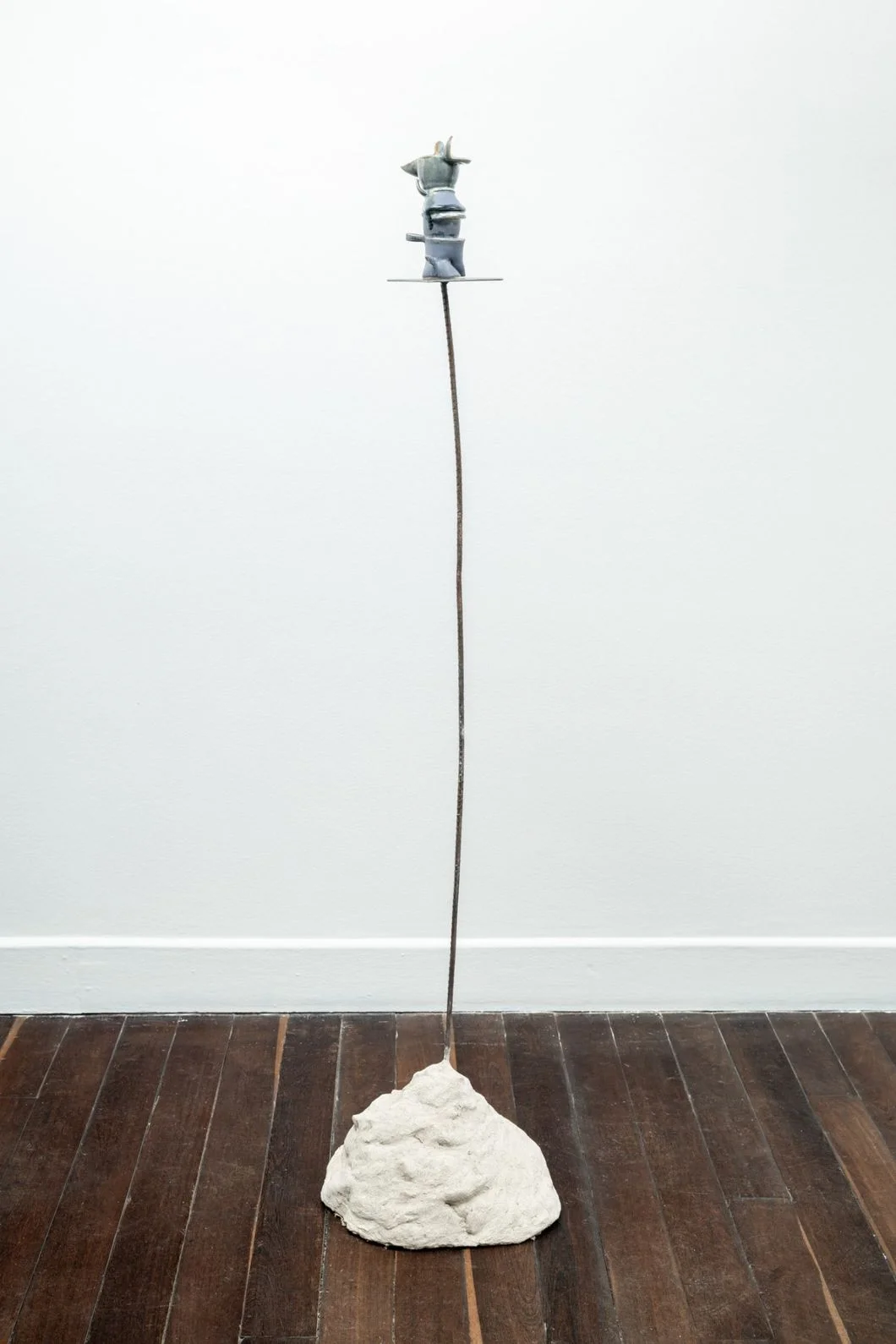
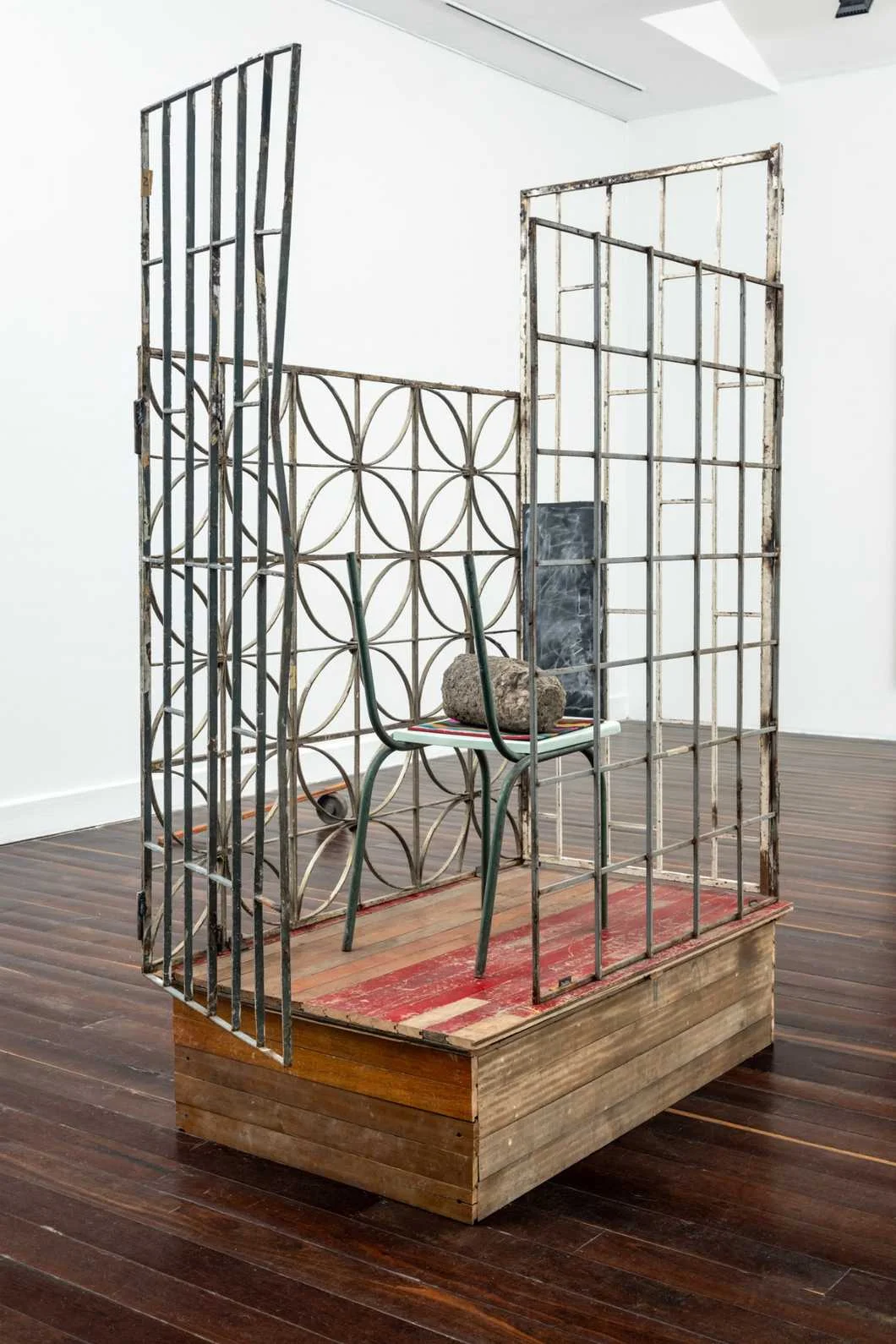
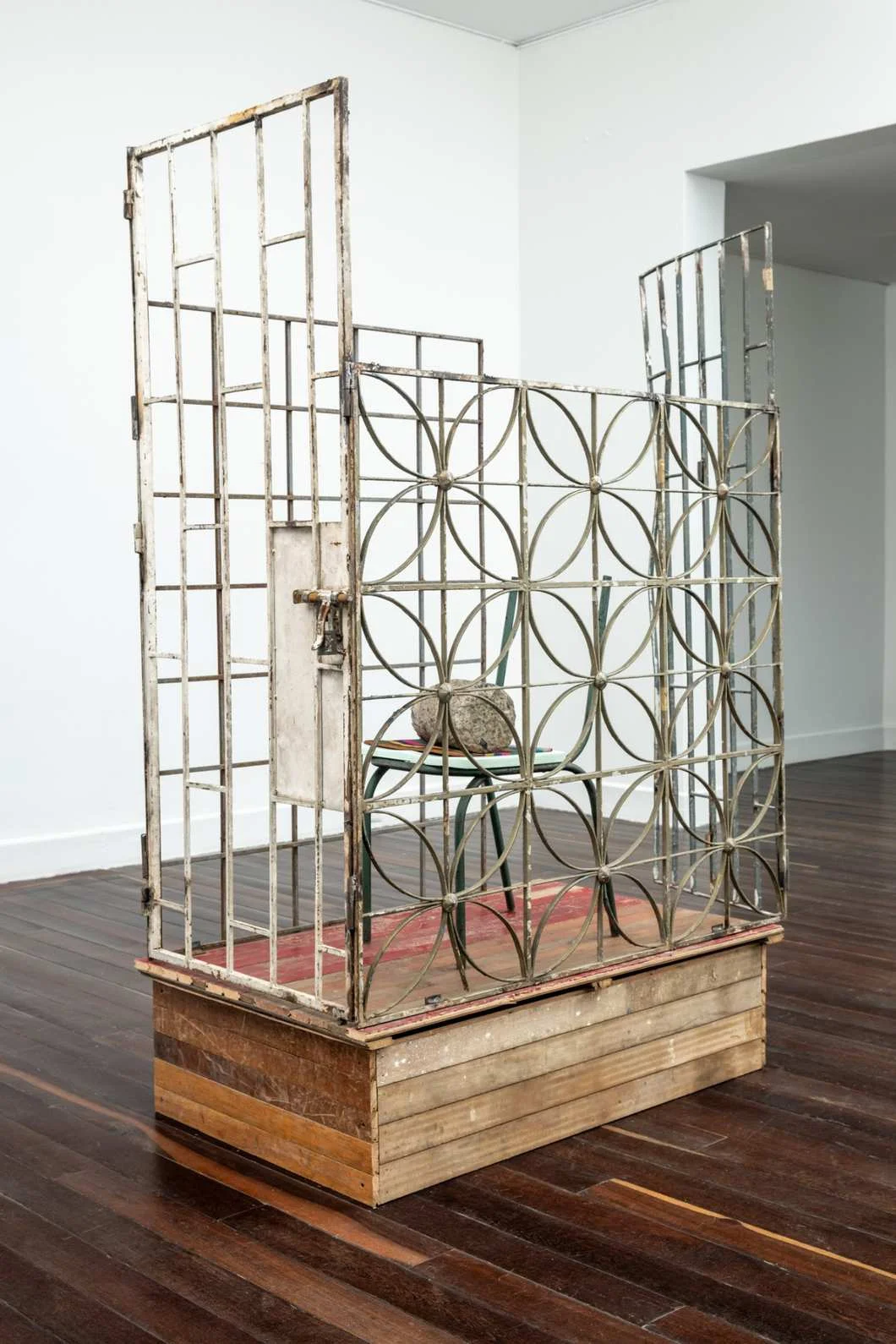
That is why, as visitors will discover in Plots, his work is pure and unadulterated simulacrum, sustained not only by the physical object but also by the delicate choreography of the exhibition space—that’s his playing field, and there he’s the home team. Thus, with just a chair and some metal bars picked up off the streets of Bogotá (Intriga, 2025), or with metal wheels and scraps of wood (Sobresaltos, 2025), among other odds and ends, Roldán steers your gaze here and there, and along the way, he stops the ball, ties it up, then shifts the rhythm again to throw you off balance. Not even “el Pitufo de Ávila” in his best moments.
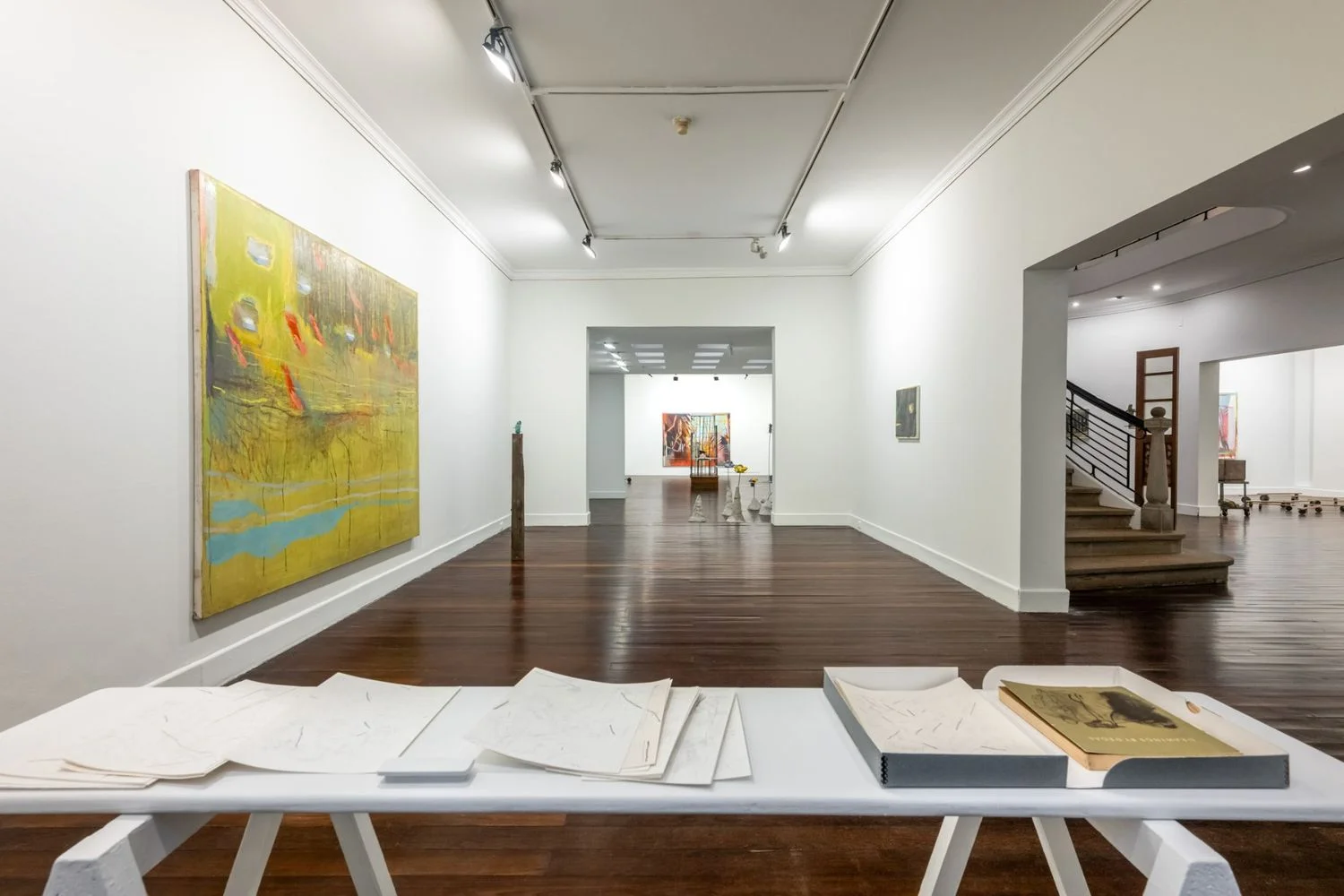
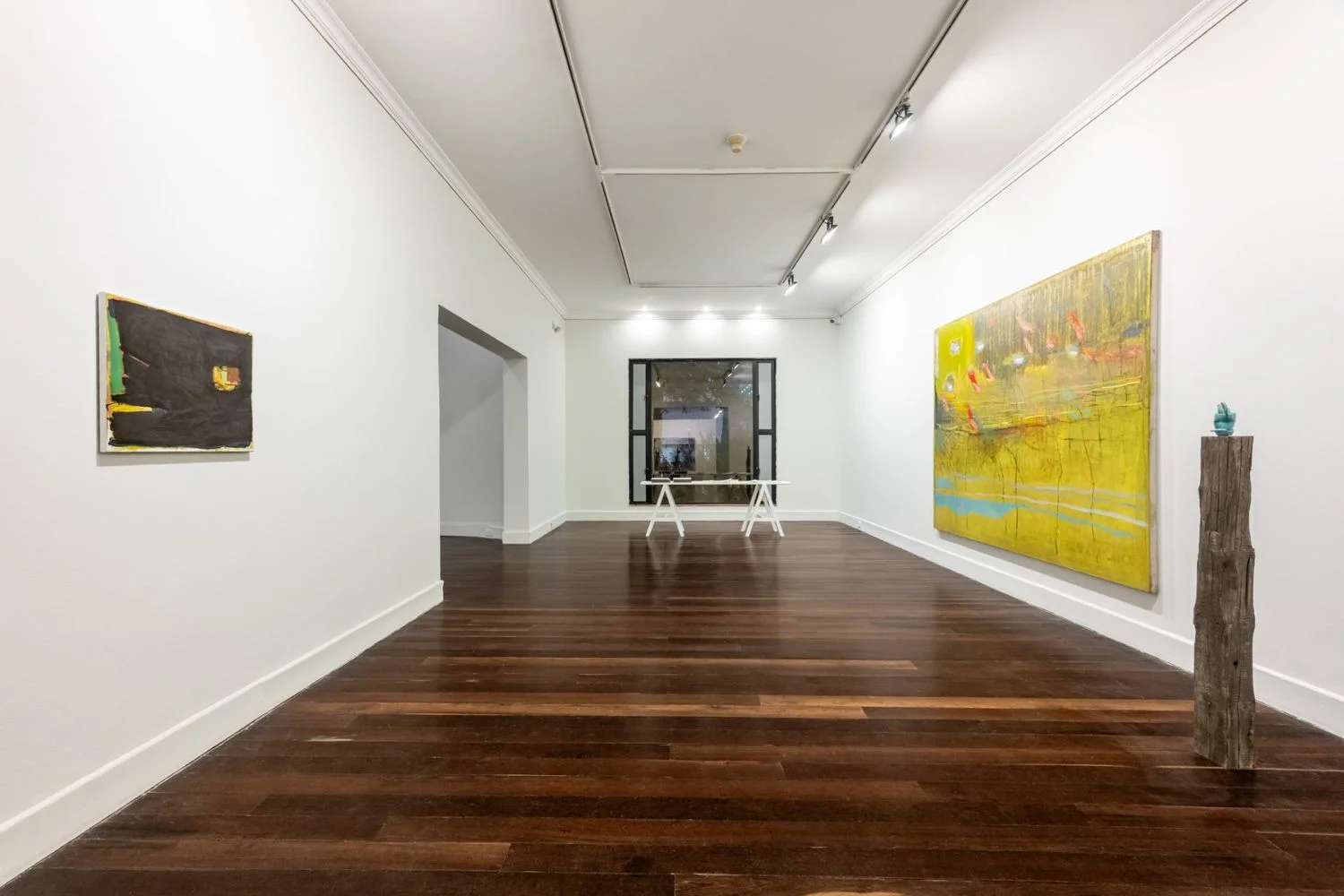
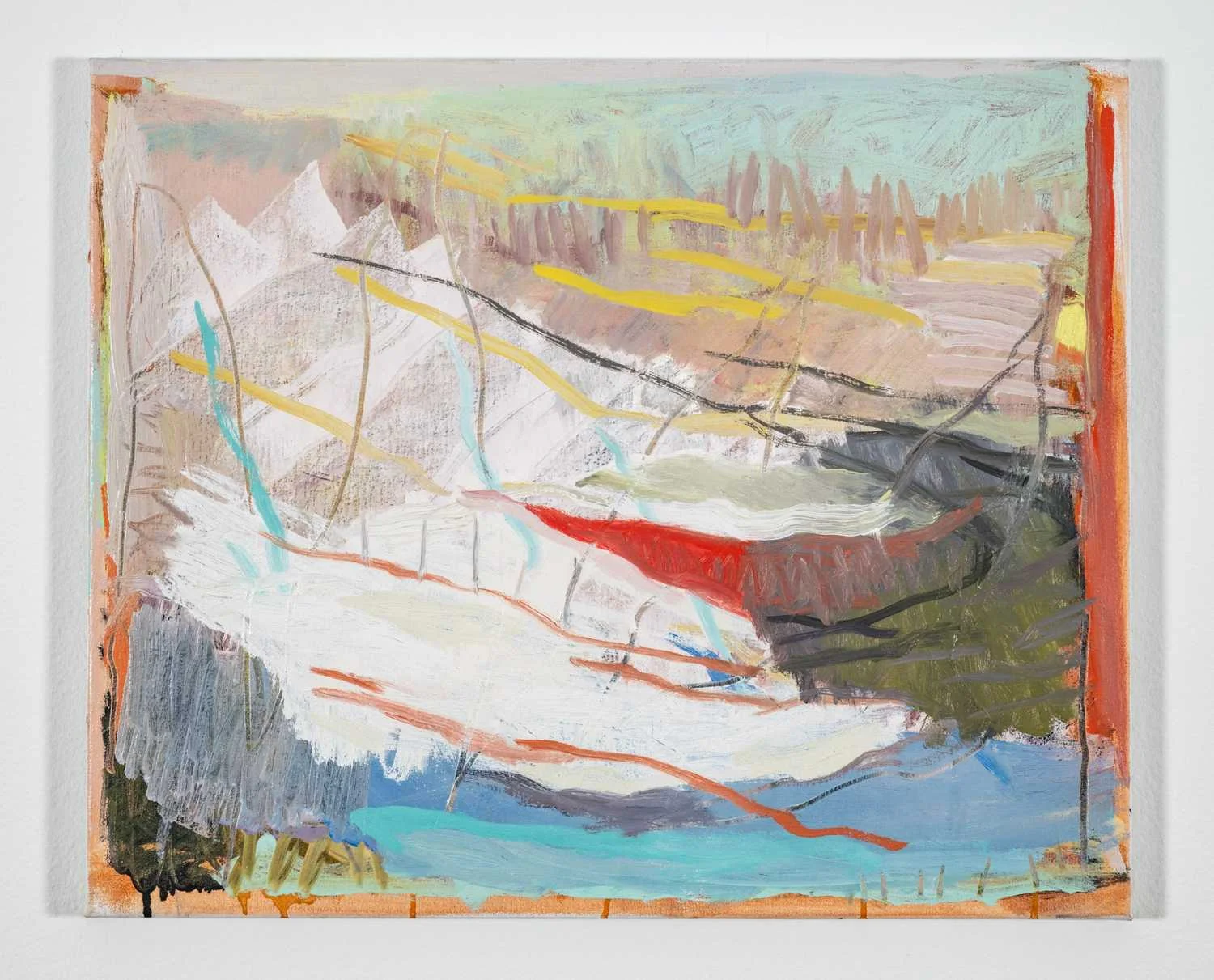
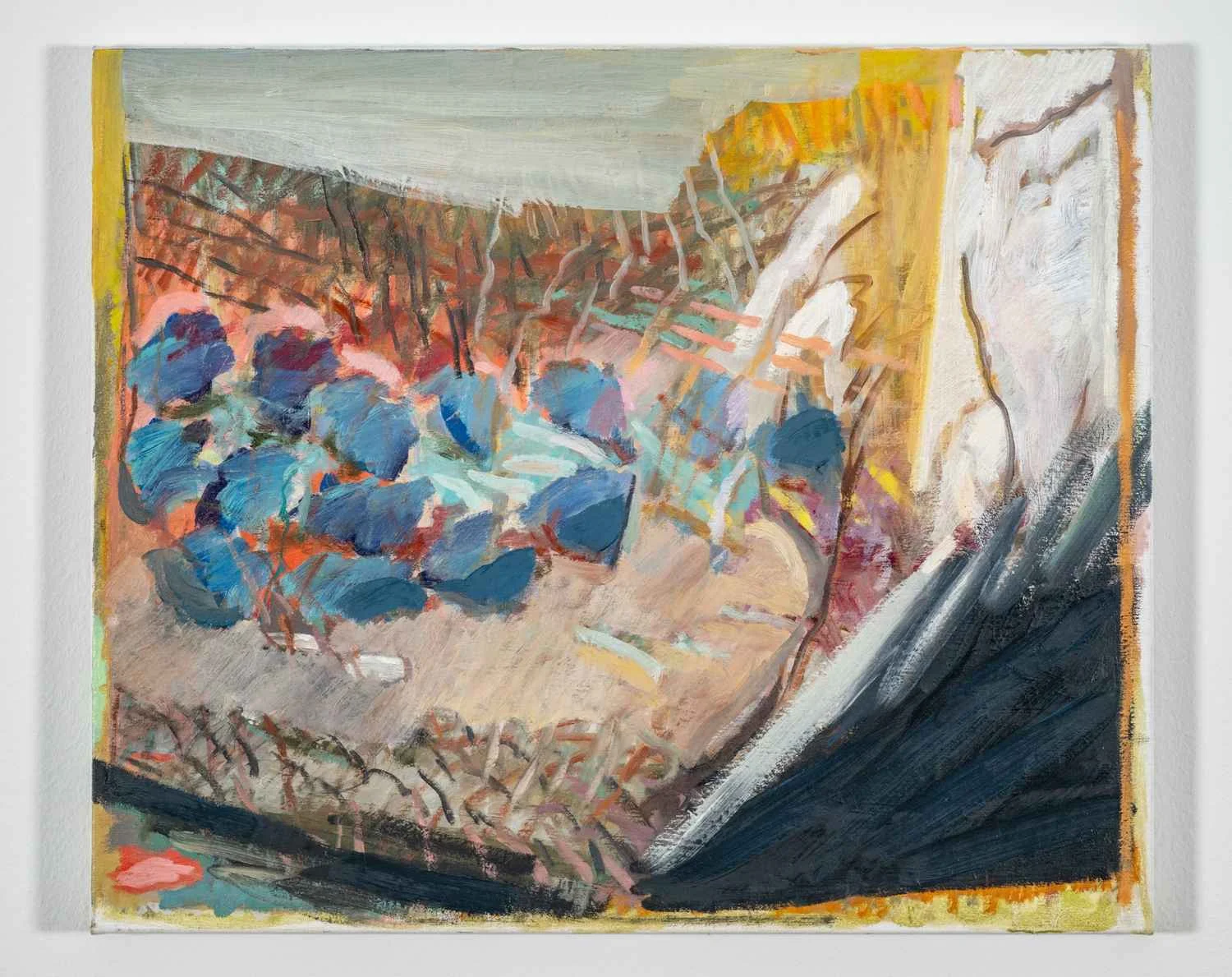
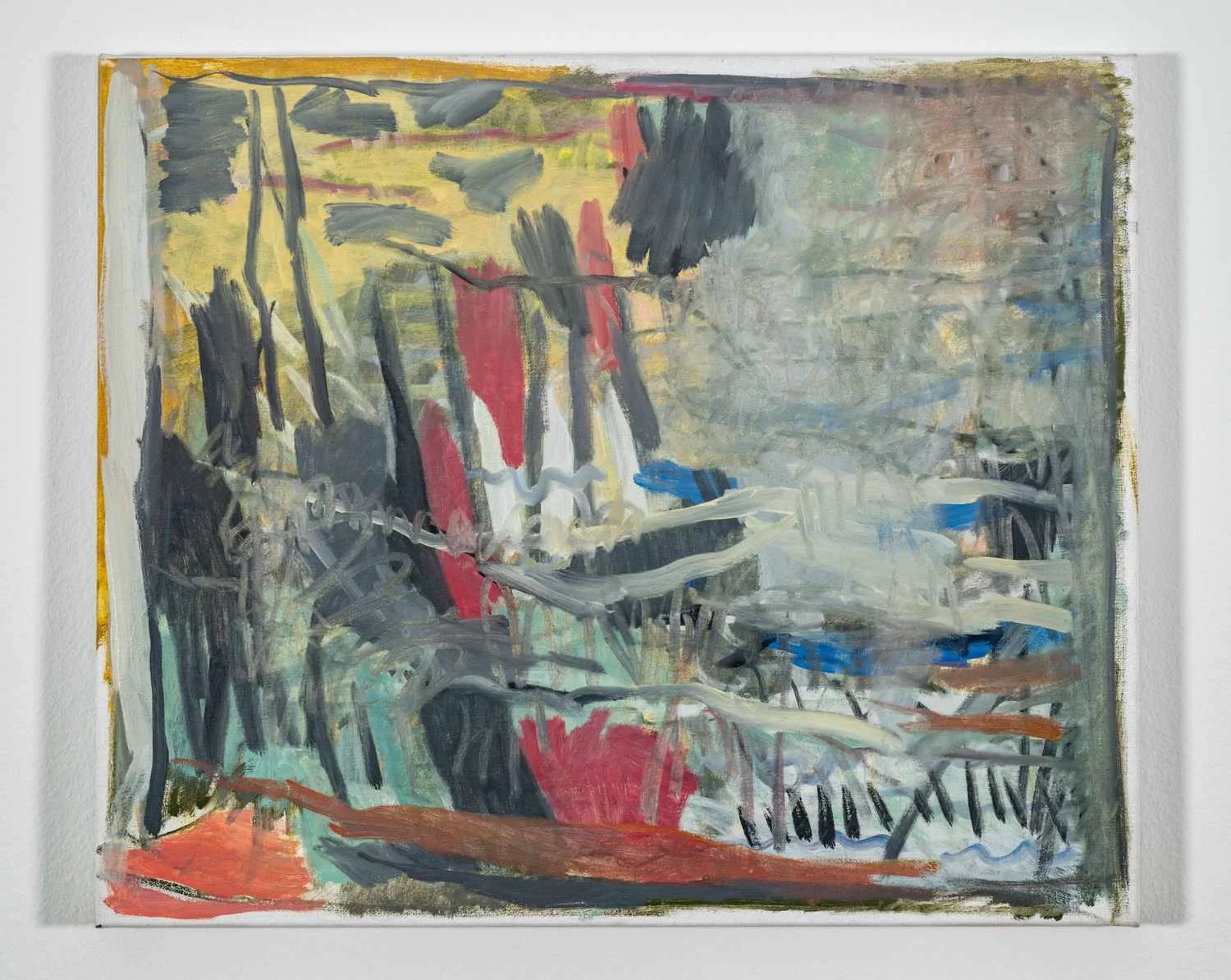
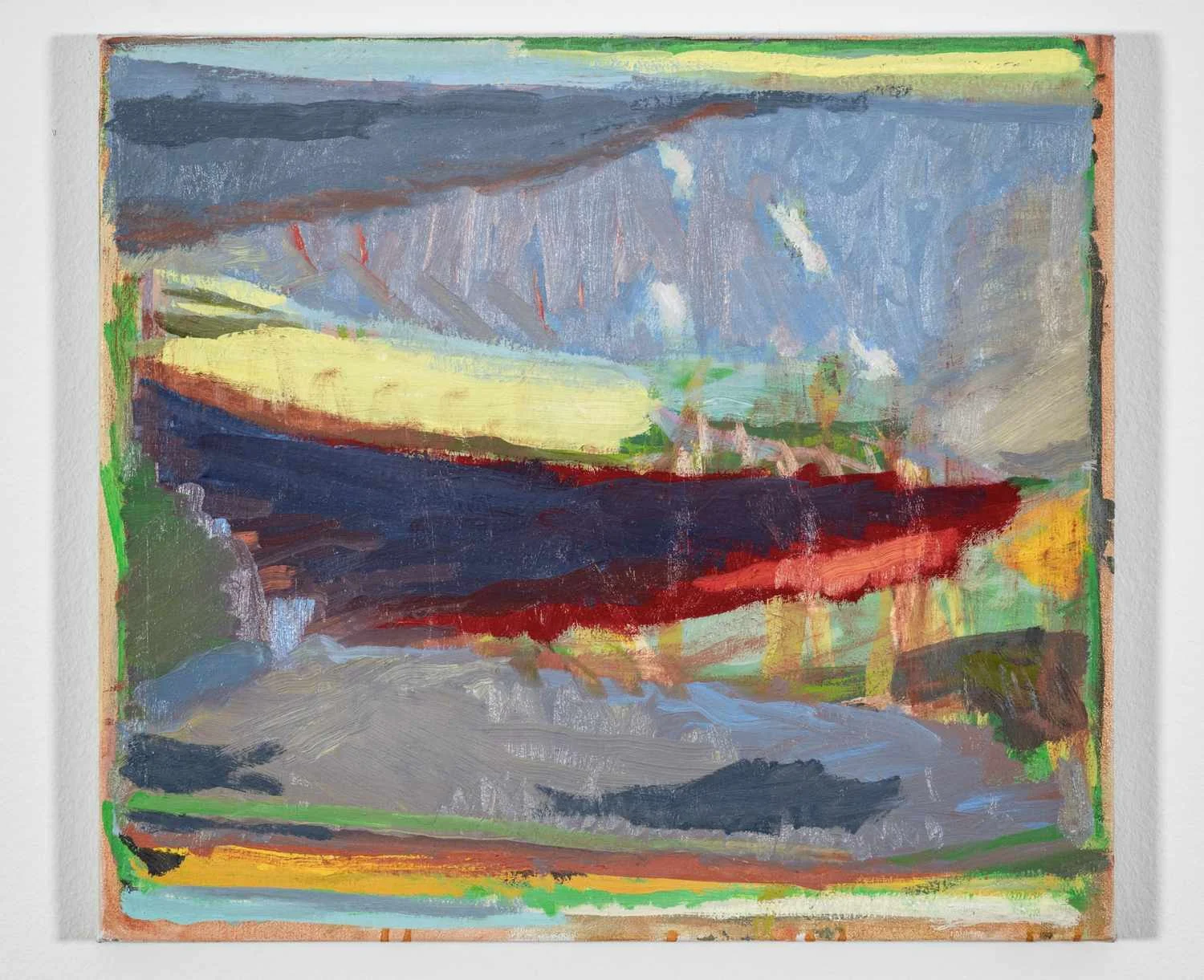
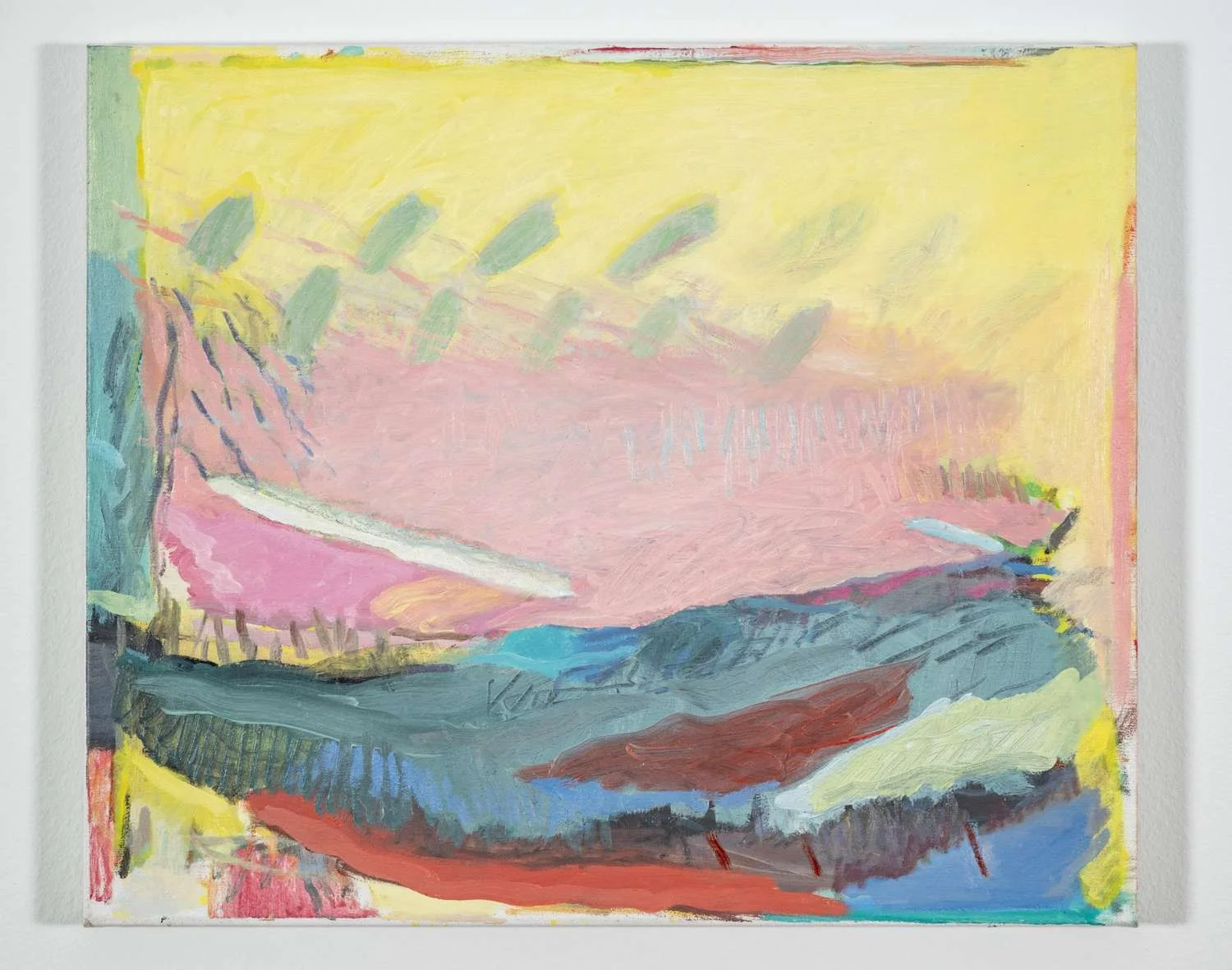
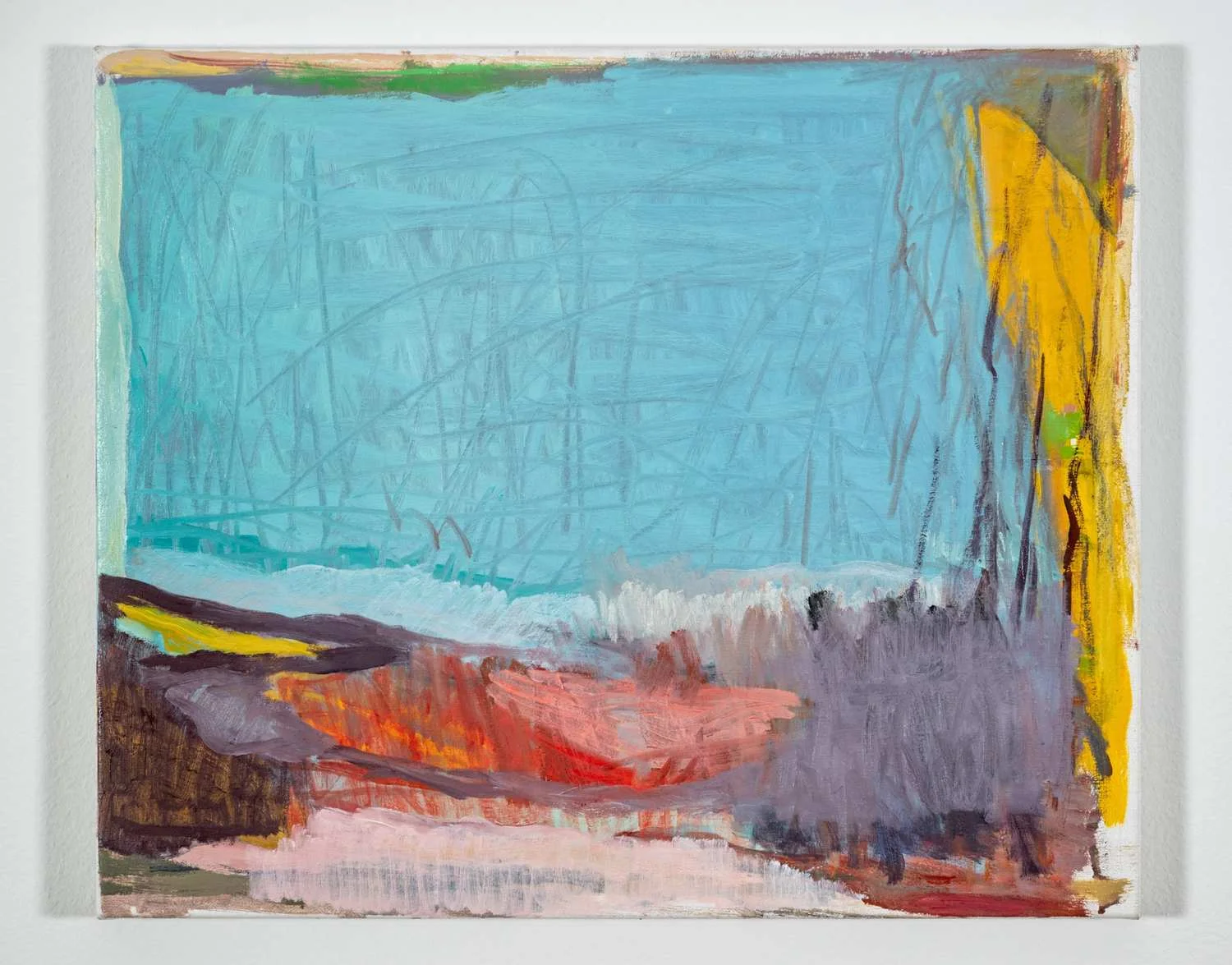
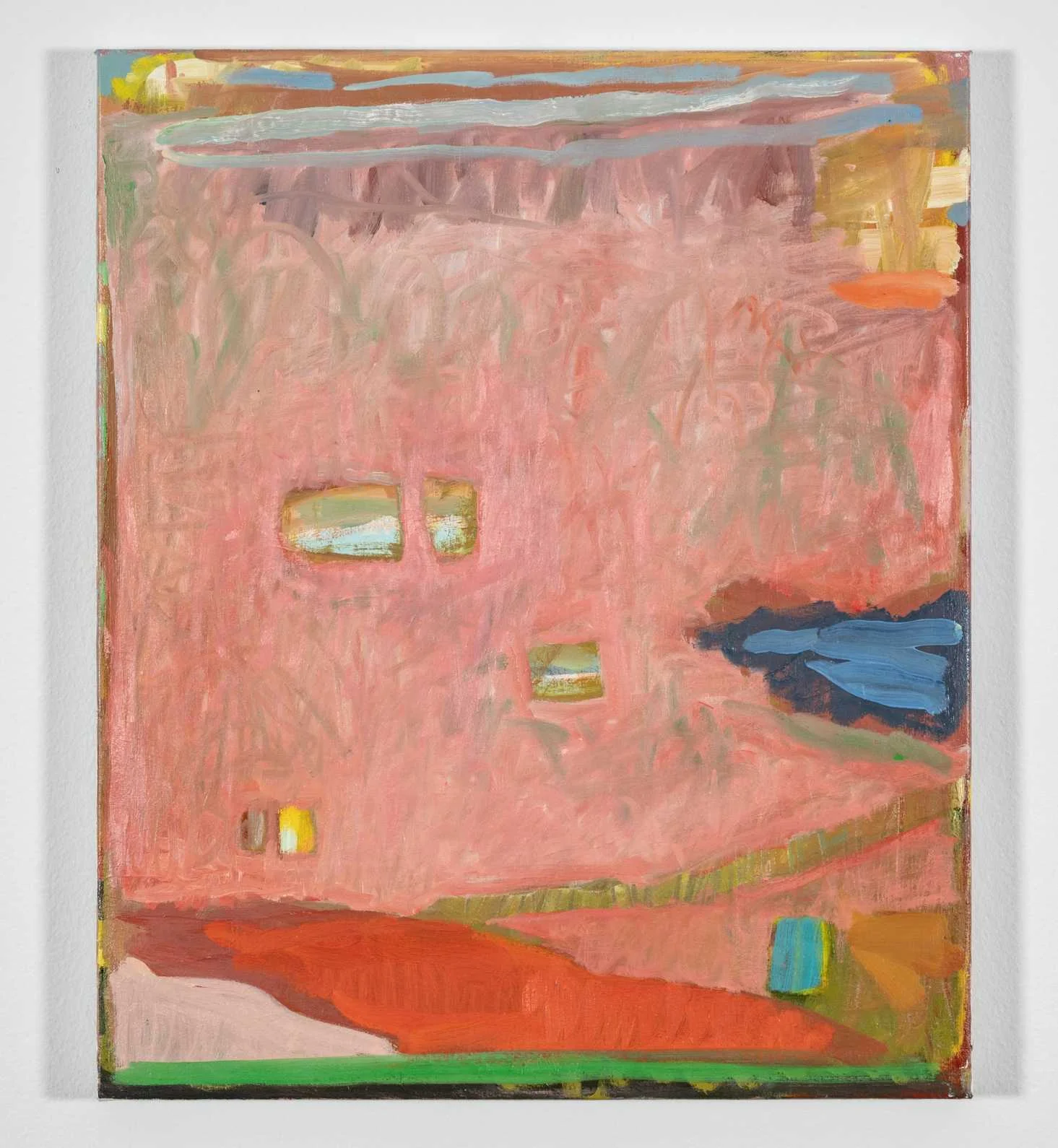
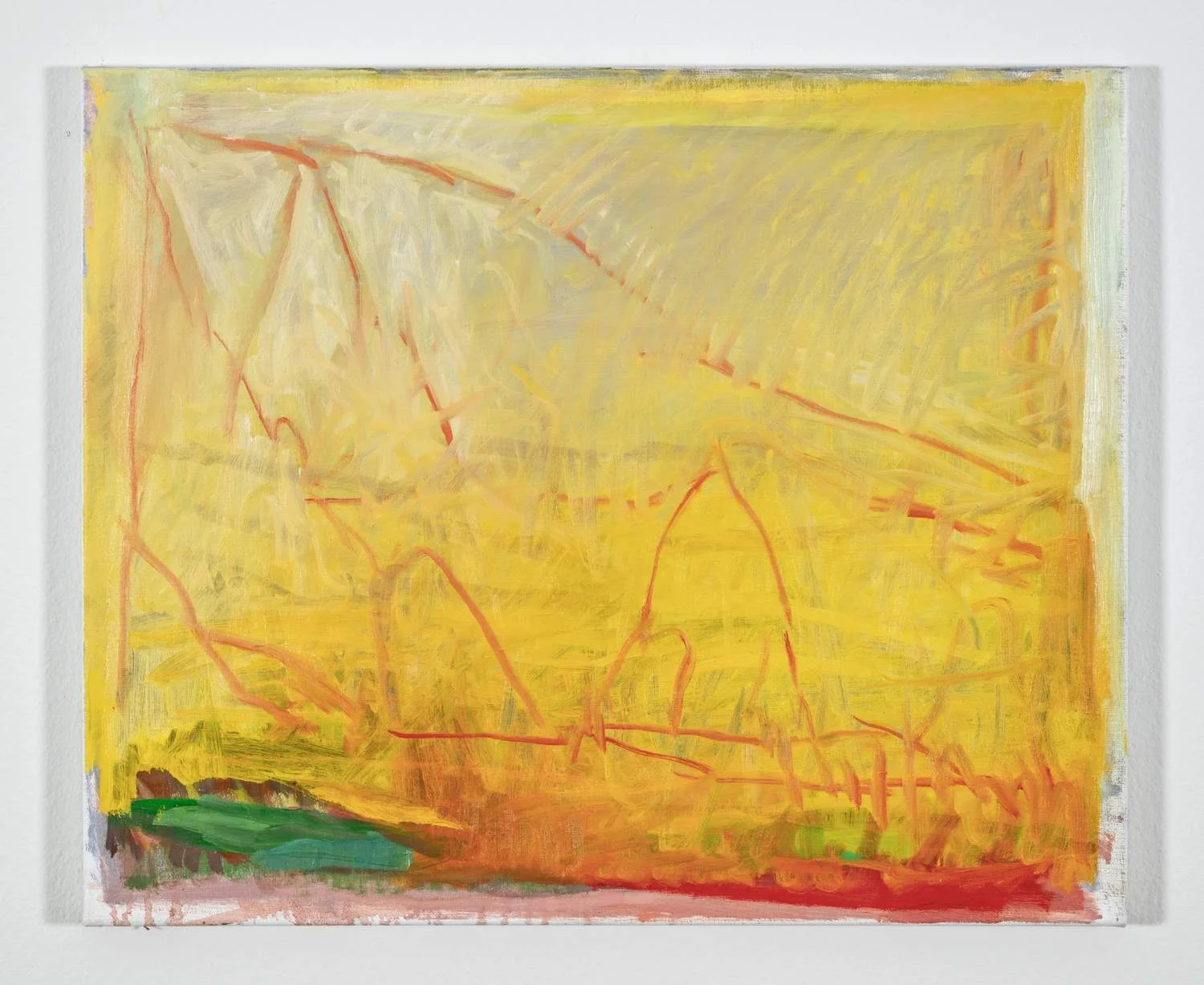
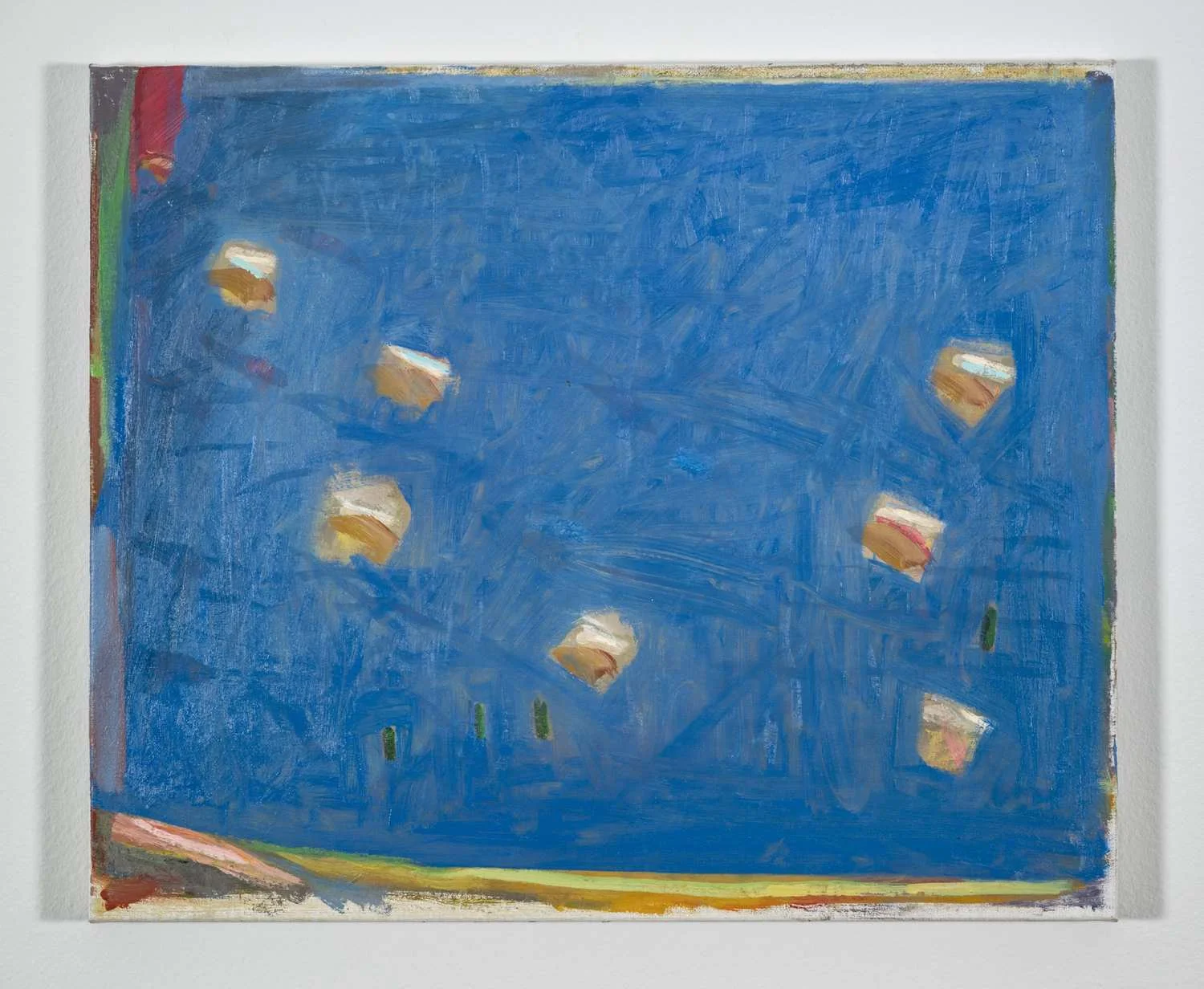
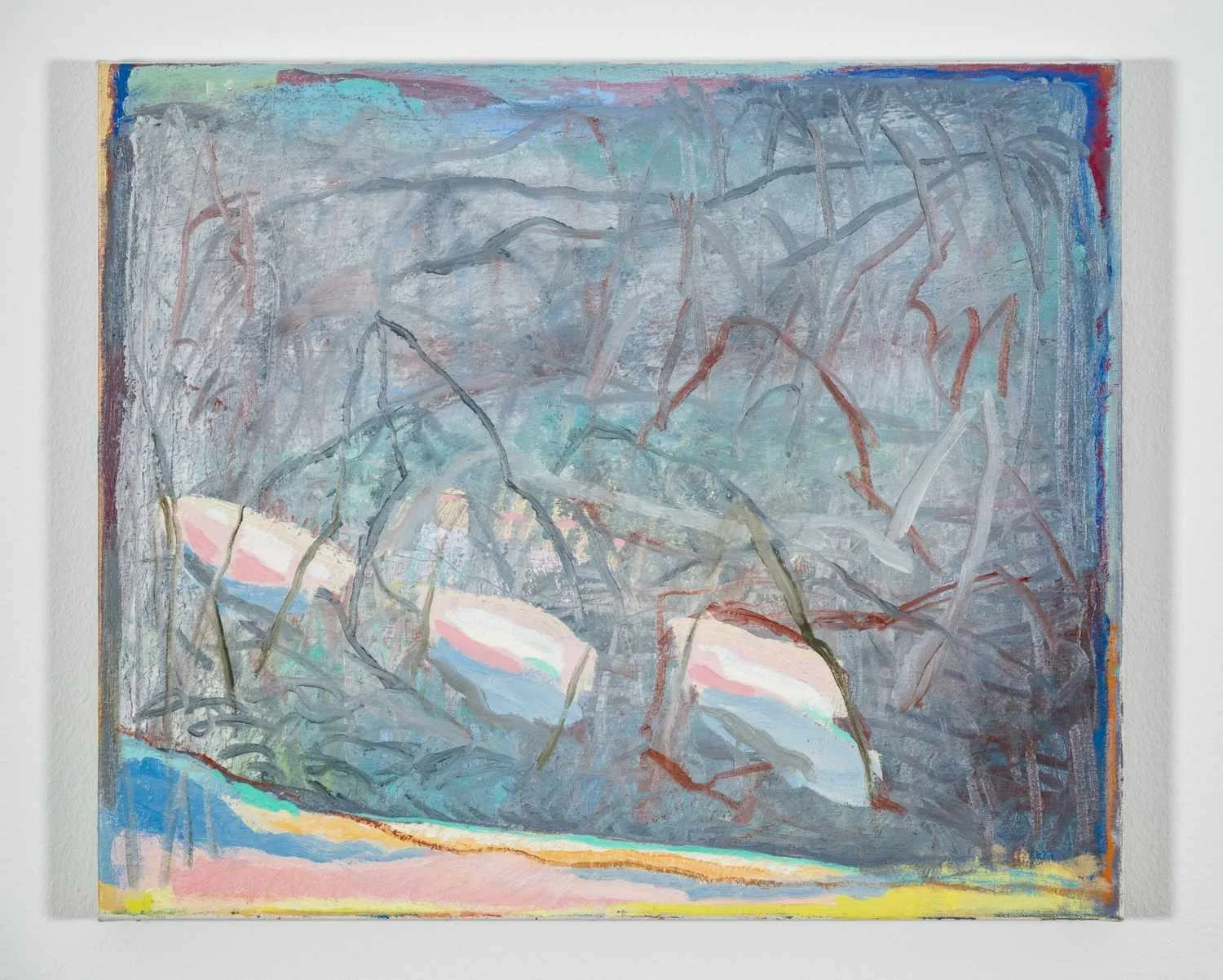
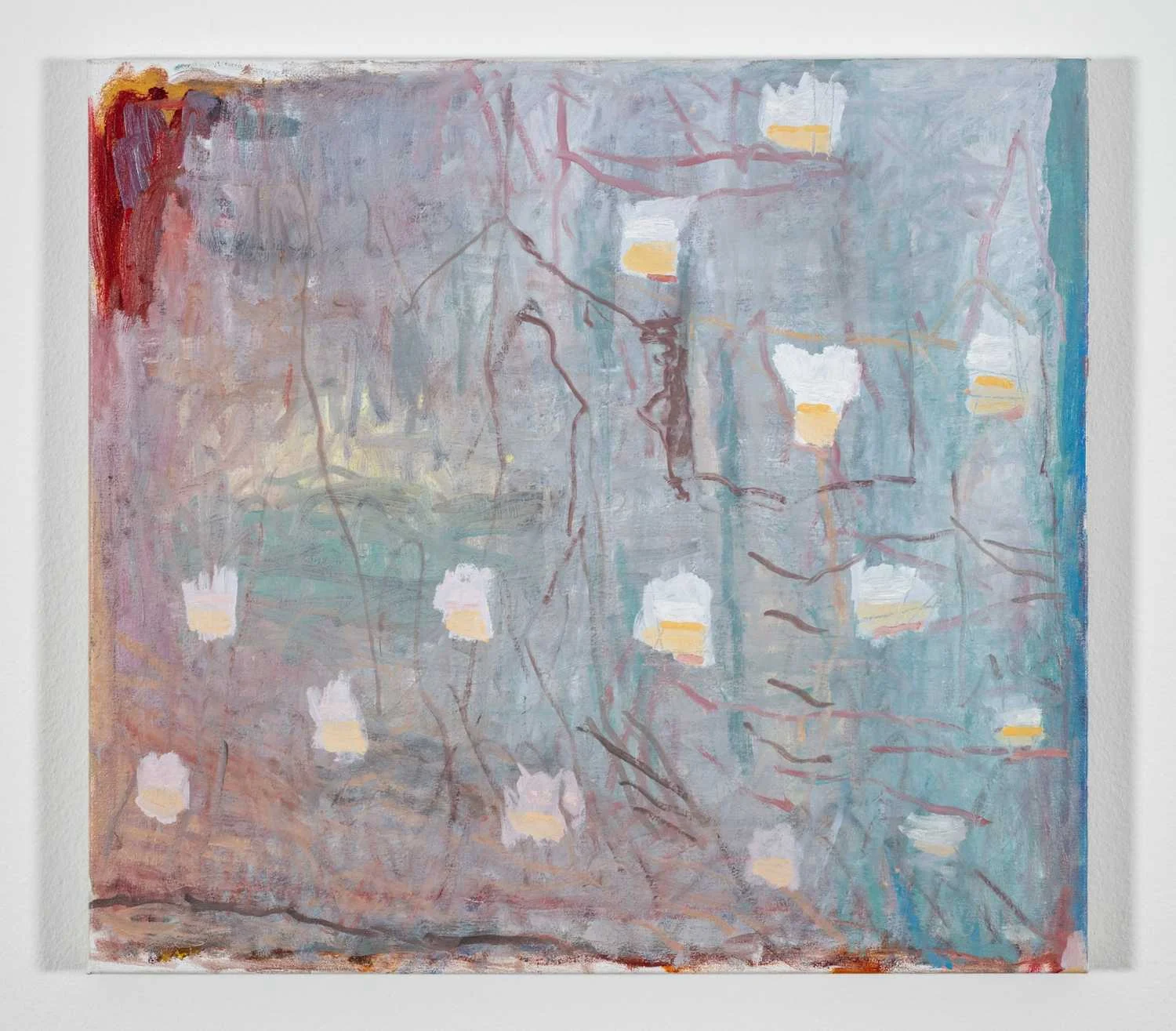
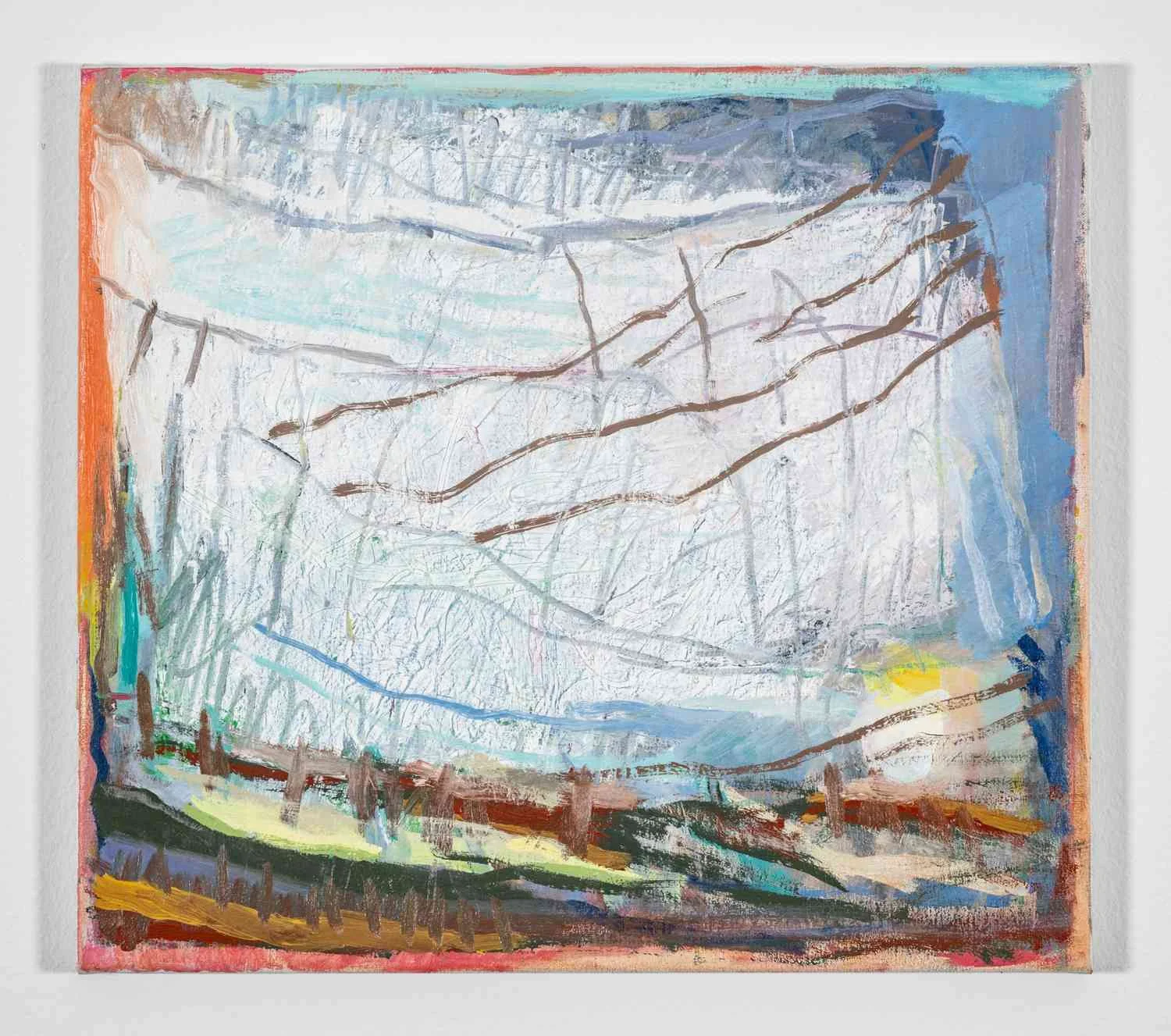
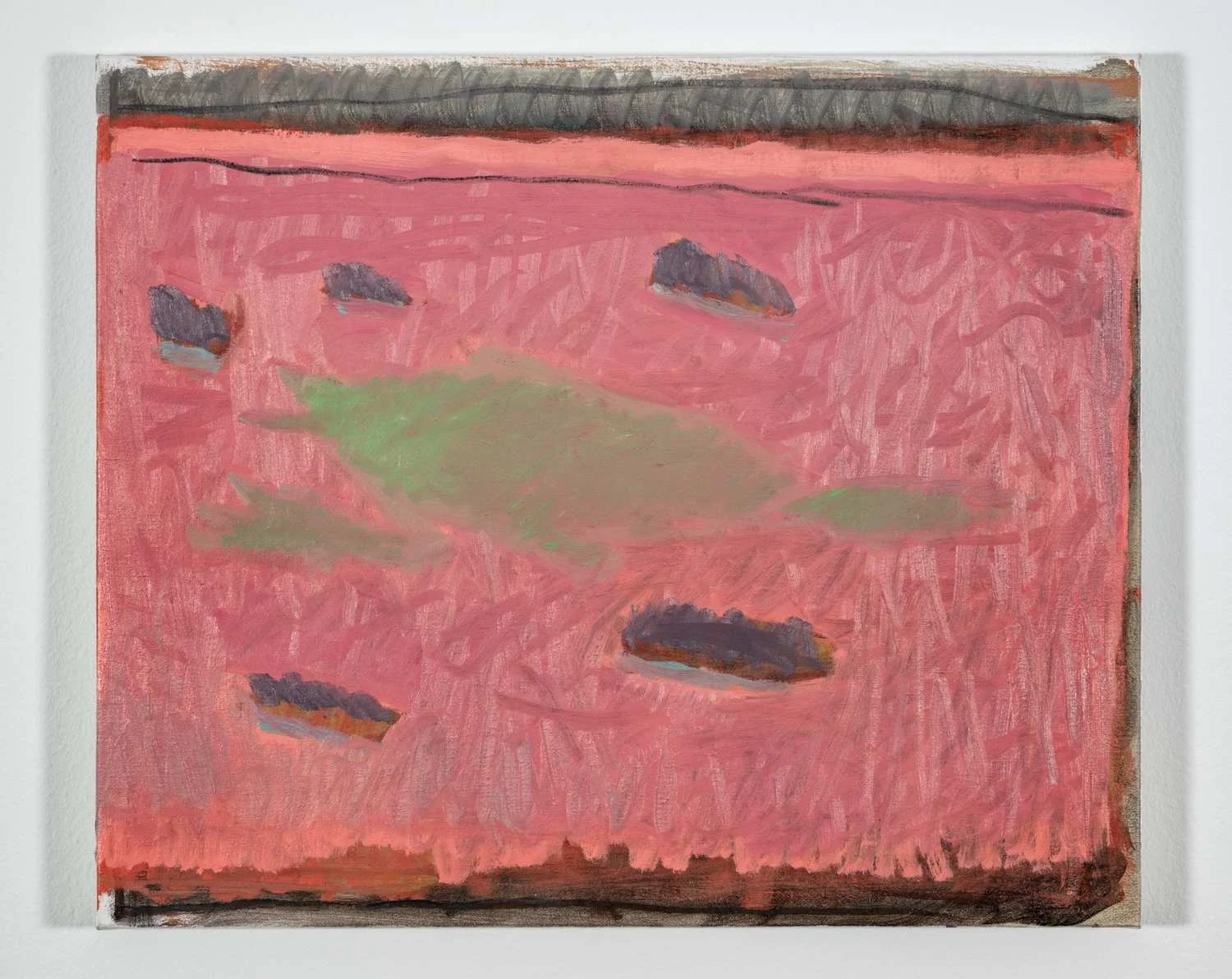
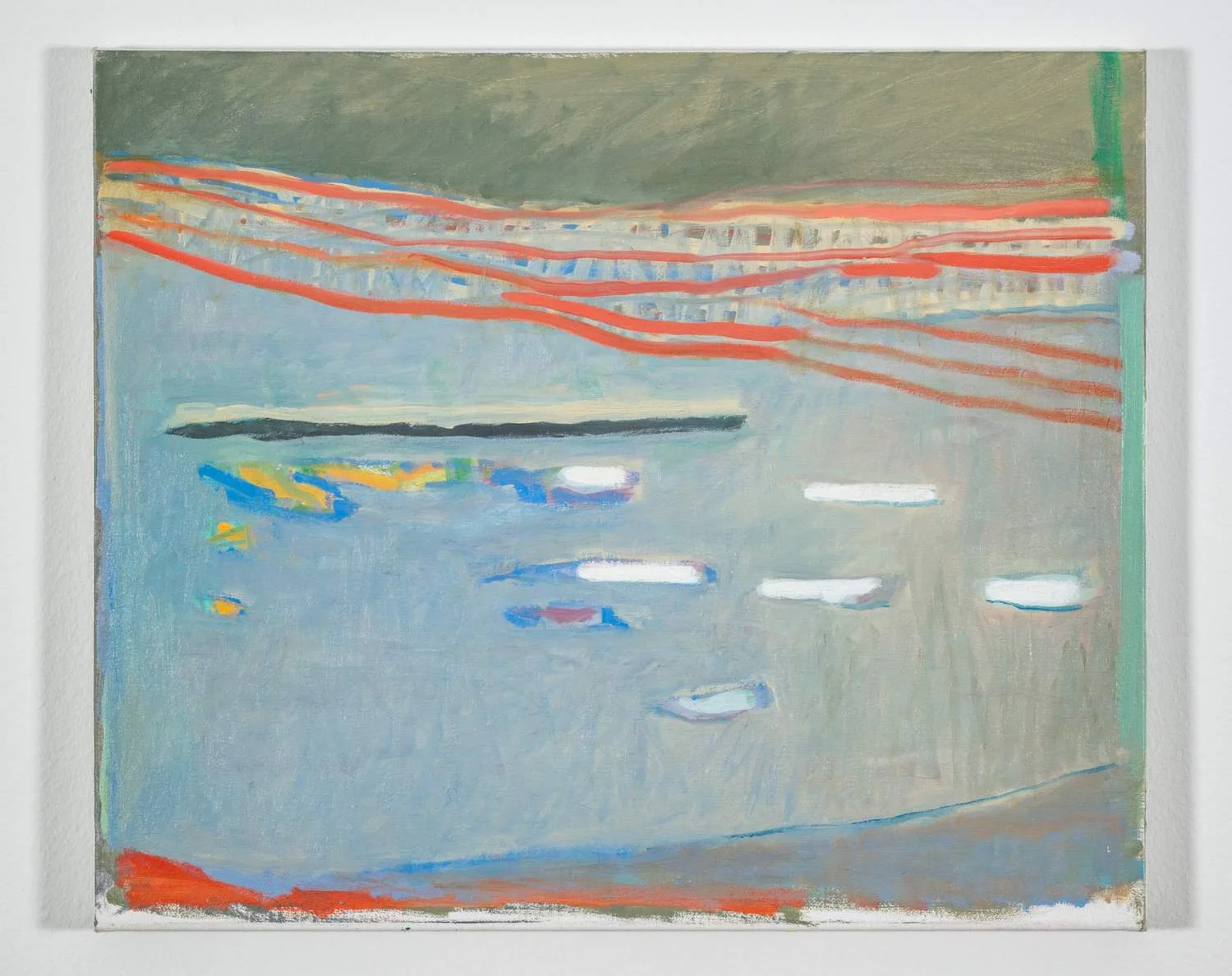
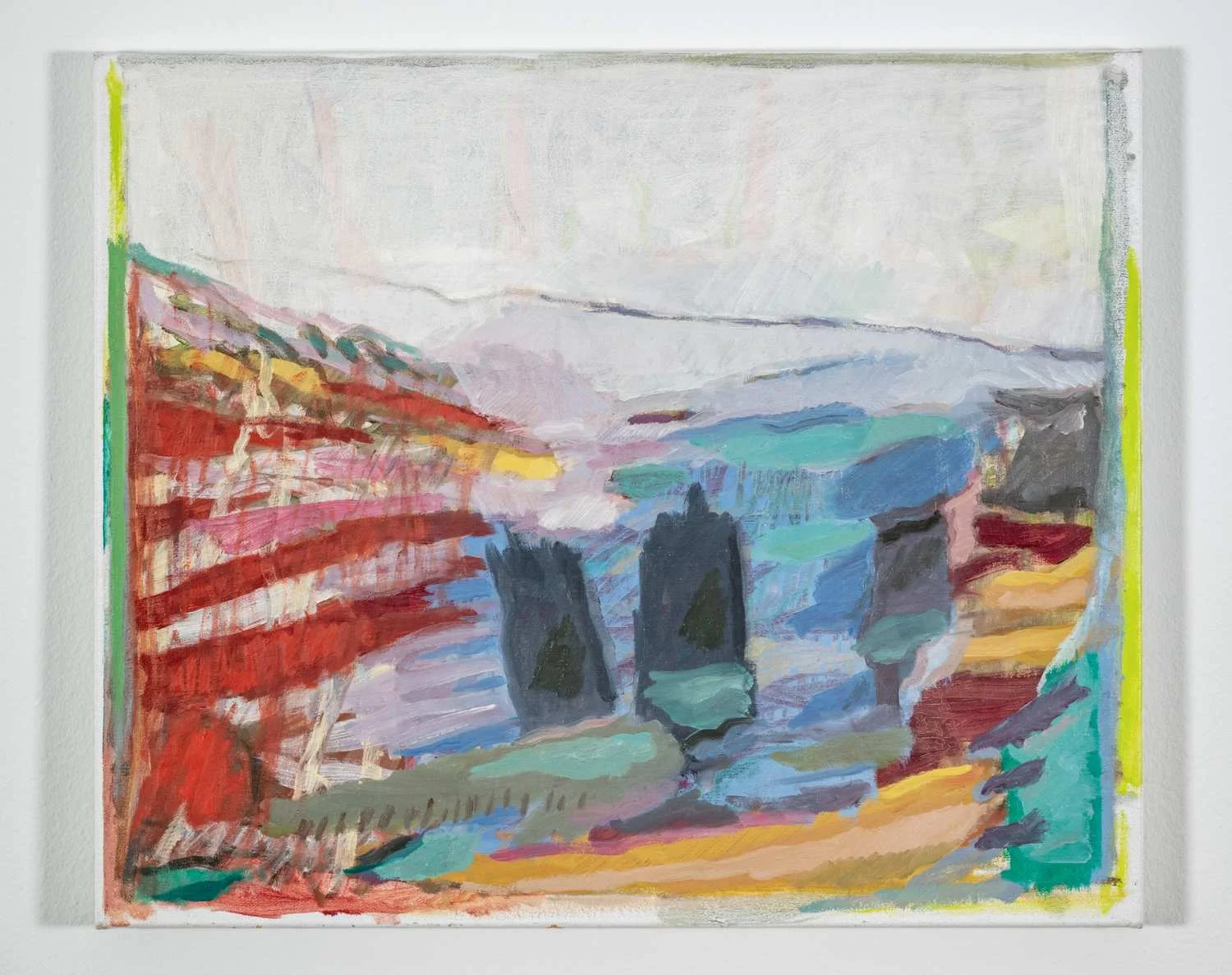
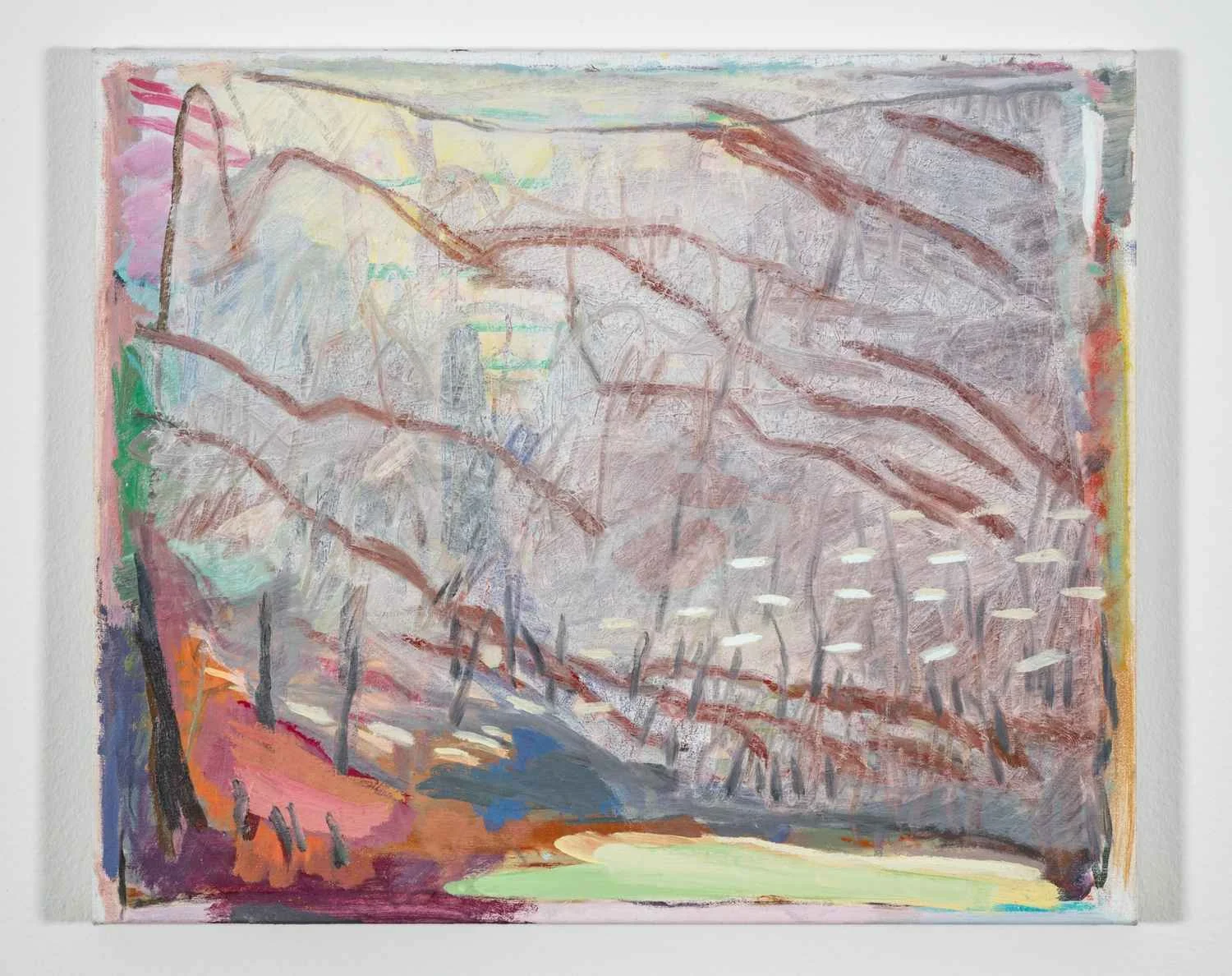
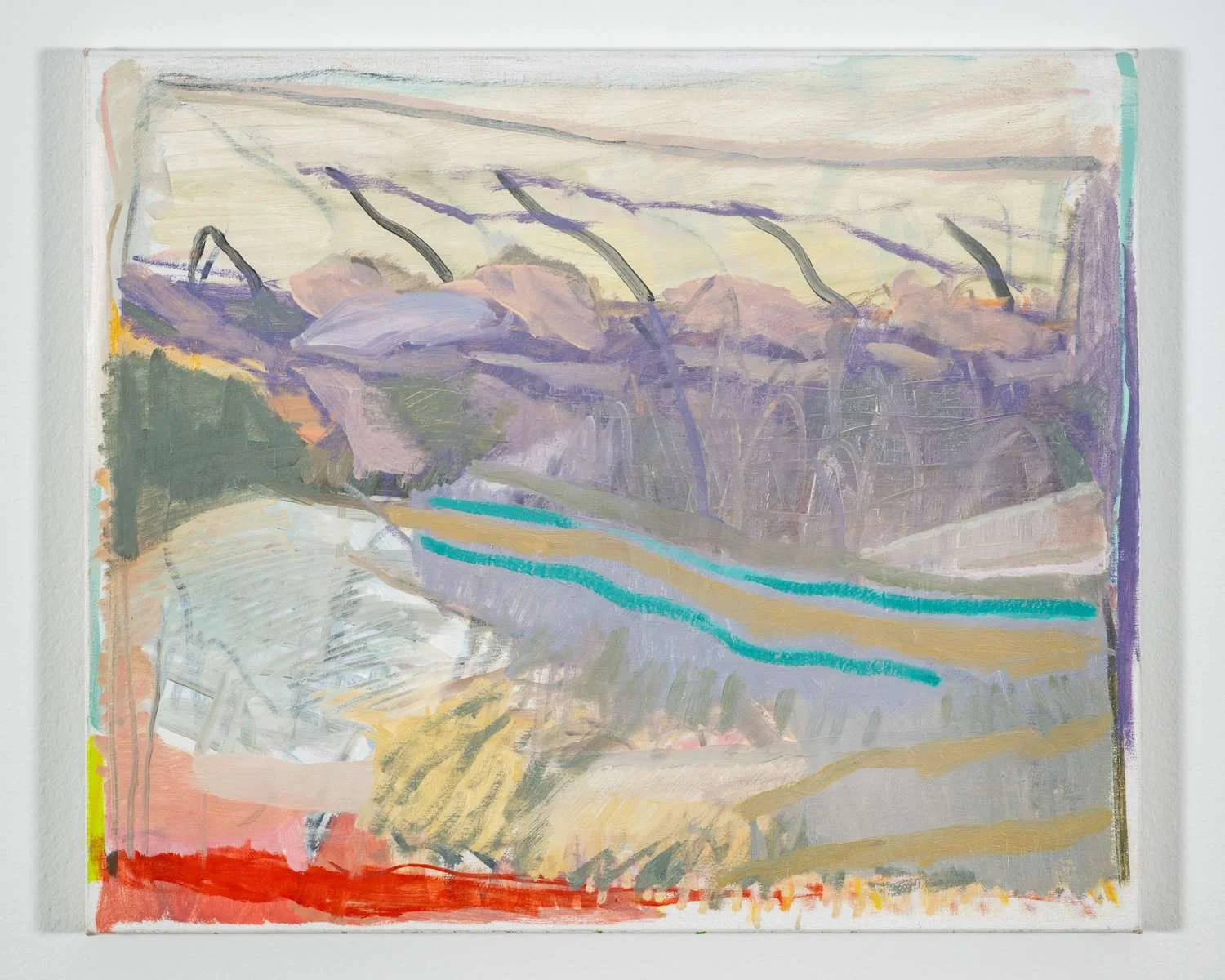
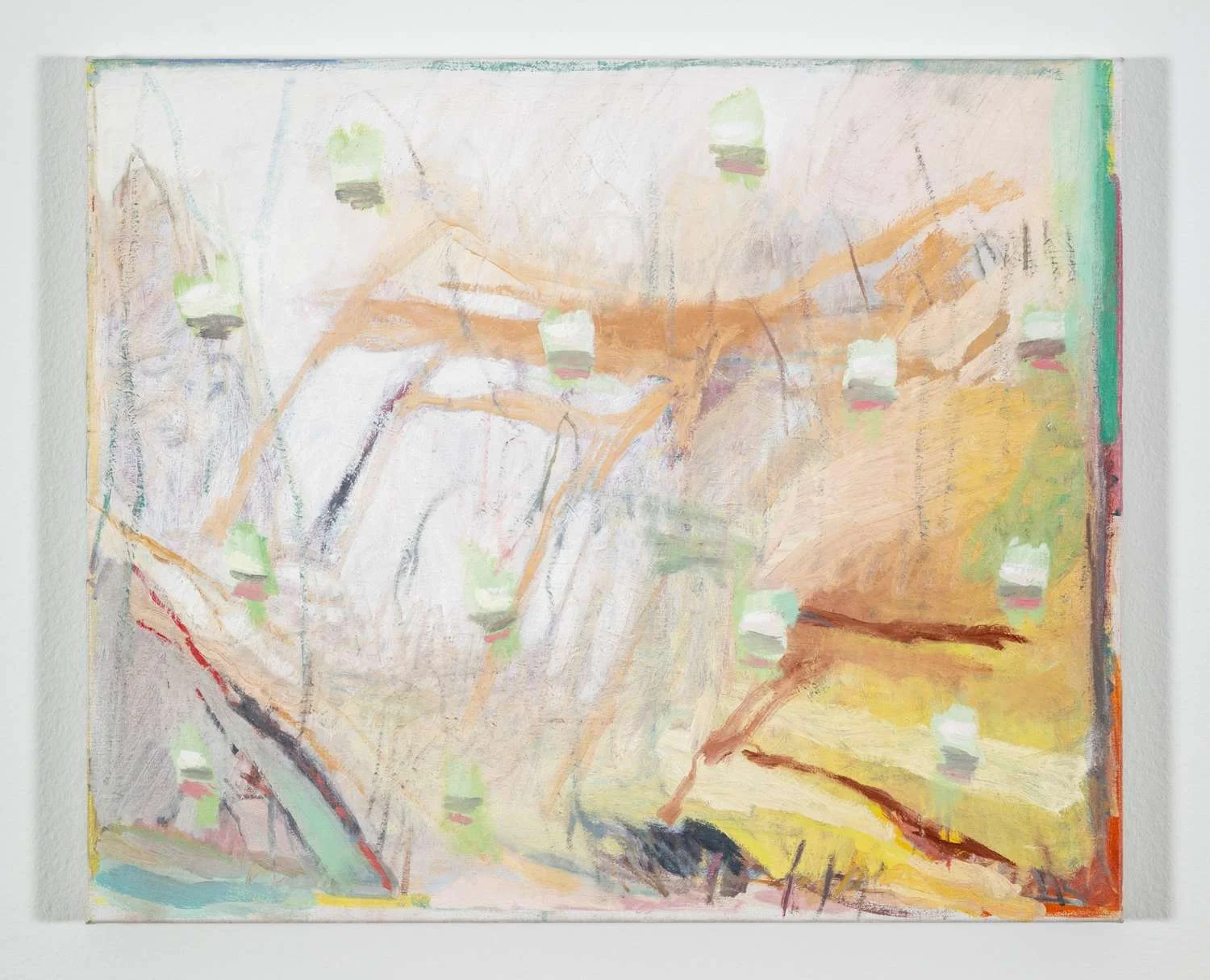
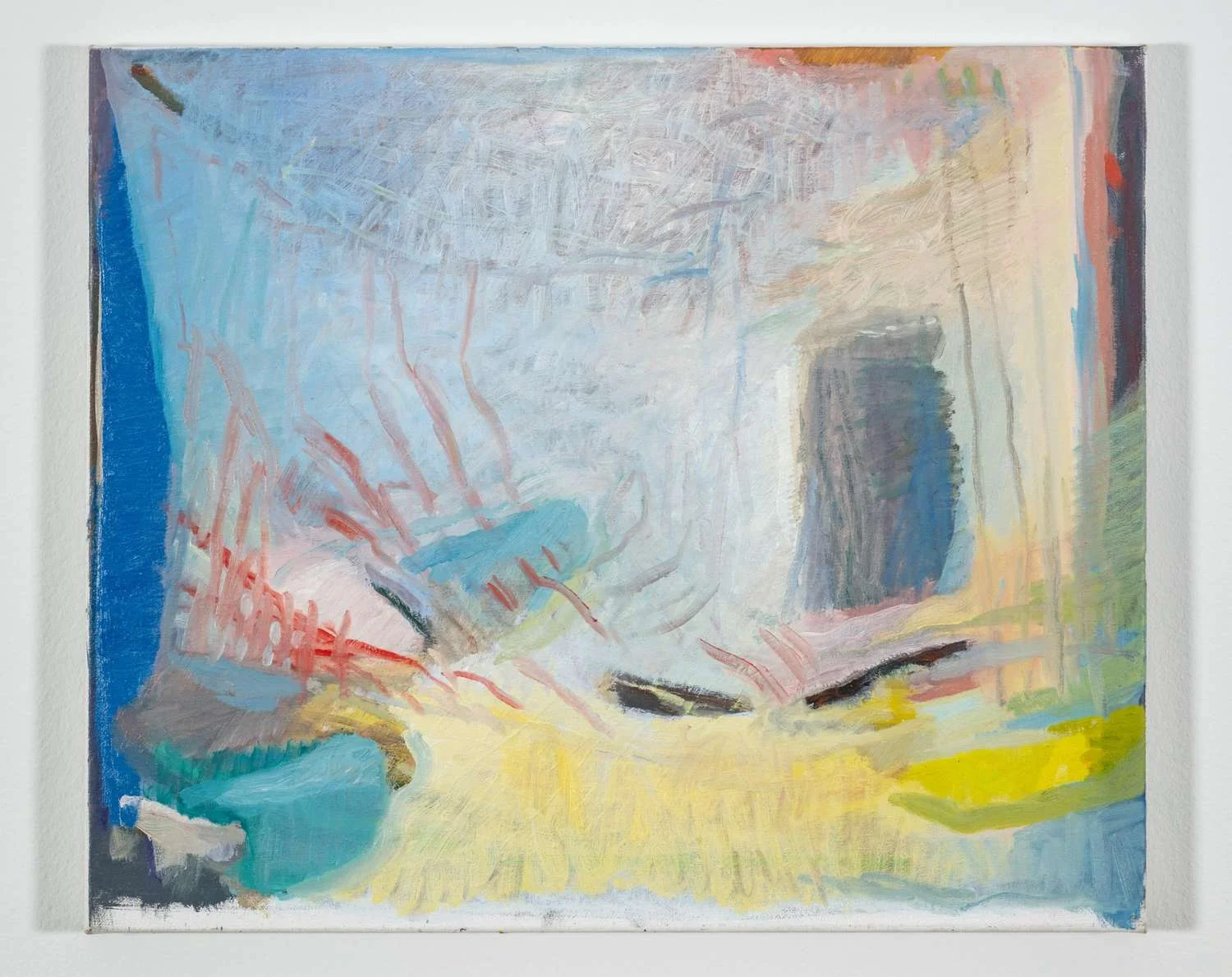
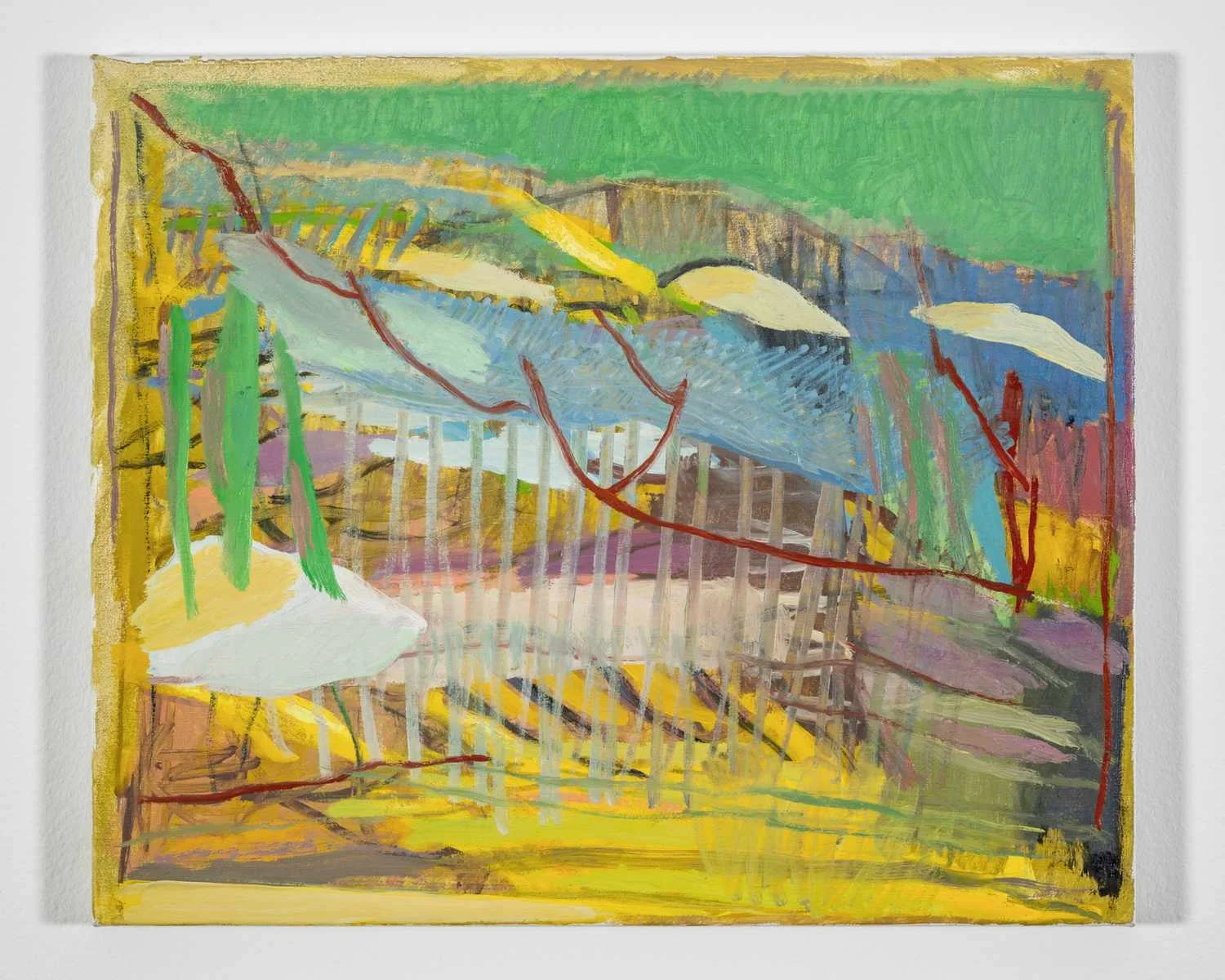
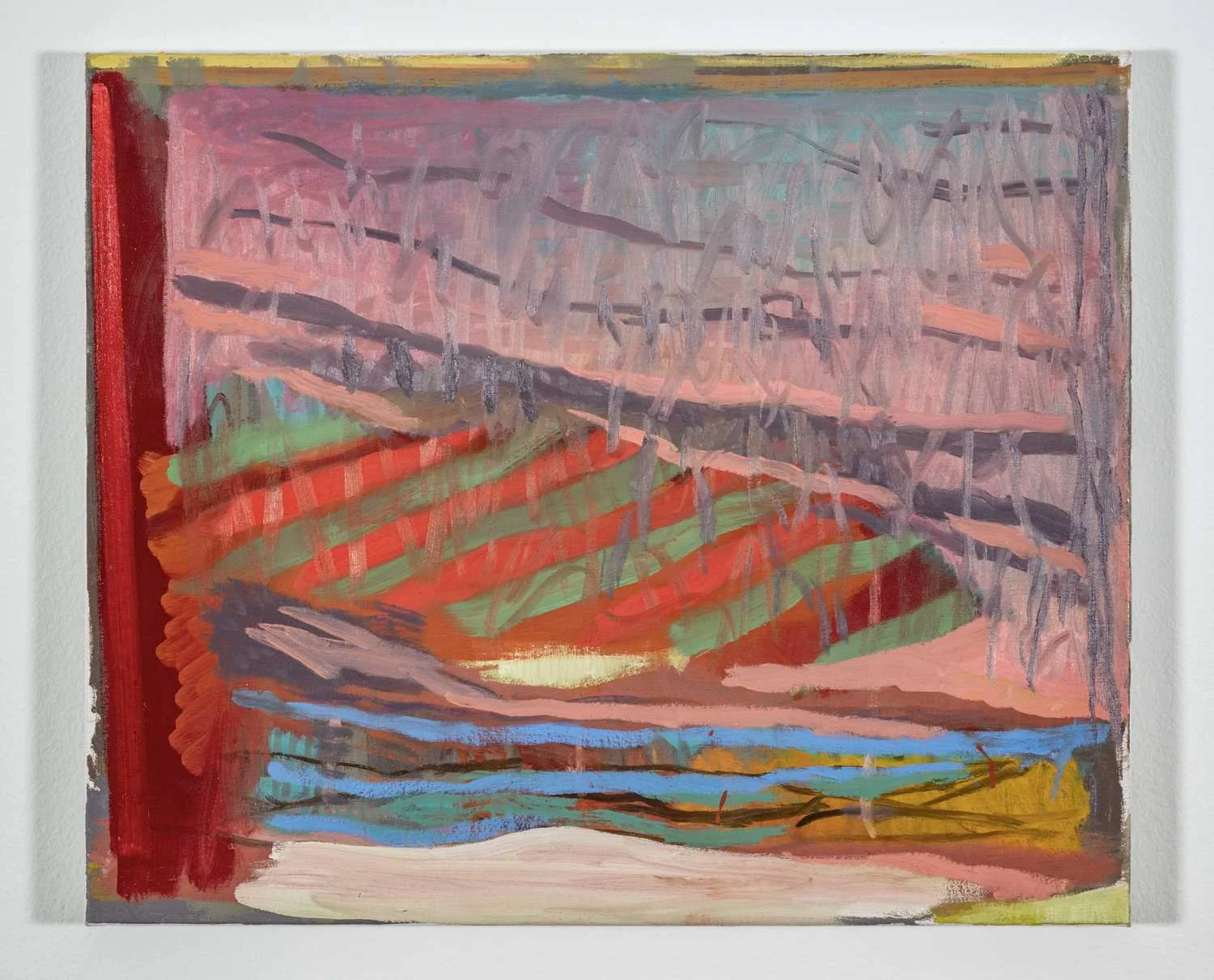
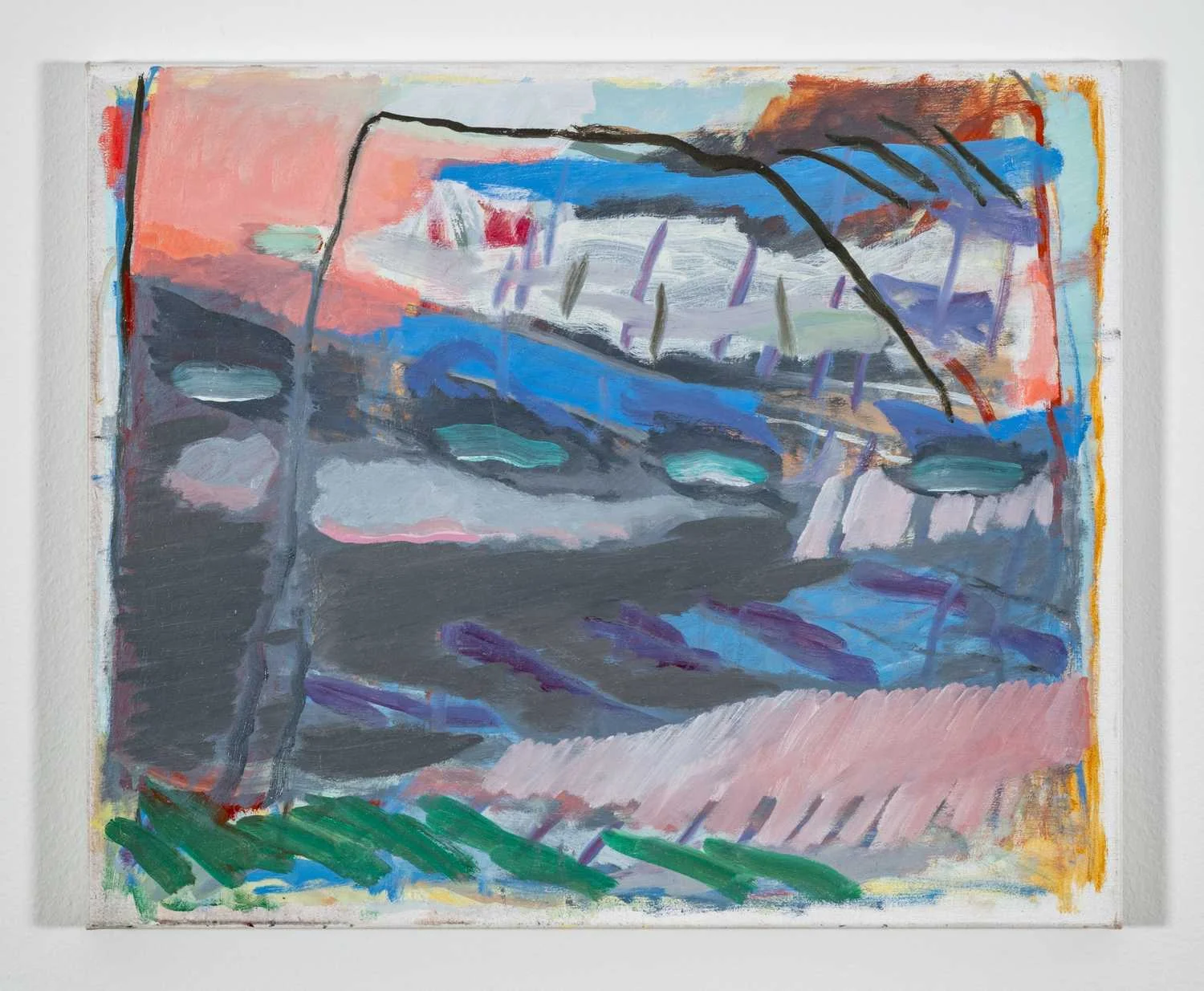
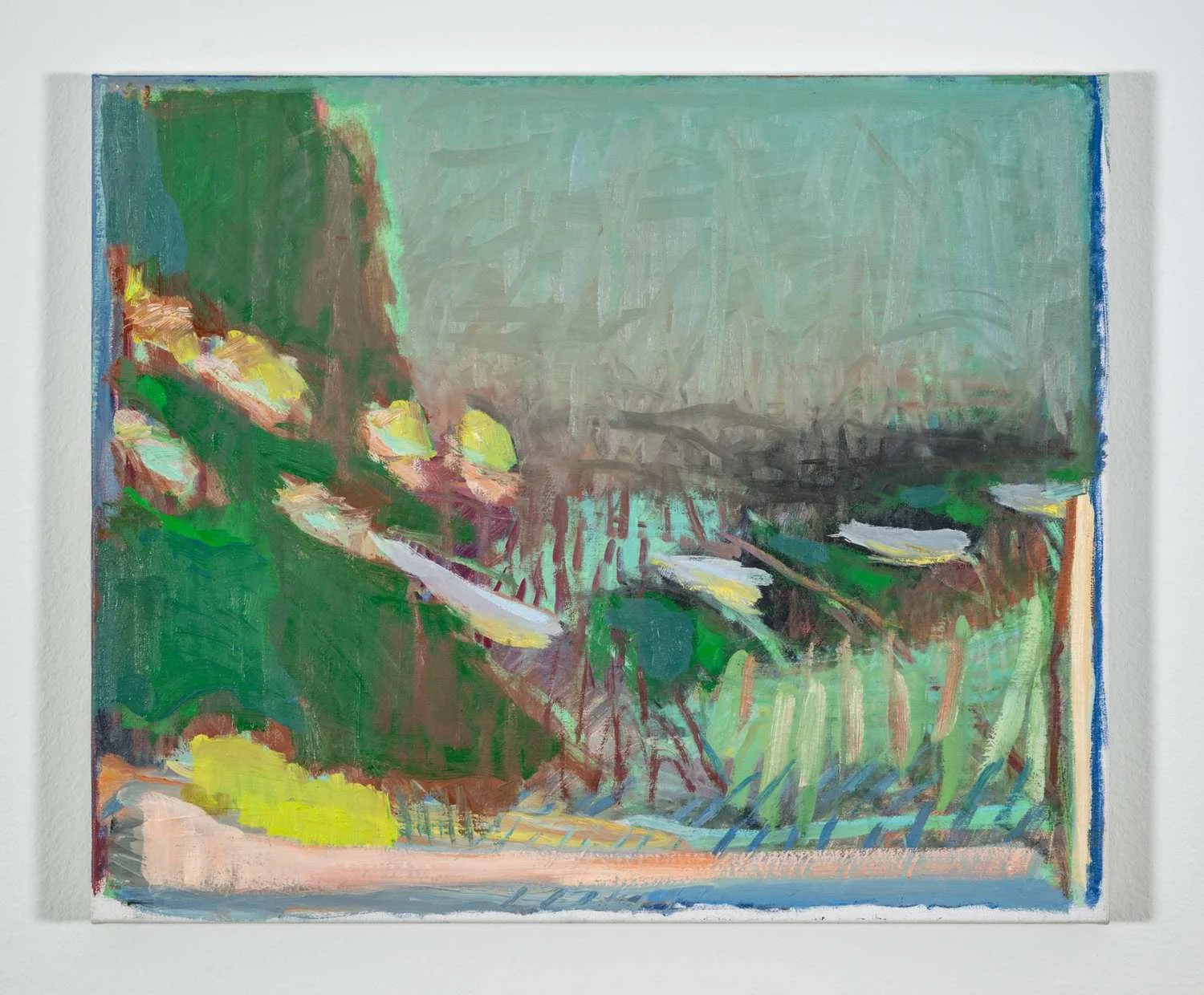
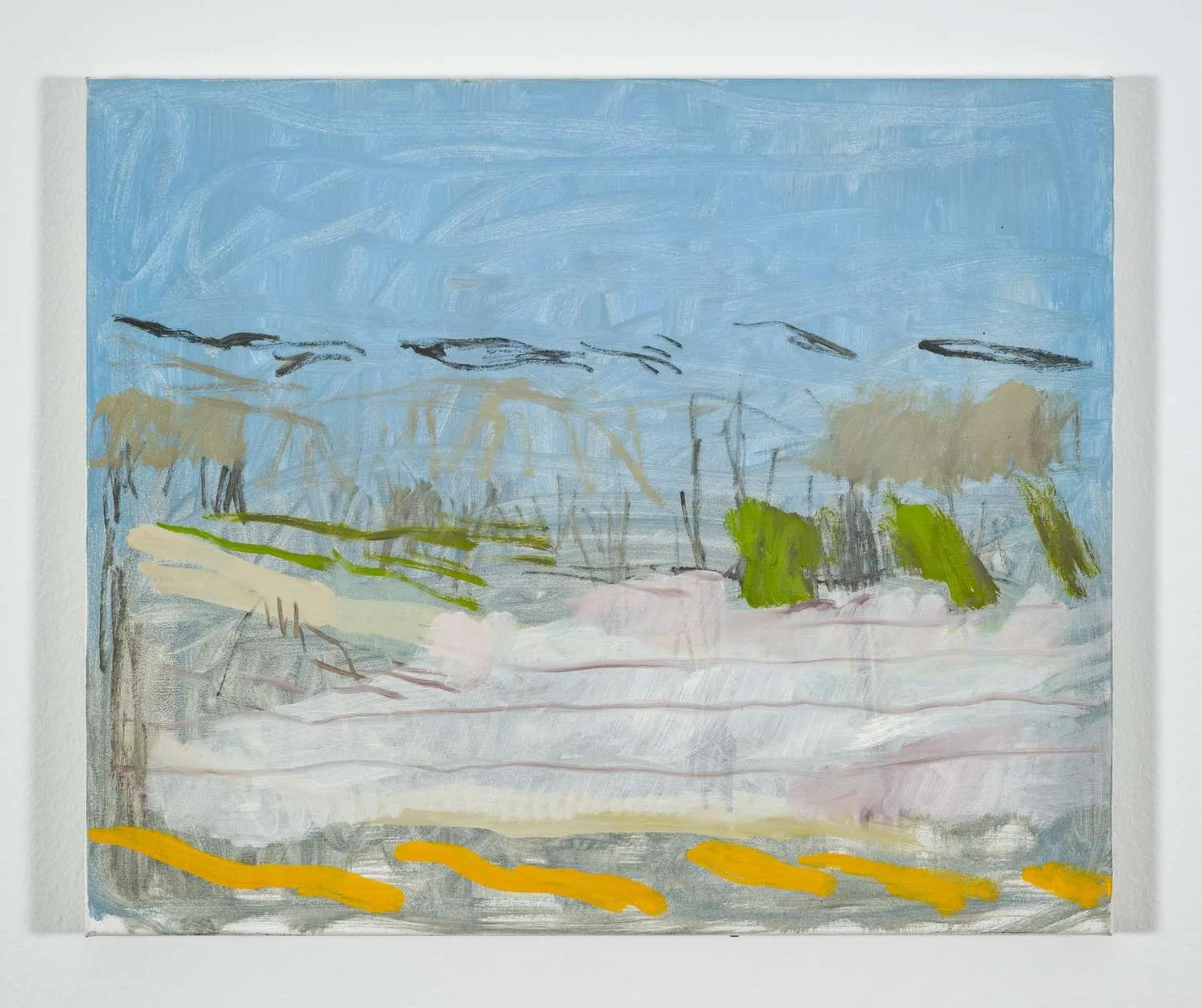
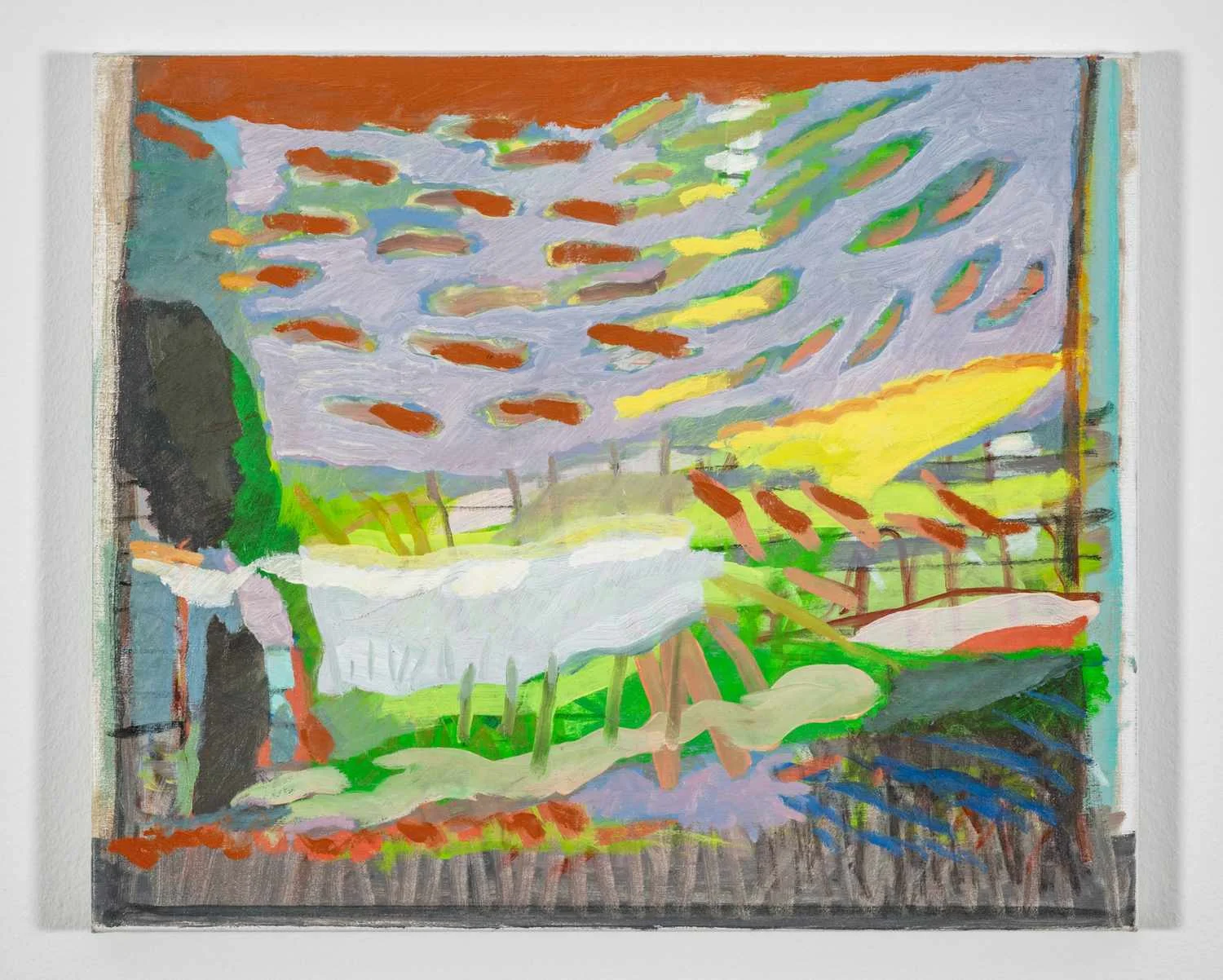
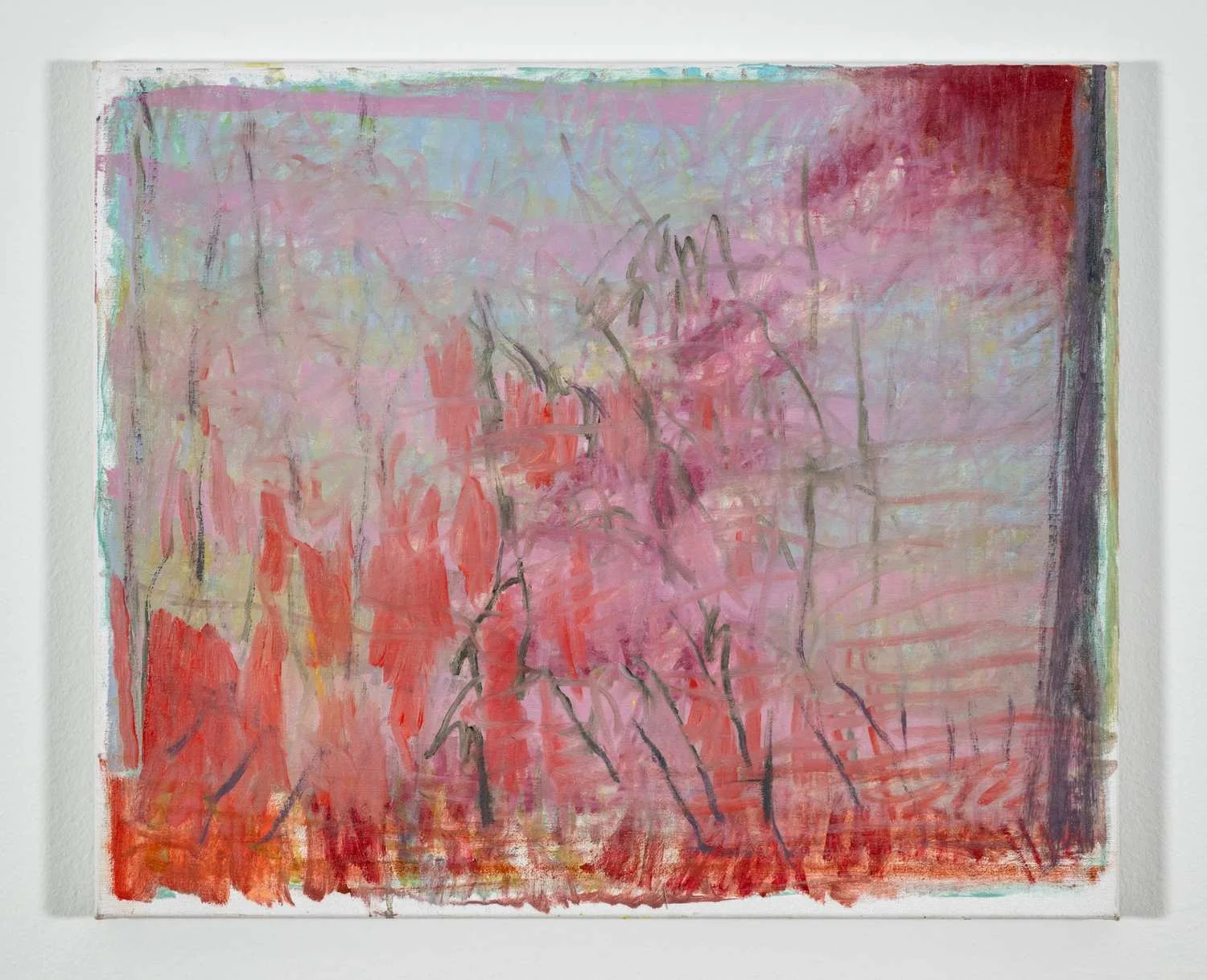
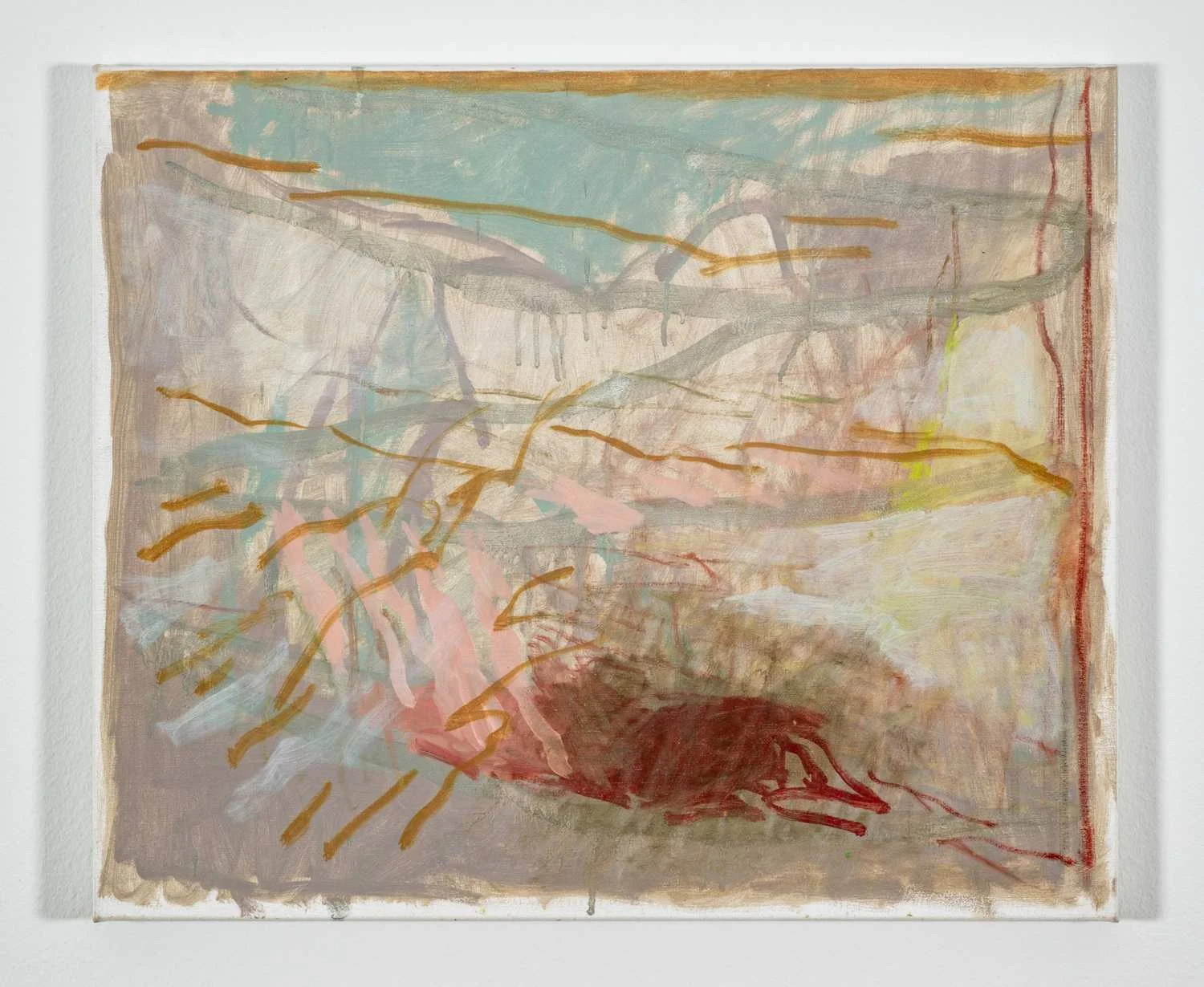
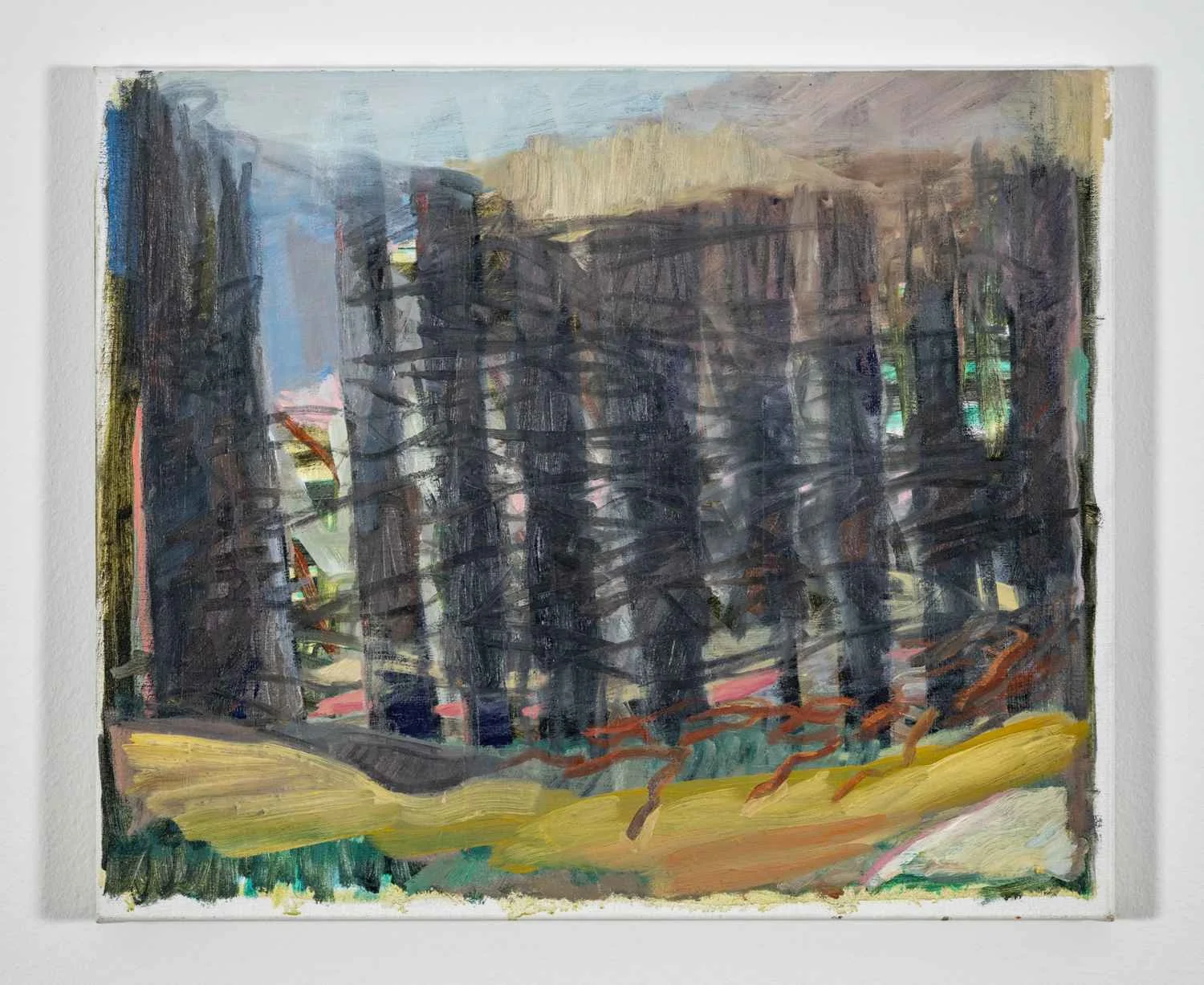
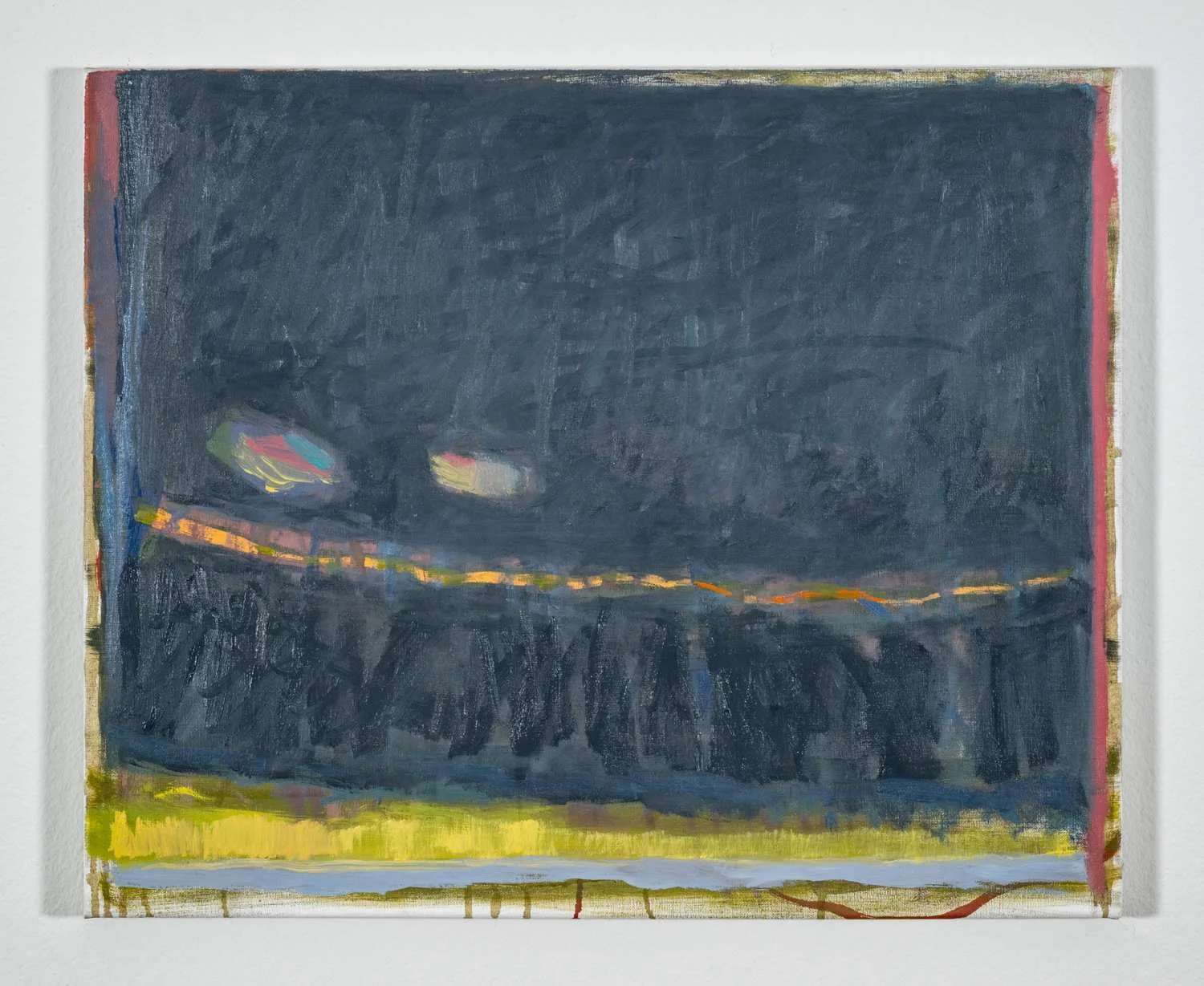
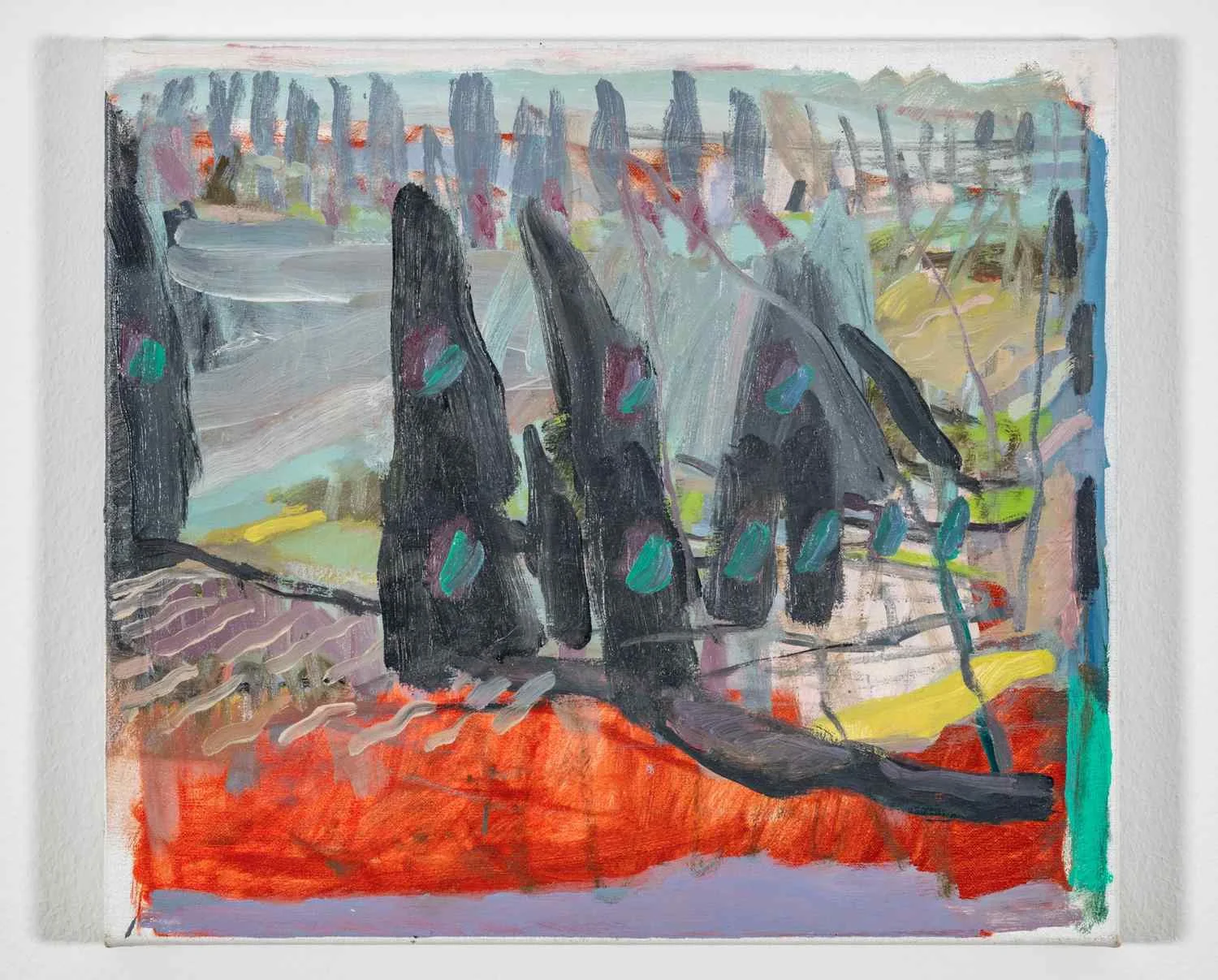
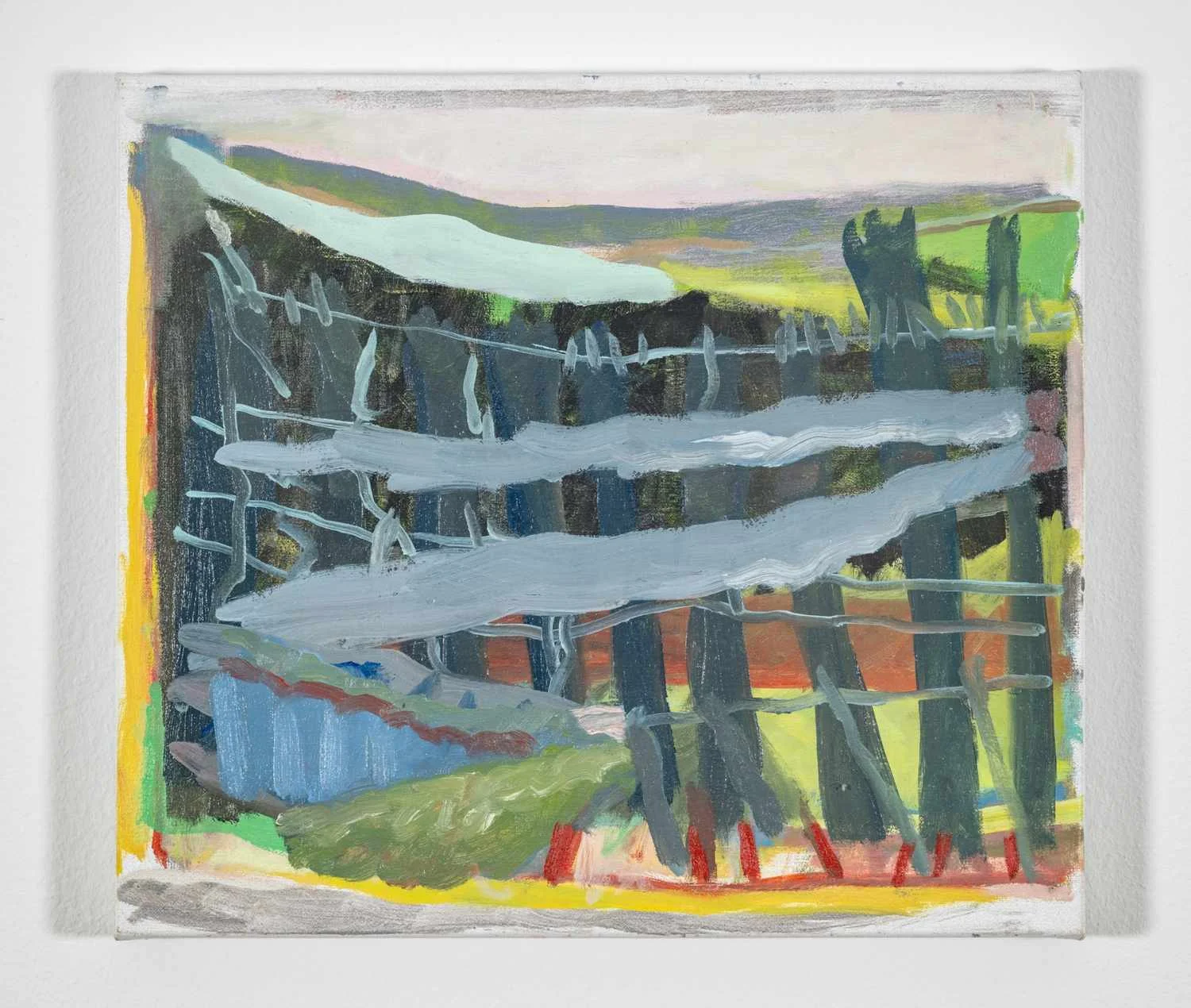
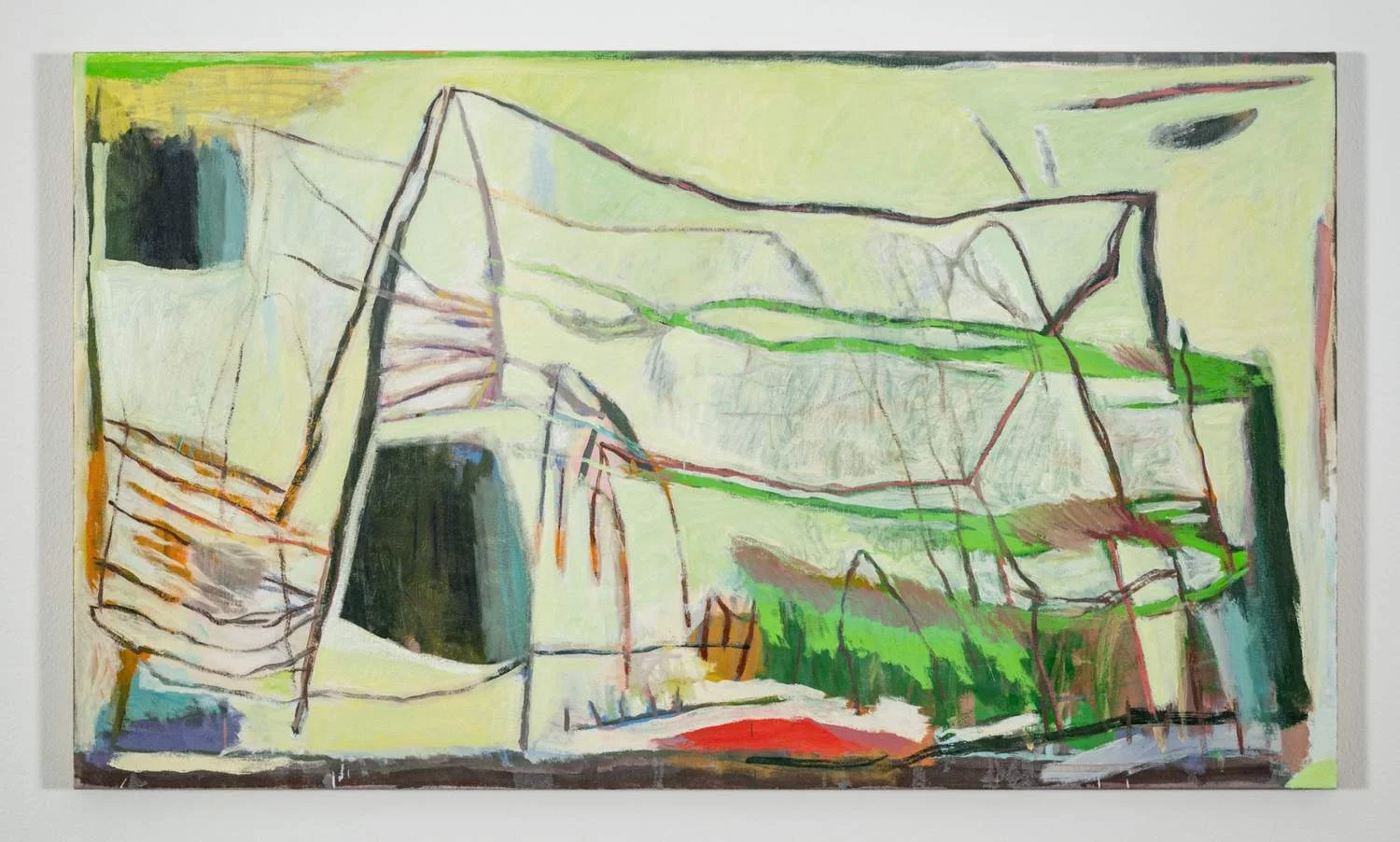
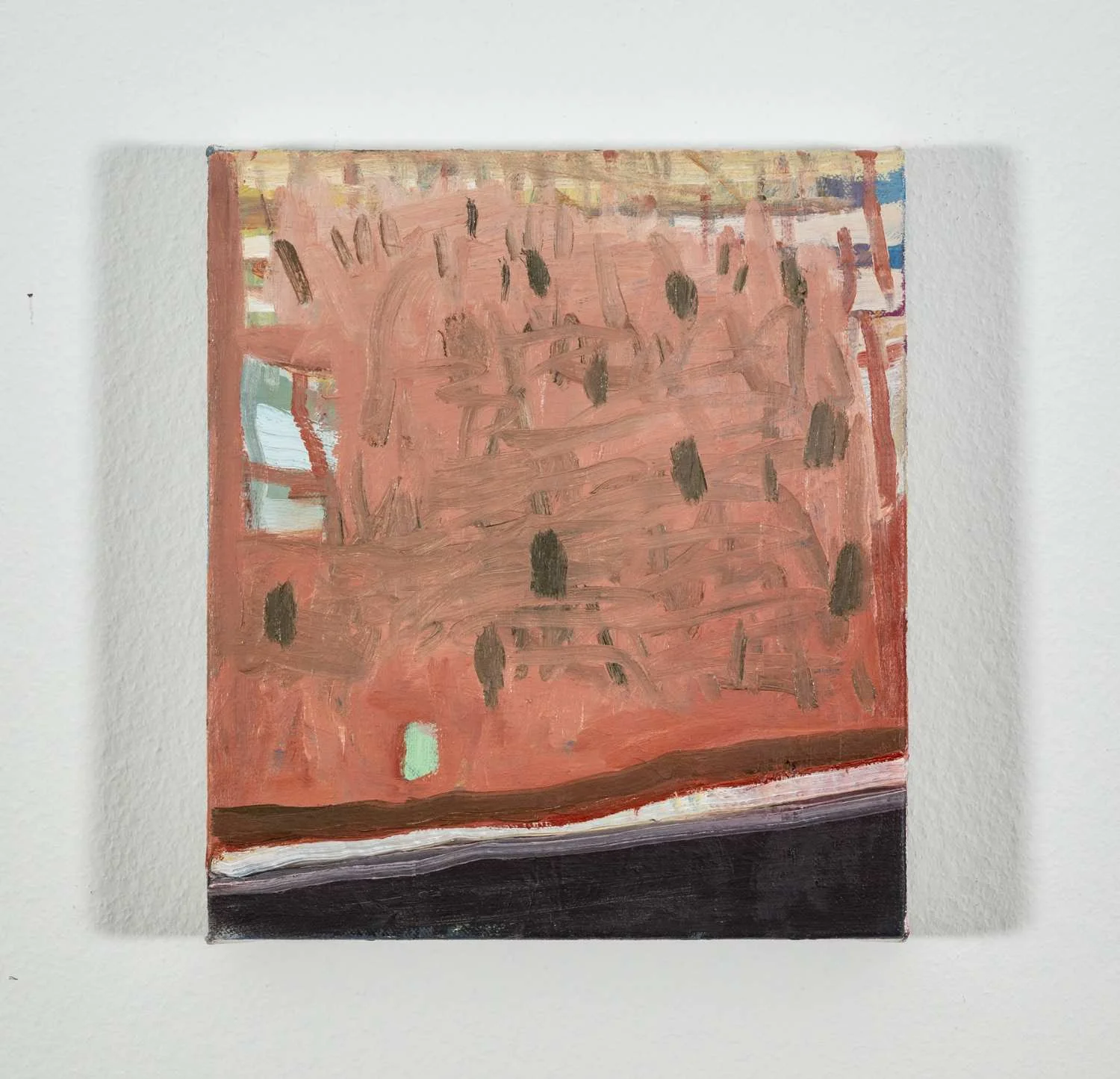
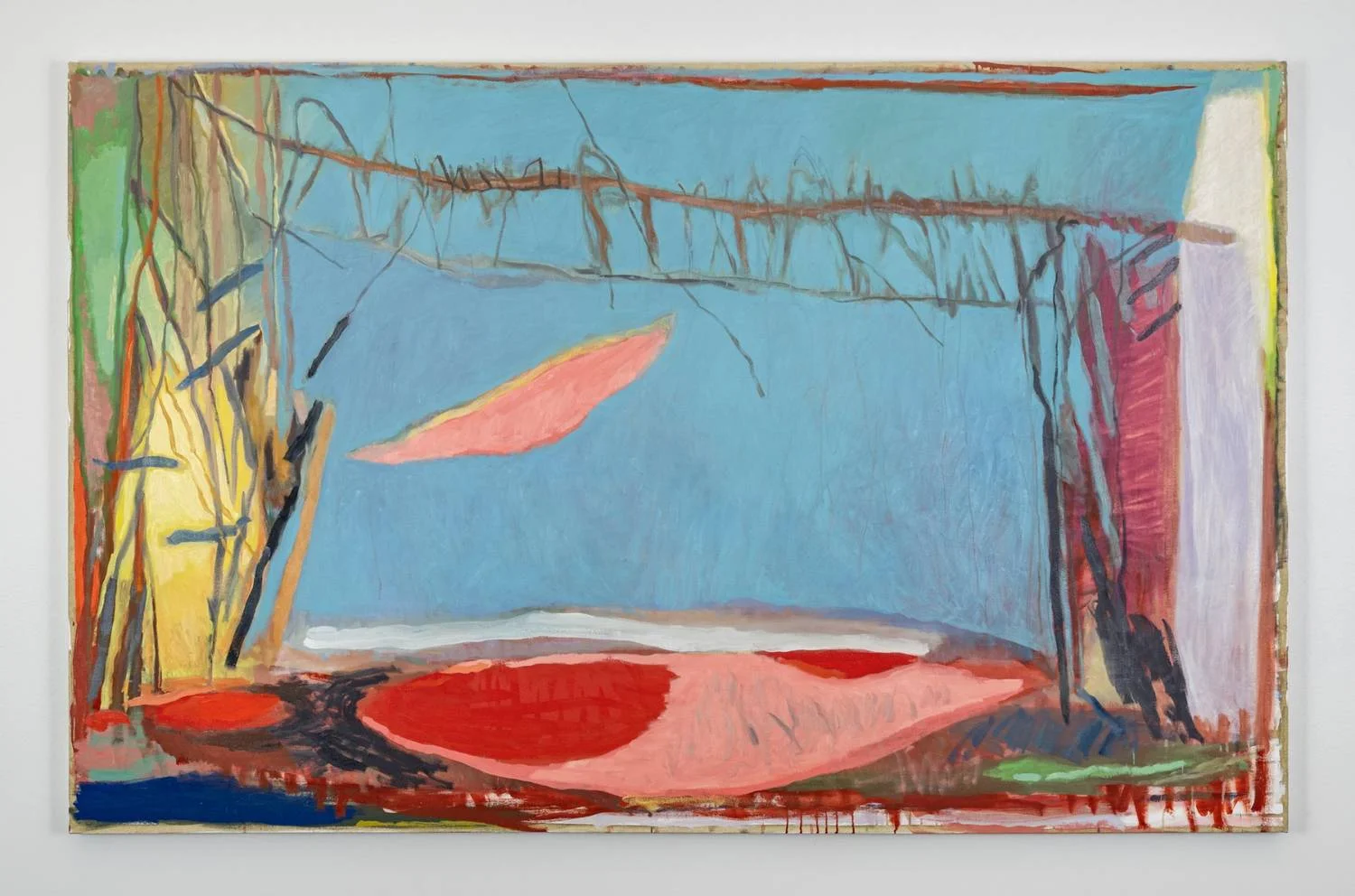
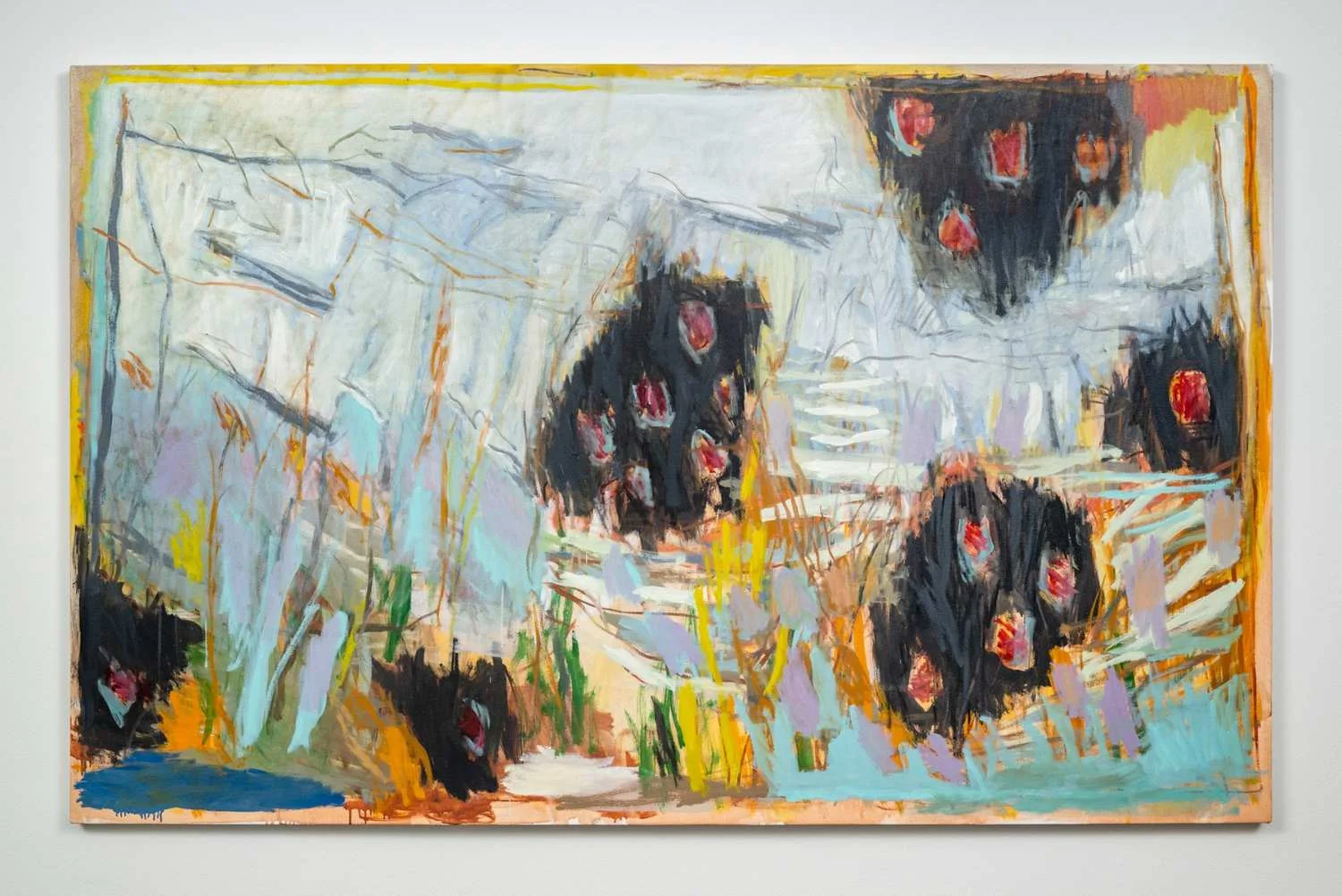
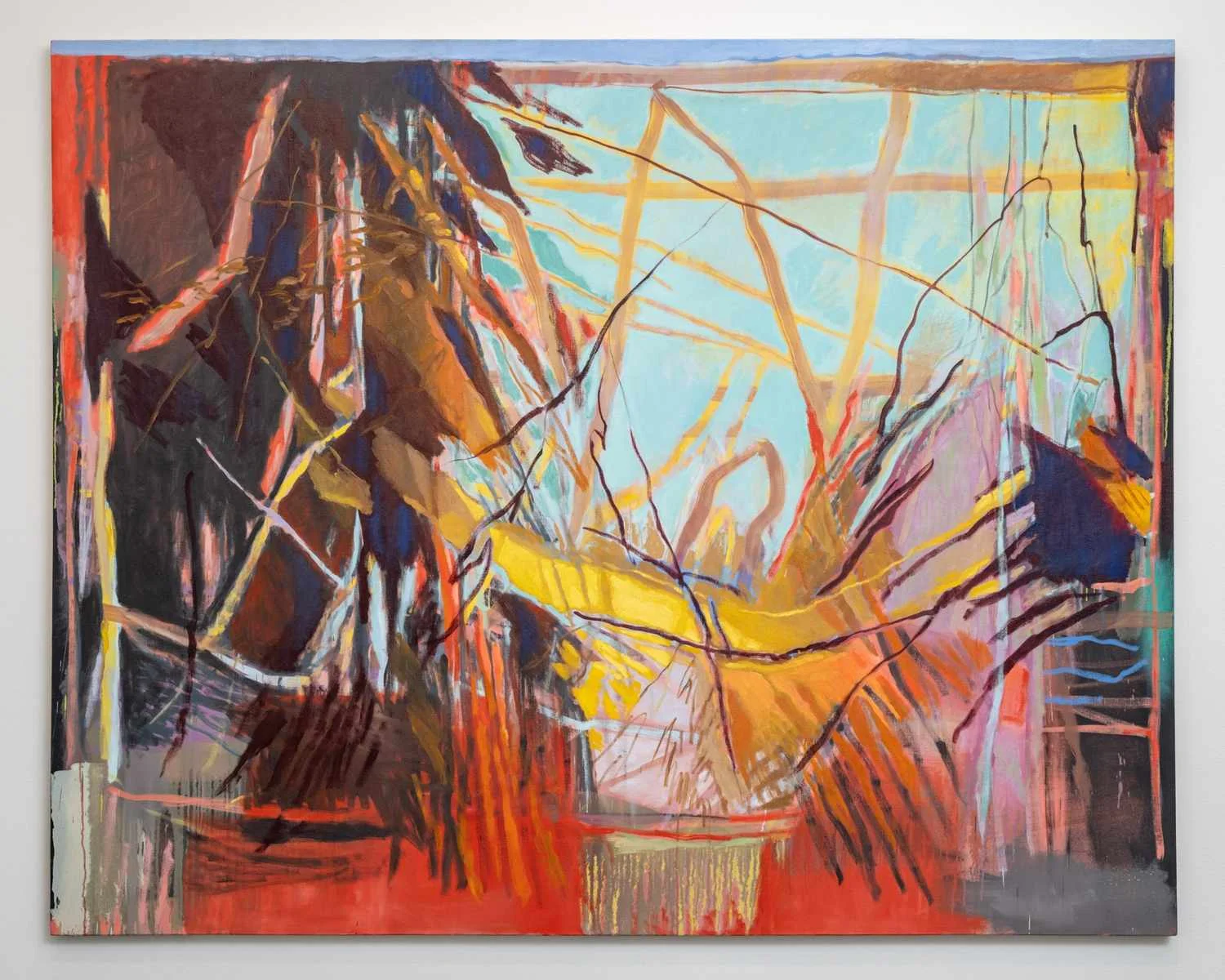
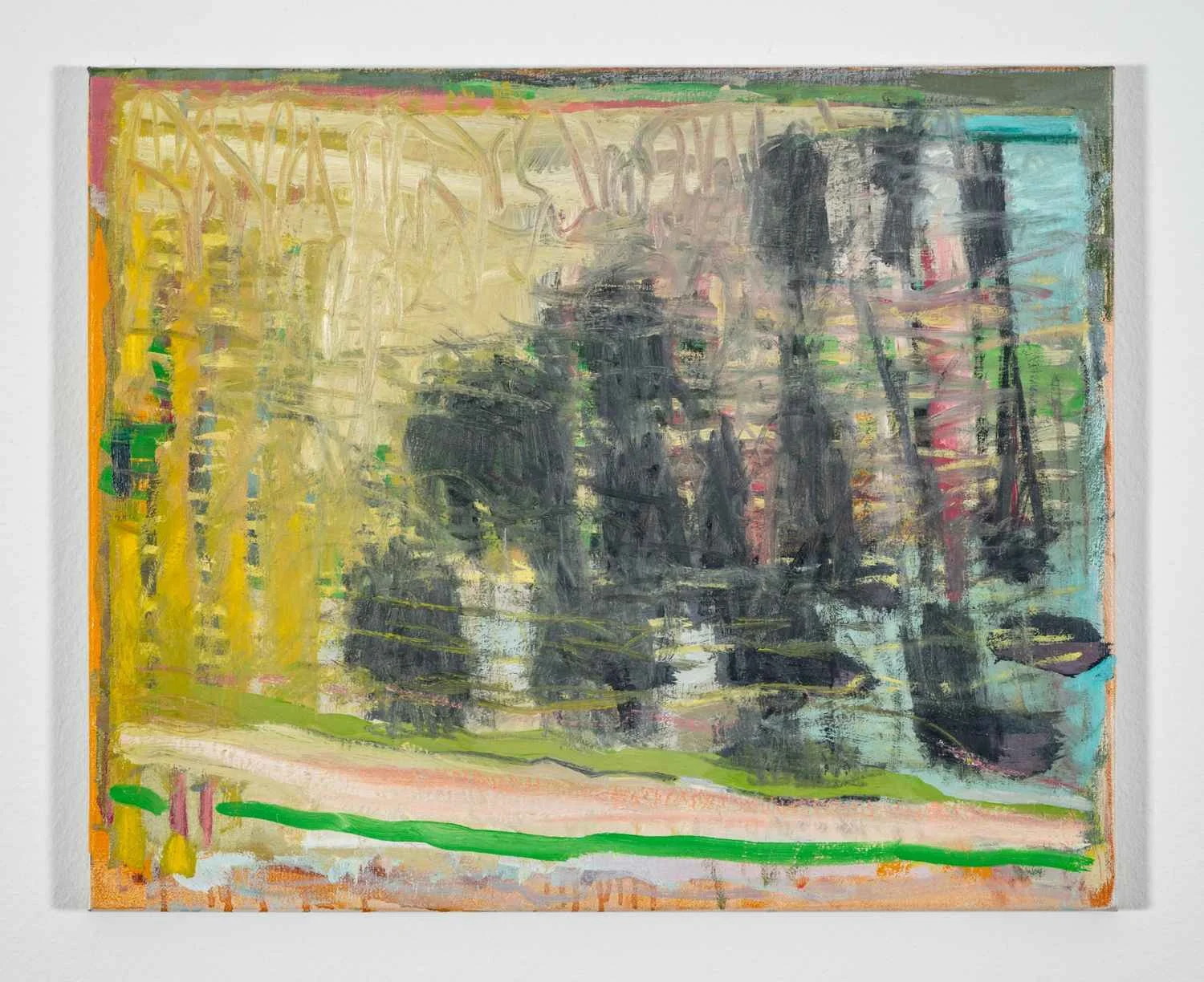
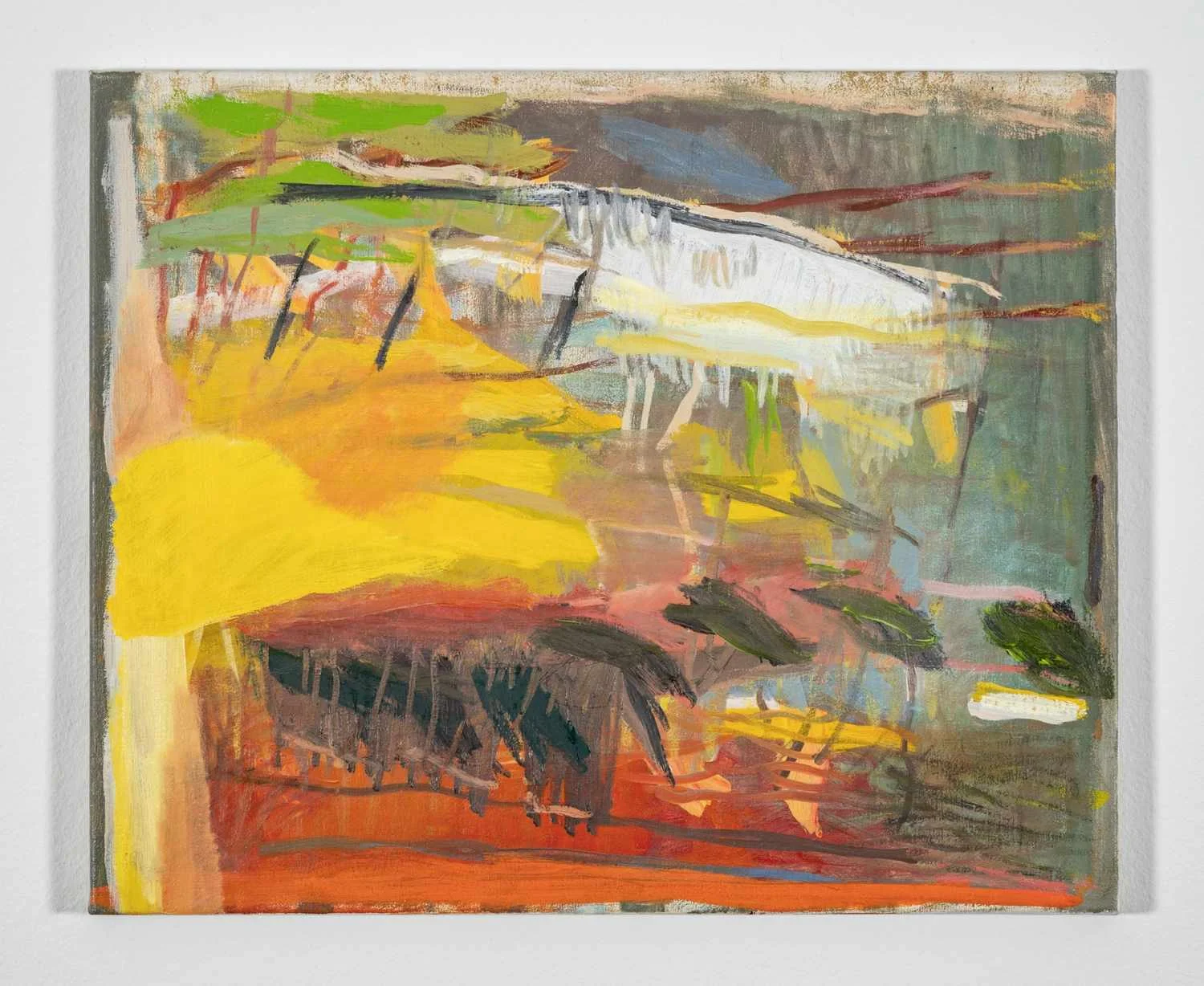
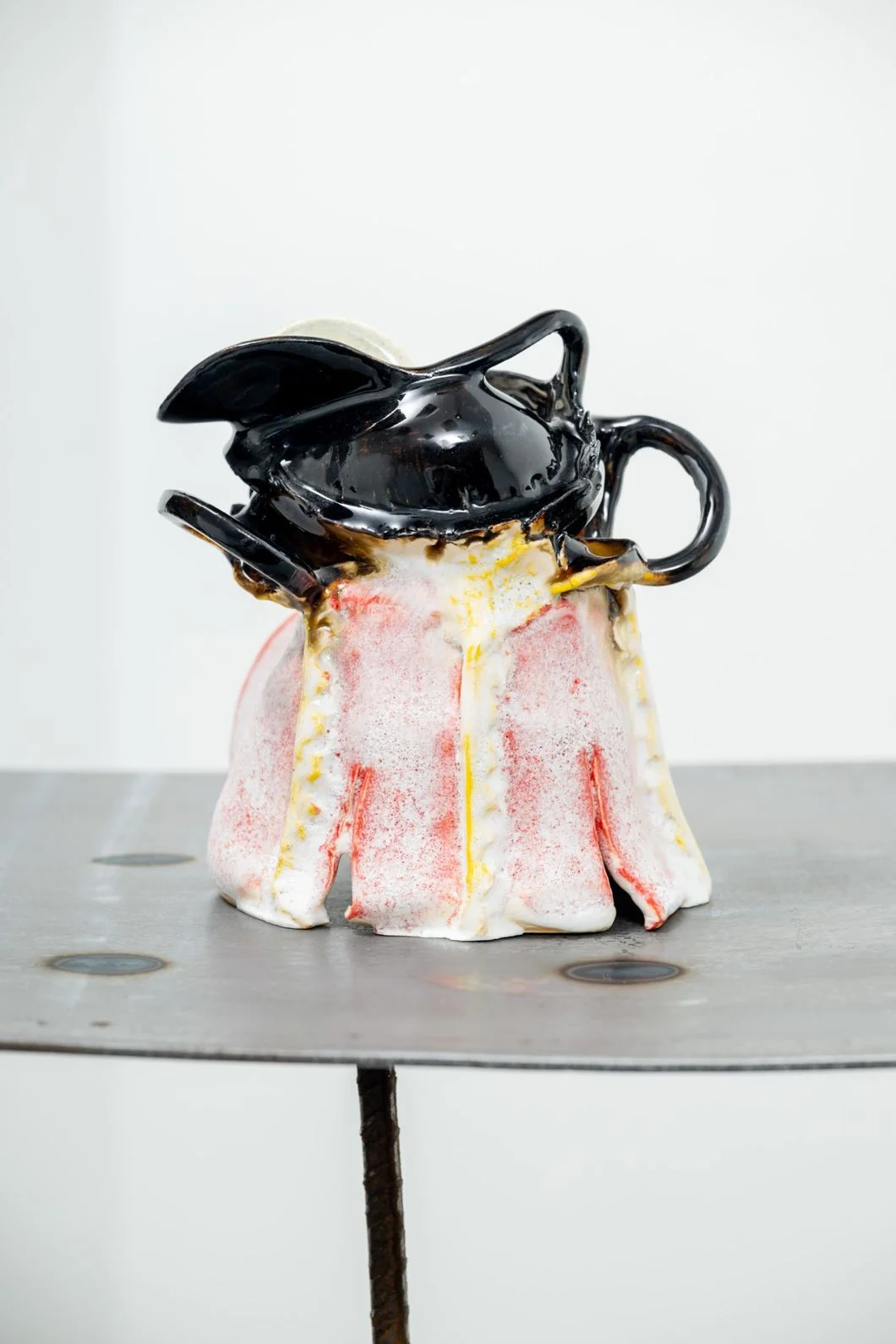
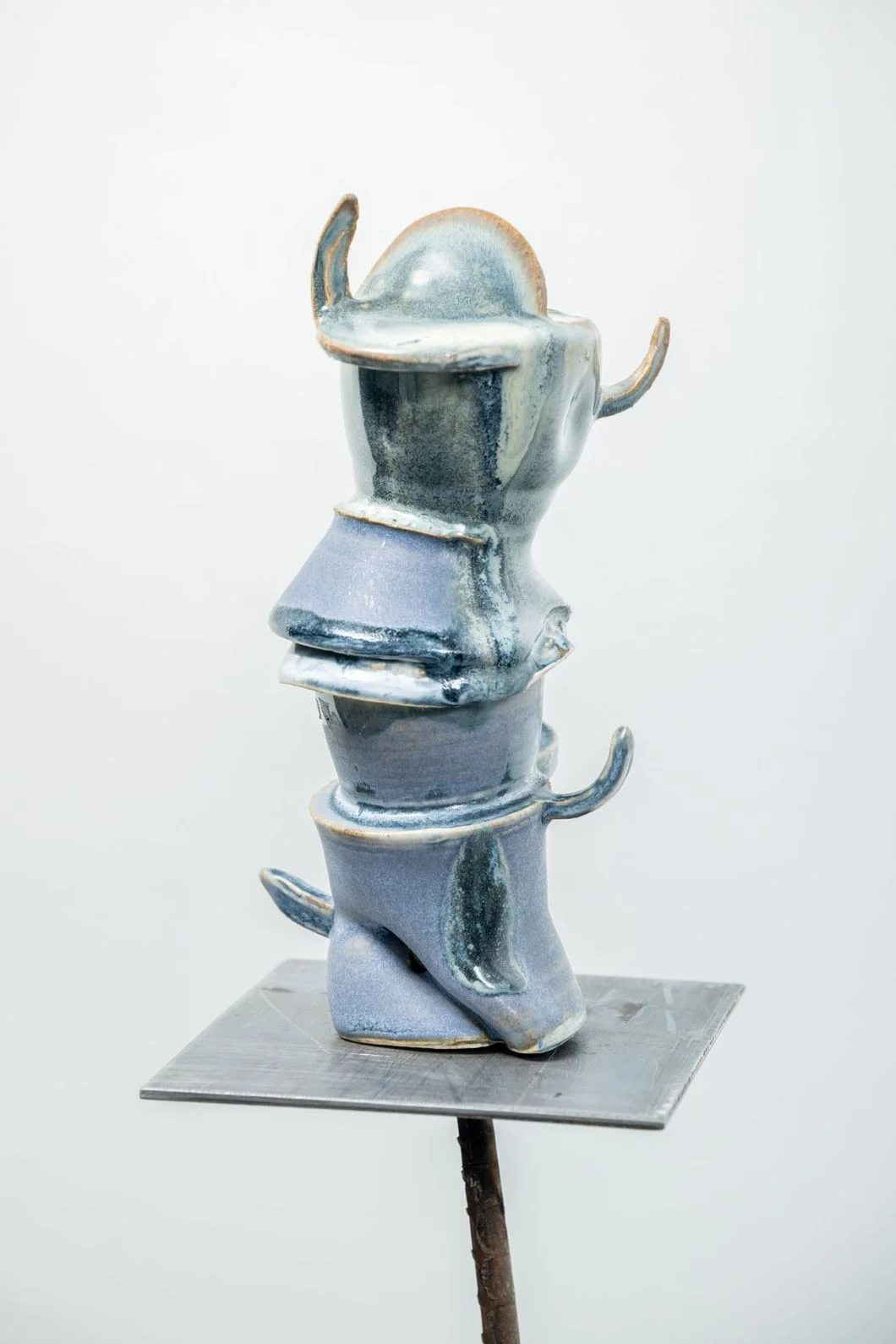
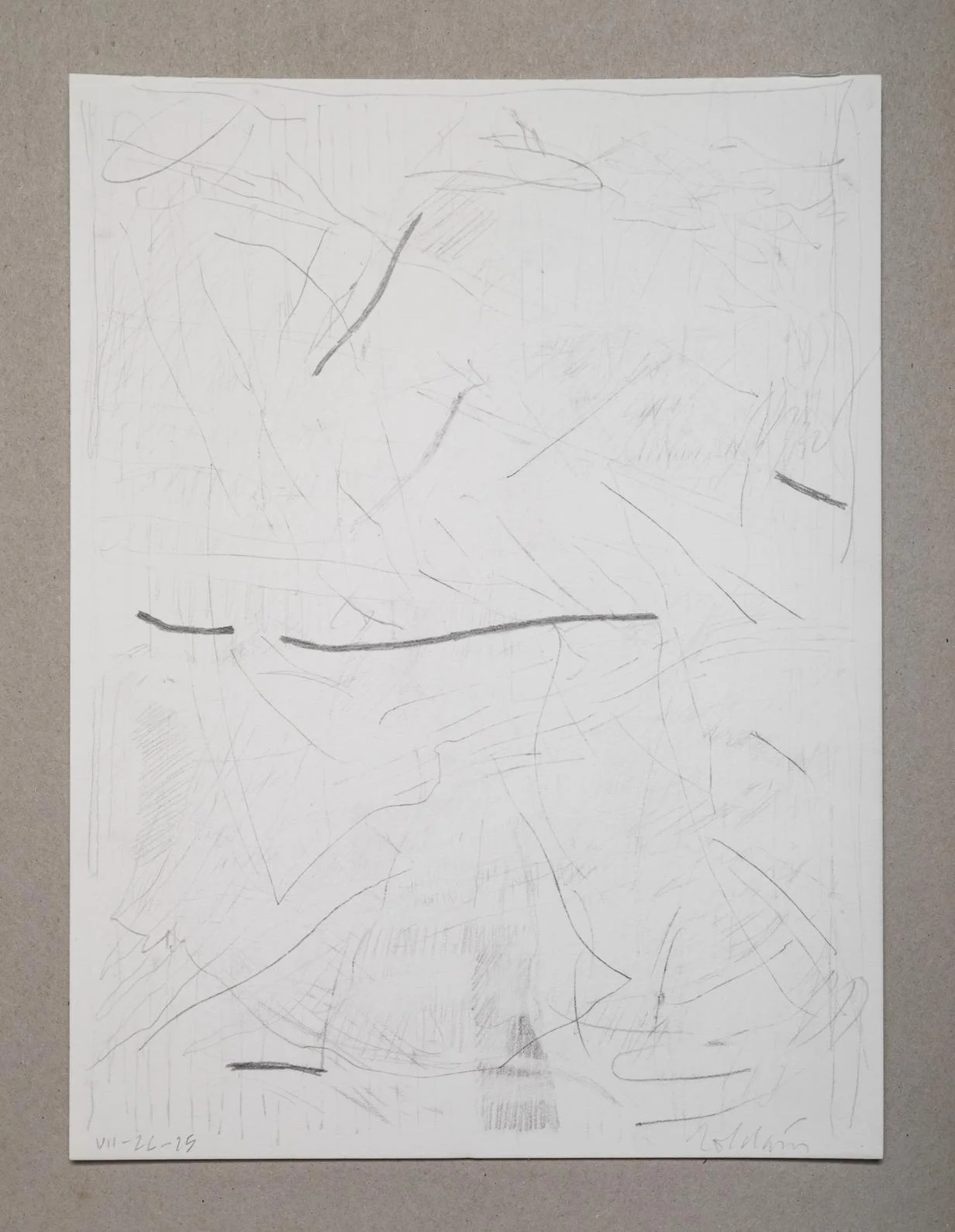
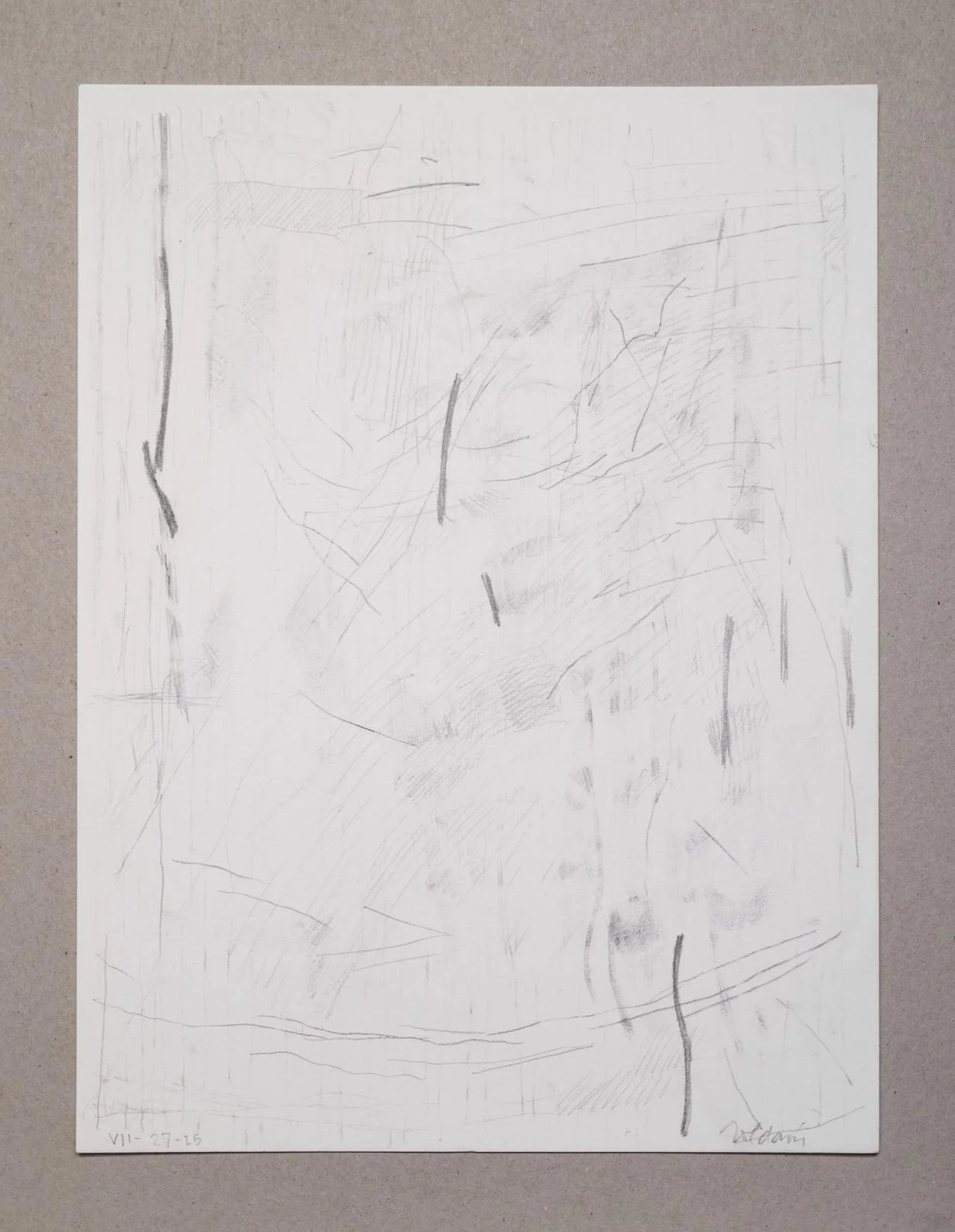
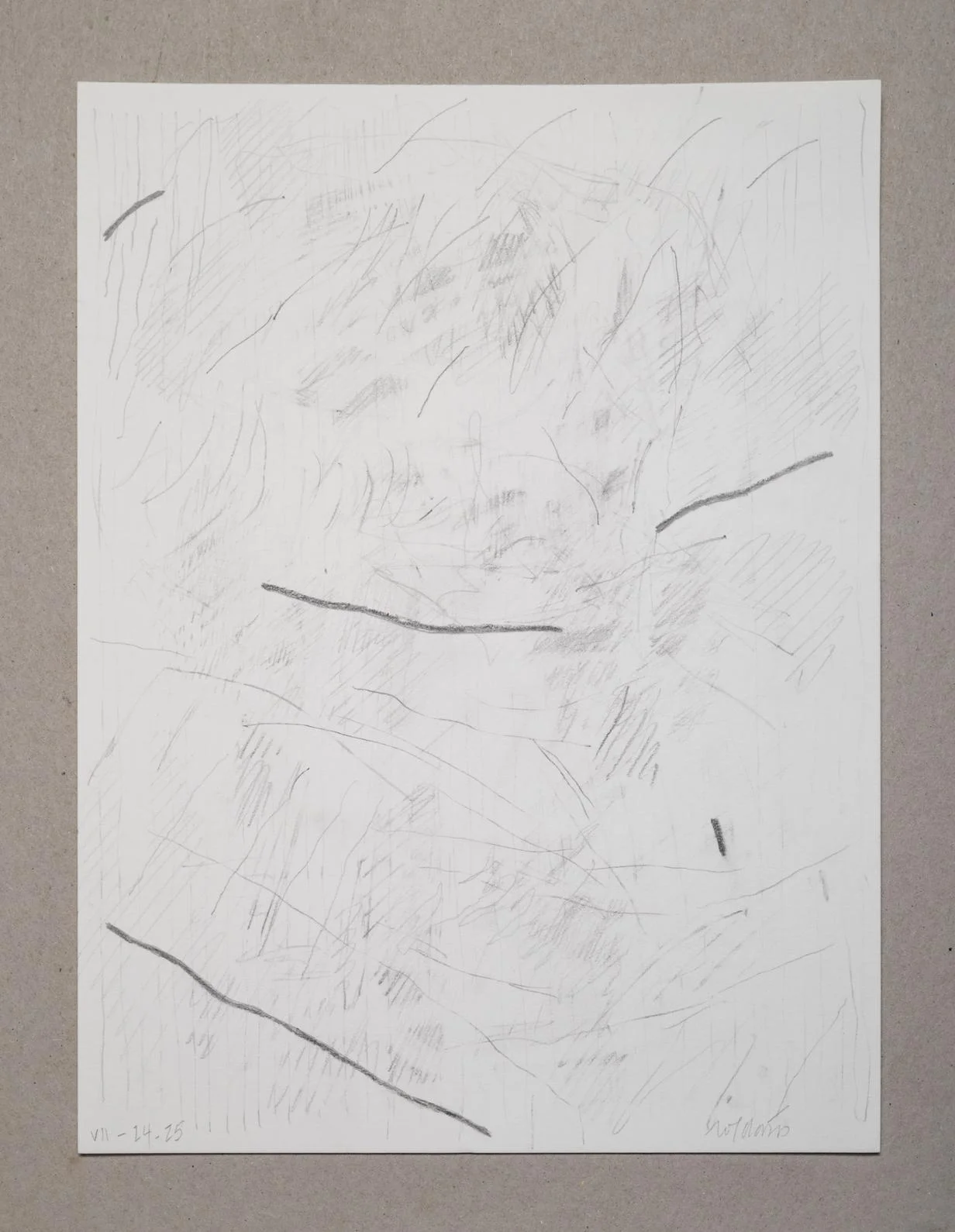
The truth is, each of Roldán’s works is a small disorientation. Linger over his paintings. Yes, those little paintings tucked here and there, and notice the perplexity they provoke, for each one constantly traverses the border between the figurative and the abstract. They never settle entirely in either territory: just when we think we recognize a form, it dissolves into gesture; just when we give in to the sheer pleasure of the abstract surface, suddenly a hint of figure appears, a fragment of the world. The image wavers, as if to tell us that all representation is unstable, that every sign is always in transit.
That oscillation is not merely a formal device but an aesthetic principle, a poetics in the full sense of the word, because in Roldán’s work—in every one of his works—form is never innocent: it exists to both suggest and deny. A line may resemble the contour of a face, but immediately it disintegrates into stains, lines, textures that pull it away from any figurative anchor. A composition may suggest landscape, architecture, or writing, but in the same gesture, it undoes those possibilities. Ambiguity is never resolved; it is cultivated. In this sense, one could say that Roldán belongs to a tradition that understands painting—and, by extension, the plastic object—as a field of uncertainty. If Kandinsky sought to free form from the bondage of representation, and if Paul Klee aspired “to make the invisible visible,” Roldán goes a step further: he shows how, in the oscillation between the recognizable and the undecipherable, lies the true power of the image. What matters is neither fidelity to the world nor its absolute rupture, but the tension that emerges at the edge, in the unfulfilled promise of meaning.
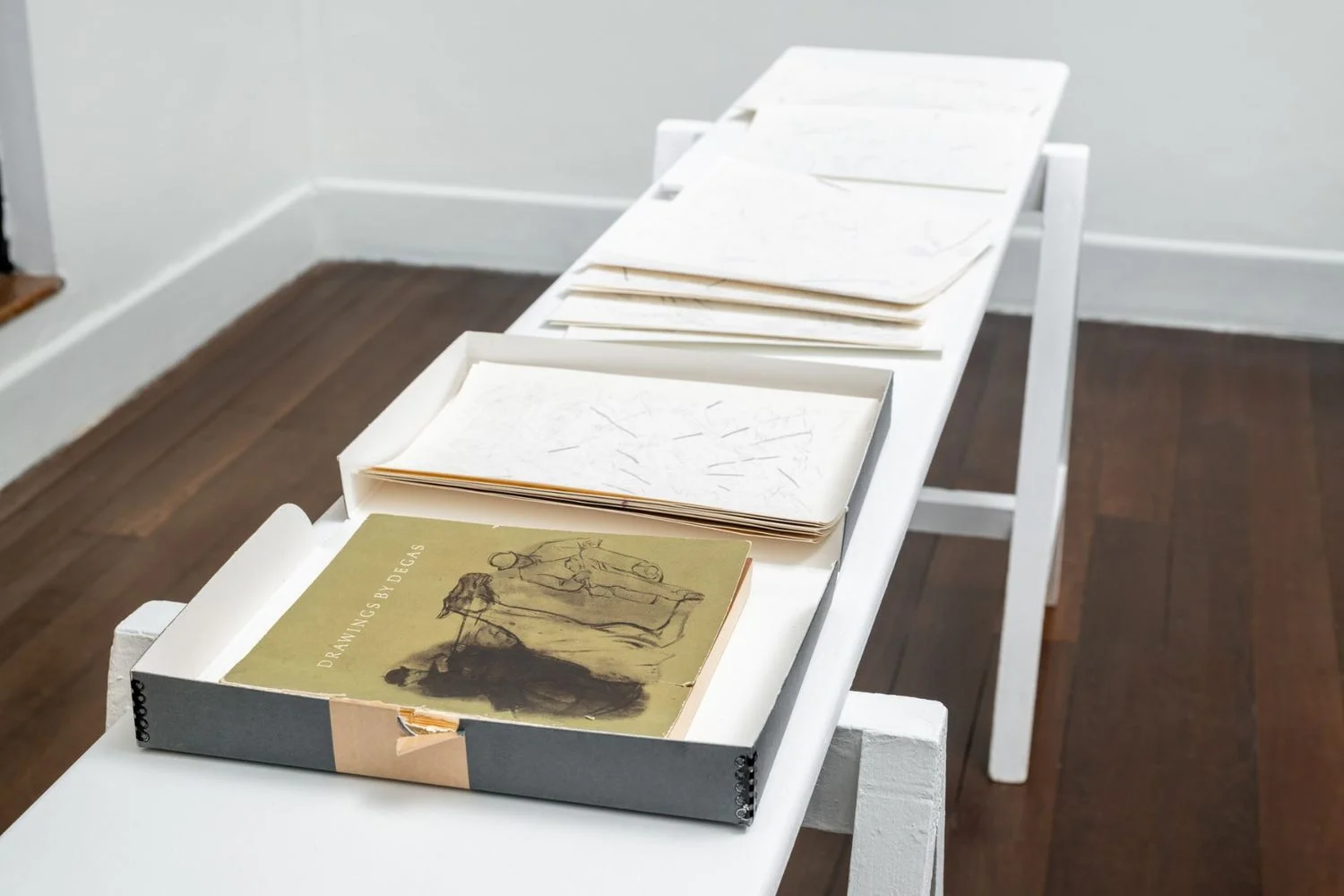
But if that is his poetics, it is complemented by his plastic and visual rhetoric, which he playfully unfolds across each of his exhibitions, reinforcing the epistemological paradox that animates and haunts every one of his works: the incomplete proves not only more revealing but also more enigmatic than the concluded. Thus, in his orchestration of the exhibition space, it becomes clear that certainties never consolidate; there is always a missing piece, always a fold that fractures interpretation. And yet, that absence does not generate frustration but fullness. As if in that discontinuity, in that crack and interruption, resided the ultimate meaning of the work.
Hence the rare satisfaction his works produce. The viewer enters confidently, believing they recognize something familiar—for much of what they see is half-familiar, many of those objects coming from the rebusque, the practice of finding and inventing new, often informal, means of making a living—only to suddenly find themselves in unstable terrain, without secure references. But that disorientation does not distress; on the contrary, it feels like a gift. Uncertainty becomes a space of freedom, a place where looking is not the reception of information but an invitation to partake in a game.
Roldán’s art does not communicate closed messages but activates—through the strategic use of the fragment—the imagination, memory, and the desire to complete what is incomplete. There is, yes, something scavenger-like in his work, but far more of Rumpelstiltskin, for he is capable of spinning gold out of straw. This is not a matter of linear recycling but of a transformative process of appropriation. His ability to convert a fragment found on the street into a sign is perhaps the clearest mark not only of his belonging but of his militancy in these torrid latitudes and their fiercest vicissitudes. In this country, and in the logic of the rebusque, it is often said that “he who finds is king.” Nothing could be further from the truth, because finding does not mean merely coming across, but transforming: rebuscar is to reinterpret the found, to search out a new use for it, to modify it slightly in order to open it up to other possibilities. Thus, Roldán turns the discarded into promise, the trivial into discovery, the precarious into sign—aligning himself as much with the historical picaresque—Lazarillo de Tormes and other rogues—as with the more recent gestures of artists such as Robert Rauschenberg, Jimmie Durham, or Abraham Cruzvillegas, who also explored the precarious not only as an aesthetic principle but as an ethic of work and of life.
That is what it means to live in these latitudes—or at least to make a living (dixit), as Roldán does—making a whole (in the exhibition space) out of almost nothing. That nebulous borderland, where refuse mingles with illusion, is his most fertile province. His art thus teaches us to value what it is to live exposed to the elements of unstable signs and meanings, and with ingenuity, to stretch and braid gold out of what seems leftover. He refuses to be trapped by the conceptual rigor of pure abstraction or by the comfort of f igurative recognition. His work, always on the run, insists on the very experience of looking: seeing and not seeing, understanding and not understanding, advancing and remaining suspended. And in that oscillation perhaps lies his deepest lesson: art is not here to confirm certainties but to remind us that even in the midst of ambiguity, we may feel strangely satisfied. }
That is why the exhibition’s title is not an empty sign but a carefully elaborated signal: the first “fragment” we must reinterpret—or translate—for a new use. That translation, in fact, already suggests multiple meanings, which in Bogotá seem to shift from block to block. In certain workshops in Ricaurte—that temple of ink and hot-stamping in the city’s south— Plots refers to the verb plotear, that is, to print diagrams or plans: to render a scheme onto paper. But further north, in the lettered city, plots is understood as argument, narrative, the warp of a story. And that is precisely what Roldán offers: a visual plot, open and in permanent reinterpretation. So, heeding his invitation, I offer my own: Plots may also be translated as “parcel.” But, when I arrive at that reading after seeing the exhibition, the parcero Roldán is already far gone, back in the street and out in the open, weaving new territories out of stories—with the only certainty being that we’ve once again fallen headlong for his latest trick, and he, as always, is laughing his ass off.
José Luis Falconi
Boston, September 2025
Opening date: September 18, 2025
Closing date: November 1, 2025